“How much does custom packaging cost?”
There’s no single answer because the price can swing dramatically based on materials, print methods, volume, finishes, and structural complexity. A simple folding carton might be $0.25 per unit, while a premium rigid box with letterpress and foil can land anywhere from $4 to $12.
That’s why teams Google this question.
Procurement wants budgeting clarity.
Brand managers need to compare formats.
Small businesses want to avoid overpaying.
Operations teams want packaging that performs without blowing up unit economics.
The challenge: most online pricing guidance is vague, outdated, or ignores the true cost drivers like tooling, freight, embellishments, or low-MOQ penalties.
This guide breaks it down clearly.
You’ll get realistic price ranges for every major packaging type, the factors that influence cost the most, a dedicated breakdown of letterpress pricing, tactical ways to reduce spend, and guidance on how to choose a supplier who can quote accurately from day one.
Let’s start with a quick snapshot.
Quick Summary
Folding cartons: typically $0.25–$1.50 per unit, depending on print method, paperboard grade, and volume.
Corrugated boxes: typically $0.40–$3.00 per unit, driven by size, flute strength, and print.
Rigid boxes: typically $3.00–$12.00+ per unit, especially when using premium wraps or embellishments.
Custom printed bags: $0.30–$4.00+ per unit, depending on material and print quality.
Letterpress packaging: usually 20–60% higher than standard offset printing due to setup time, labor, and tactile impressions.
Biggest cost drivers: material type, print method, embellishments, structural complexity, MOQs, and freight.
Typical Price Ranges for Common Packaging Types
Custom packaging costs vary widely depending on material, size, printing, finishes, and order volume. Below are realistic, industry-standard ranges to help you understand what different formats typically cost and why.
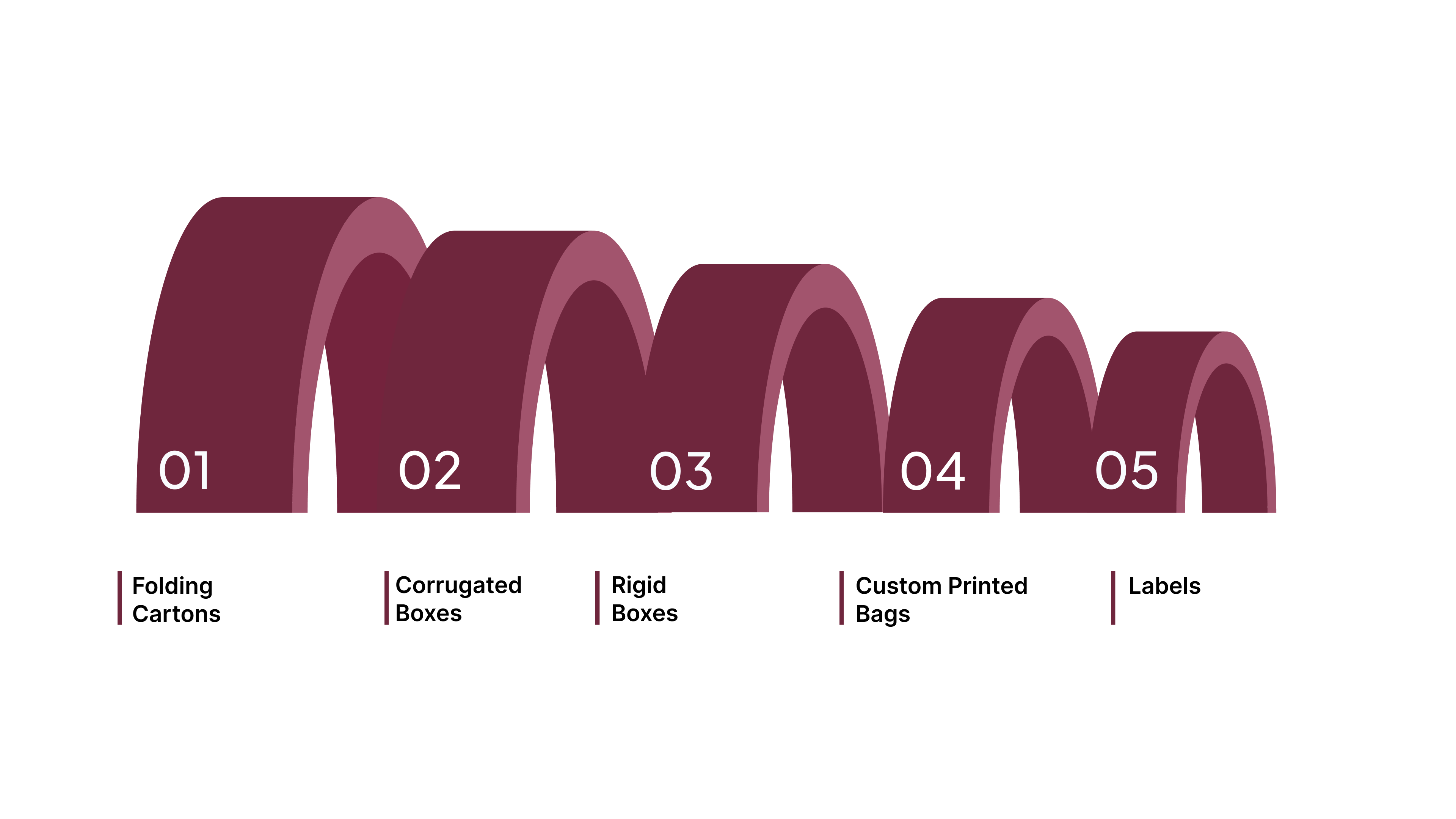
Folding Cartons (Retail Packaging)
Typical Cost:
Low volume (500–2,000 units): $0.60–$1.50 per unit
Mid–high volume (5,000–50,000+ units): $0.25–$0.70 per unit
What affects the price:
Paperboard grade (16pt → 24pt → premium boards)
Print method (digital vs offset vs letterpress)
Spot colors vs full CMYK
Specialty coatings (soft-touch, matte, gloss)
Embellishments (foil, emboss, deboss, windows)
Structural complexity (auto-lock bottoms, inserts)
Corrugated Boxes (Shipping Boxes)
Typical Cost:
Low volume: $1.50–$3.50 per unit
High volume: $0.40–$1.80 per unit
What affects the price:
Box size and flute type (E/B/C/Double-wall)
Print type (digital → flexo → litho-lam, huge price differences)
Board strength (ECT/Burst specs)
Large-format printing or full-coverage ink
Custom inserts
MOQ efficiencies (shipping boxes reward higher volume)
Rigid Boxes (Premium / Luxury Packaging)
Typical Cost:
Low volume: $6.00–$12.00+ per unit
High volume: $3.00–$7.00 per unit
What affects the price:
Board thickness (1.0–2.0mm chipboard)
Wrap material (specialty papers, soft-touch, textured stock)
Magnetic closure vs friction lid vs drawer
Manual vs semi-automated assembly (biggest cost driver)
Foil, emboss, deboss, edge-wrapping precision
Insert type (rigid board, EVA, pulp, molded paper)
Custom Printed Bags (Paper, Kraft, or Premium Retail Bags)
Typical Cost:
Low volume: $1.00–$4.00+ per bag
High volume: $0.30–$1.50 per bag
What affects the price:
Material (kraft → coated → premium textured)
Handle type (twisted paper, ribbon, rope, die-cut)
Full bleed vs minimal print
Reinforced bases (for heavy items)
Specialty coatings or foils
Bag size (dramatically affects cost)
Labels (Pressure-Sensitive Labels for CPG, Beauty, Food & Bev)
Typical Cost:
Standard labels: $0.03–$0.12 per label
Premium labels: $0.12–$0.40+ per label
What affects the price:
Facestock (paper, film, textured, metallic)
Adhesive type (standard, freezer-grade, removable)
Print method (digital vs flexo)
Foils, embossing, varnishes, and tactile coatings
Shape complexity (circles = cheap; custom dies = pricey)
Roll configuration (automation vs manual application)
These ranges only make sense once you understand why pricing changes so dramatically. The next section breaks down the seven cost drivers that determine whether your packaging lands at the low or high end of these ranges.
What Actually Drives Cost (The 7 Variables That Matter Most)
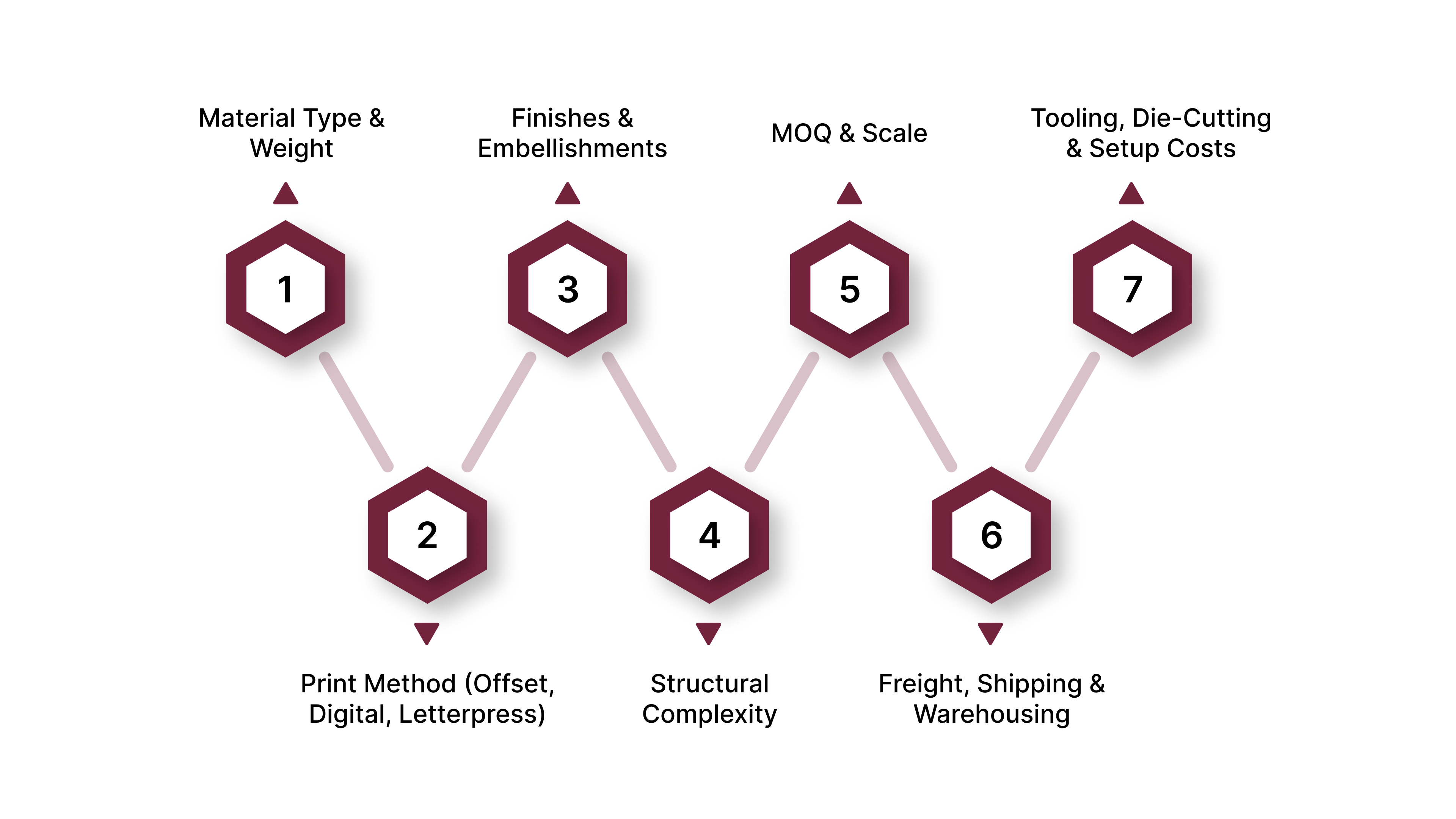
Custom packaging pricing is the sum of seven variables that influence material usage, production time, machine setup, and finishing labor. Understanding these factors helps you predict cost, compare quotes accurately, and avoid paying for features you don’t need.
1. Material Type & Weight
The material itself is usually the biggest cost driver.
Common ranges:
Paperboard (cartons): 250–400gsm costs more as the thickness increases
Corrugated: Upcharges for stronger flutes (E → B → BC)
Rigid box board: 1.2–2mm chipboard significantly increases cost due to density
Premium papers: Textured, cotton, kraft, or specialty wraps can add $0.10–$0.40 per unit
Example: Upgrading from 300gsm paperboard to 400gsm can add $0.05–$0.12 per unit.
2. Print Method (Offset, Digital, Letterpress)
The print method determines both price and quality.
Digital printing: Low setup cost → best for low MOQ
Offset printing: Sharper quality → best for mid-to-high volume
Letterpress: Elevated texture → higher cost due to slower, manual processes
Example: Letterpress printing adds $0.20–$1.00 per unit, depending on plate size and impression coverage.
3. Finishes & Embellishments
Every enhancement adds time, materials, or extra production steps.
Common add-ons and typical ranges:
Soft-touch coating: +$0.08–$0.25
Foil stamping: +$0.10–$0.50
Emboss/Deboss: +$0.05–$0.20
Spot UV: +$0.08–$0.25
Edge painting (letterpress aesthetic): +$0.20–$0.60
Example: Soft-touch + foil together often adds $0.20–$0.70 per unit, depending on volume.
4. Structural Complexity
The more custom the structure, the higher the cost.
Higher-cost features include:
Drawer boxes
Magnetic closures
Multi-panel folds
Custom inserts (chipboard, molded pulp, EVA alternatives)
Non-standard dielines
Example: Adding a custom insert can increase unit cost by $0.15–$0.80, depending on the material.
5. MOQ & Scale
Volume dramatically impacts cost.
Low MOQ → higher cost per unit (setup, make-ready, waste)
High MOQ → lower cost per unit due to efficiency and bulk material pricing
Example: A carton that costs $1.20 at 500 units can drop to $0.35 at 10,000 units.
6. Freight, Shipping & Warehousing
Packaging is bulky even when light, and logistics costs often surprise teams.
Key variables:
Box size (DIM weight)
Location of the factory and final destination
Pallet configuration
LTL vs. FTL shipping
Storage costs if ordering in bulk
Example: Freight can add 5–25% on top of production cost, depending on distance and volume.
7. Tooling, Die-Cutting & Setup Costs
Set-up expenses apply mostly to custom or specialty work.
Common charges:
Dieline tooling: $100–$500
Letterpress plates: $40–$150 per plate
Foil stamping dies: $80–$250
Make-ready fees: Charged for short runs
Example: A one-time dieline fee of $250 can add $0.25 per unit on a 1,000-piece order.
All seven of these variables interact: materials, print, finishes, and volume can swing pricing by several dollars per unit.
Print Methods That Affect Cost (Digital vs Offset vs Letterpress)
Print method is one of the biggest cost drivers in custom packaging, but many teams lump all print processes together.
In reality, digital, offset, and letterpress behave very differently in terms of setup time, quality, and scalability.
Digital Printing (Fast, Flexible, Best for Low MOQ)
Digital printing uses toner or inkjet technology to print directly onto paperboard or labels without plates. It’s the most flexible and low-commitment option for small brands or frequent design changes.
Why brands choose digital:
Zero plate cost → lowest setup fees
Fast turnaround for launches and sampling
Great for 500–5,000 unit runs
Supports variable data (barcodes, batch codes, personalization)
Ideal for cartons, labels, and short-run corrugated mailers
Cost impact:
Digital has the cheapest startup cost, but the highest per-unit cost at scale.
It’s efficient for small batches, but becomes more expensive than offset above ~10k units.
Typical use cases:
Indie beauty brands
Seasonal cartons
Rapid prototyping
Short-run SKUs
Offset Printing (High Quality, Best for Mid–High Volume)
Offset printing transfers ink from plates onto a blanket, then onto the substrate. It’s the global standard for high-quality retail packaging.
Why brands choose offset:
Extremely consistent color accuracy
Sharp details + high-end retail finish
Works on almost any paperboard
Most economical at scale (5,000–200,000 units)
Ideal for national retail runs
Cost impact:
Higher setup cost due to printing plates, but per-unit pricing drops dramatically once volume increases. Offset becomes the cheapest and most consistent method for mid to large orders.
Typical use cases:
Beauty & personal care cartons
Food + CPG boxes
Printed corrugated via litho-lam
Large cosmetic or supplement runs
Letterpress Packaging Cost
Letterpress is a traditional printing method where raised plates press ink directly into the material, creating a deep tactile impression you can see and feel.
Brands choose it because it communicates:
Premium craftsmanship
Heritage and authenticity
Tactile, debossed texture that digital and offset can’t replicate
Minimalist, luxury aesthetic with high ink density
It’s used often for:
Premium folding cartons
Small-batch beauty packaging
Specialty candles
Chocolate and confectionery boxes
High-end stationery or gift sets
Letterpress isn’t just “printing.” It’s a sensory effect that elevates even simple structures.
Why Letterpress Costs More
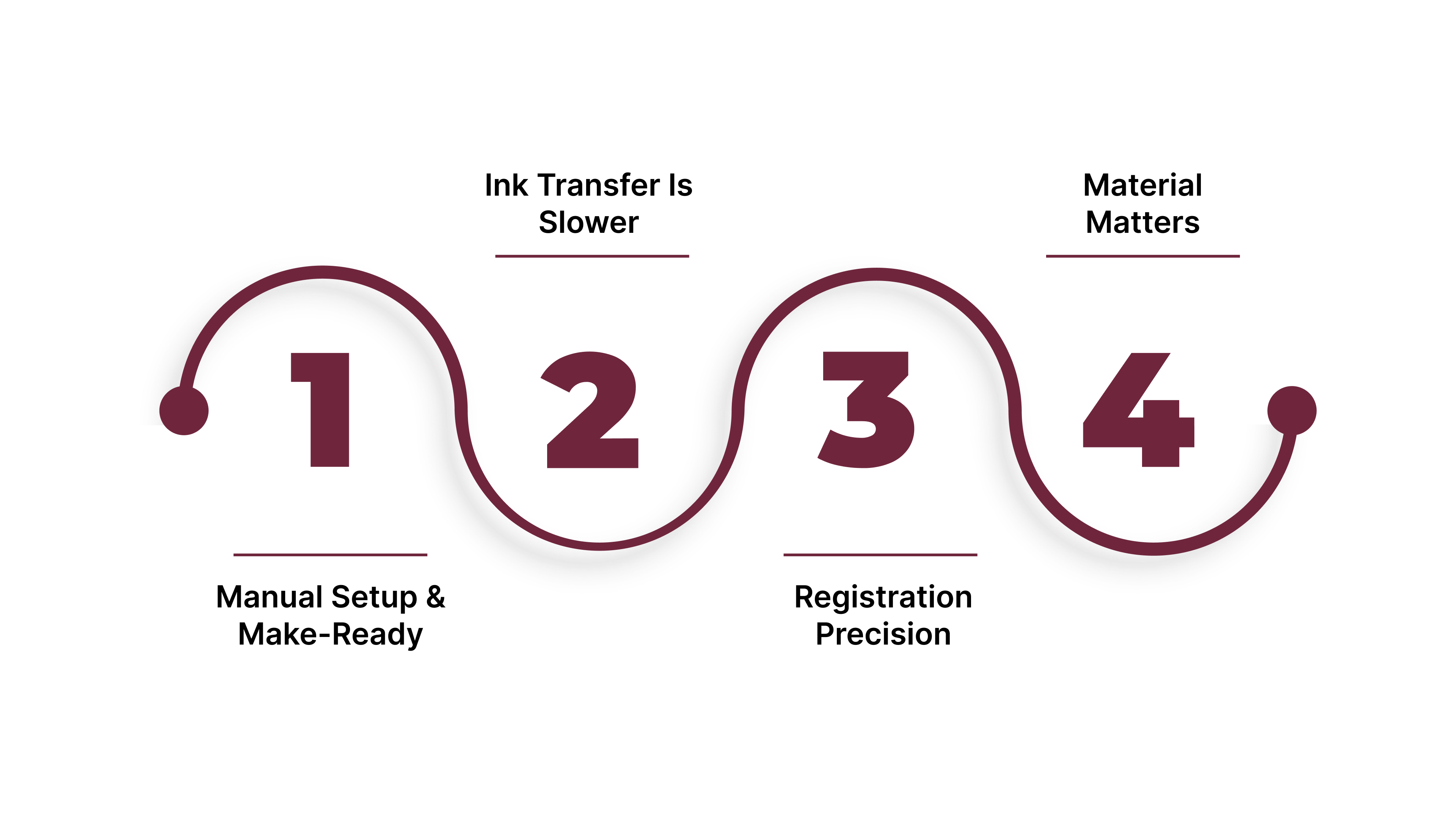
Letterpress is labor-heavy and slower than digital or offset. That’s why its cost per unit follows a different curve.
1. Manual Setup & Make-Ready
Each color requires its own metal or photopolymer plate.
Plate costs: $40–$150 per plate
Setup is hands-on and time-consuming → higher labor cost
2. Ink Transfer Is Slower
Letterpress presses ink into the paper, not on top of it.
Slower speed
Less automation
More operator skill is required
3. Registration Precision
Keeping the impression aligned requires tight tolerances, especially on textured or uncoated papers.
Adds time
Increases waste during calibration
4. Material Matters
Soft, cotton, or textured papers handle impression best but cost more, adding $0.10–$0.40 per unit depending on board weight.
Letterpress delivers unmatched tactility, but the process adds cost at every stage: plates → setup → slower production → higher-quality materials.
Letterpress Packaging Price Ranges
Below are realistic ranges used by packaging converters and specialty print houses. (These vary by region but reflect standard market pricing.
1. Small Runs (100–500 units)
High per-unit cost due to plate/setup fees.
Typical cost: $2.00–$6.00 per unit
Premium stocks can push this toward $8.00+
Best for luxury launches, small-batch SKUs, or gift sets
2. Mid Runs (500–5,000 units)
Set up fees spread out → cost becomes more efficient.
Typical cost: $1.00–$3.00 per unit
Multicolor work increases plate count → adds $0.20–$0.60 per plate
Foil + letterpress combined: +$0.20–$0.70 per unit
3. High-End or Multi-Step Letterpress
For brands that combine letterpress with additional embellishments:
Common add-ons:
Foil stamping
Emboss/deboss layering
Duplexed thick boards
Edge painting
Typical cost:
$3.00–$10.00+ per unit, depending on complexity
Duplexing thick boards alone can add $0.40–$1.00 per unit
Letterpress is not mass-market cheap, but it creates one of the highest perceived value jumps per dollar spent.
Letterpress vs Digital vs Offset (Cost Comparison Table)
A simple cost comparison will help you justify when letterpress is the right investment.
Print Method | Best For | Setup Cost | Unit Cost (Low Volume) | Unit Cost (High Volume) | Tactile Impression |
|---|---|---|---|---|---|
Letterpress | Luxury tactile packaging, small-batch premium | High (plates + setup) | $2.00–$6.00 | $1.00–$3.00 | Strong (debossed) |
Offset | Mid–high volume retail cartons | Moderate | $0.40–$1.00 | $0.10–$0.40 | None |
Digital | Low MOQ, fast turnaround | Low | $0.50–$1.50 | Not ideal for 10k+ | None |
Letterpress packaging typically costs $1–$6 per unit, depending on volume, materials, and the number of plates required.
How to Reduce Custom Packaging Cost
Custom packaging doesn’t need to be expensive to look premium. These proven strategies help teams cut costs without sacrificing presentation, performance, or brand consistency.
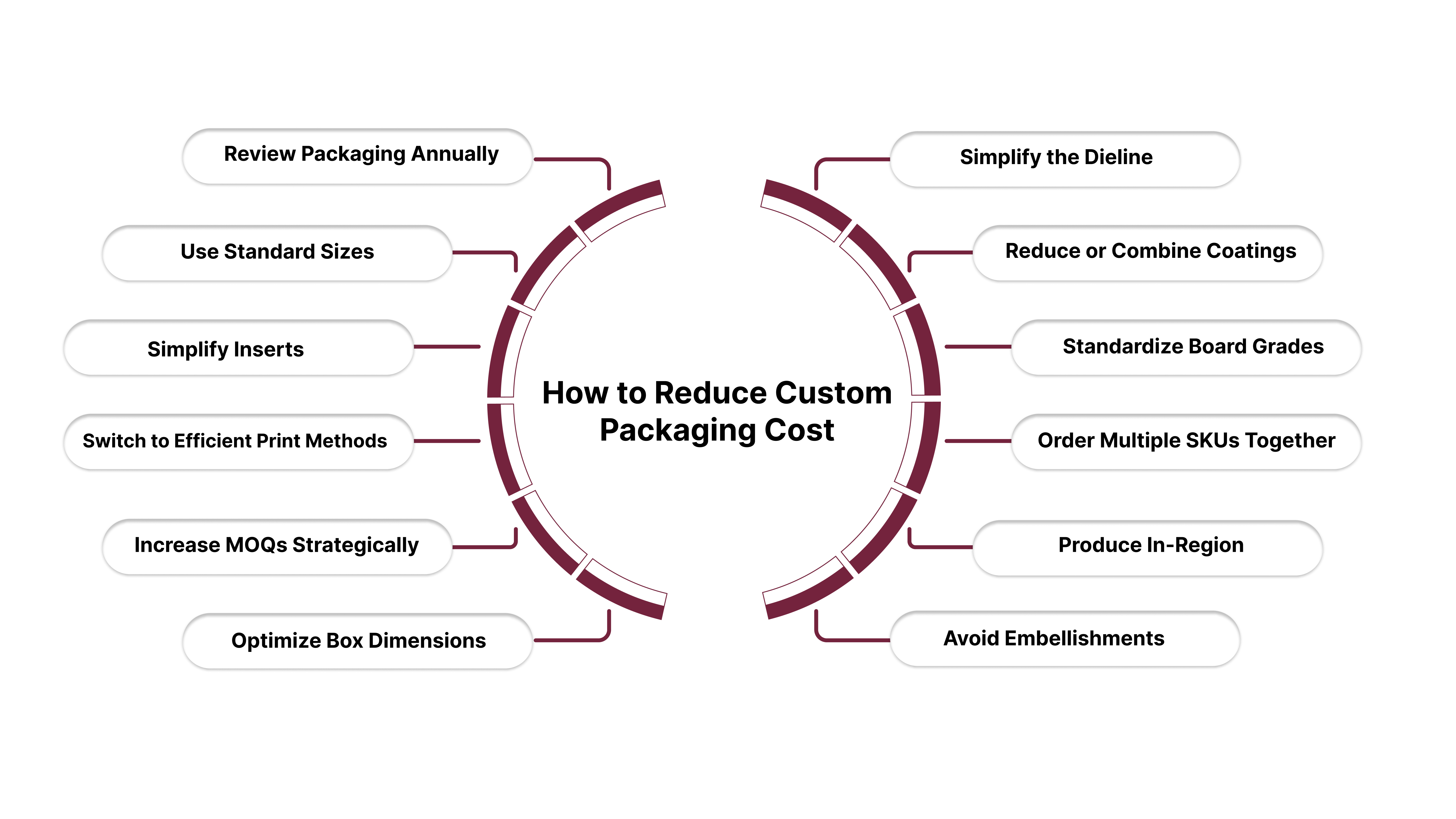
1. Simplify the Dieline
Every extra panel, flap, or fold adds:
More tooling
More material
More assembly time
Easy win: Switch to tuck-end or crash-lock bases where possible.
2. Reduce or Combine Coatings
Multiple coatings = multiple passes on the press.
Instead of soft-touch + matte + spot UV, choose one premium coating that delivers the look you want.
Savings: $0.10–$0.30 per unit.
3. Standardize Board Grades Across SKUs
Using one paperboard grade (e.g., 18pt → 20pt) prevents:
Mixed MOQs
Excess waste
Price hikes from small-lot sourcing
Pro move: Build a “brand board spec” that all SKUs follow.
4. Order Multiple SKUs Together
Group production into one batch to reduce:
Setup charges
Plate costs
Idle machine time
Especially effective for beauty, CPG, or supplement lines with many similar cartons.
5. Produce In-Region (When It Makes Sense)
Overseas production is cheaper per unit, but:
Freight
Tariffs
Long lead times
Often, erase the savings.
If your packaging is bulky (corrugated, rigid boxes), local production can be cheaper end-to-end.
6. Avoid Unnecessary Embellishments
Foil, embossing, debossing, and textured papers elevate packaging, but using all of them at once doesn’t.
Choose one “hero” finish instead of three.
7. Optimize Box Dimensions for Freight
Dimensional weight (DIM) can increase shipping costs by 10–40%.
Shrink the box by a few millimeters, and you may:
Fit more units per pallet
Reduce air shipping costs
Improve warehouse stacking
This alone saves some brands thousands per year.
8. Increase MOQs Strategically
Higher volume = lower cost per unit.
But you don’t want dead inventory.
Smart approach:
Increase MOQ slightly (e.g., from 2,000 → 3,000) and split delivery into two drops.
9. Switch to More Efficient Print Methods
For mid–high volumes, offset is cheaper than digital.
For low volumes, digital avoids wasteful setup fees.
Right method → right volume → major savings.
10. Simplify Inserts
EVA, foam, or molded pulp inserts are expensive.
Cost-efficient alternatives:
Folded paperboard
Corrugated inserts
Single-piece structural designs
11. Use Standard Sizes Where Possible
Rigid boxes, mailers, and bags have “base sizes” that avoid custom tooling.
Same look, less cost.
12. Review Packaging Annually
Material pricing fluctuates. Vendor capabilities change.
Annual reviews help eliminate unnecessary upgrades added over time.
You now have the full pricing picture. The next challenge is execution: choosing a supplier who can engineer the right structure, optimize materials, and quote realistically from day one. That’s where GMS Industries supports teams most effectively.
How GMS Industries Help
Once you understand the true cost drivers behind custom packaging, the next step is working with a supplier who can engineer a solution that hits your budget, performance requirements, and brand goals. GMS Industries supports teams by bringing materials, structure, and cost optimization together in one place.
Expertise Across All Major Packaging Formats
GMS manufactures and supplies the core components most brands need:
Folding cartons
Corrugated shipping boxes
Chipboard inserts and dividers
Pressure-sensitive labels
Multi-component packaging systems
This allows brands to consolidate suppliers and avoid a mismatch between packaging elements.
Cost Optimization & Material Engineering
Budgets stretch further when packaging is engineered intelligently.
GMS helps teams reduce costs by:
Selecting the right board grades
Standardizing coatings and finishes
Simplifying structures without reducing performance
Optimizing dimensions for freight efficiency
Advising on MOQ and run-size efficiencies
This is where most brands recover 10–30% of unnecessary packaging spend.
Multi-Location Reliability (U.S. + Mexico)
With production across multiple facilities, GMS offers:
Faster replenishment
Lower lead-time variability
Redundancy across regions
More predictable ongoing supply for high-volume SKUs
This reduces downtime and protects continuity for both small launches and national programs.
Integrated Packaging Ecosystem
Because GMS produces cartons, corrugated outers, inserts, and labels, everything is designed to fit together correctly.
This means:
Fewer sizing issues
Cleaner assembly
More consistent branding across components
Reduced rework and waste
Most suppliers can only manage one part of the system; GMS supports the whole workflow.
Support With Quoting, Feasibility & Transit Testing
From early-stage feasibility to final testing, GMS helps teams:
Validate structural strength
Choose efficient materials
Forecast cost at scale
Review artwork for production feasibility
Reduce risk in transit and warehousing
The goal is simple: packaging that performs, without surprise costs or hidden inefficiencies.
Need clear pricing?
Get a custom quote from GMS within 24–48 hours.
Conclusion
Custom packaging costs can range widely depending on materials, print methods, structure, finishes, and order volume. Letterpress adds a premium because of its craftsmanship, but it becomes predictable and cost-efficient when you understand how setup, materials, and run sizes affect pricing.
Use the ranges and checklists in this guide to budget with confidence and choose the right format for your product.
If you need help evaluating options or getting an accurate quote, GMS Industries can break down costs clearly and recommend the most efficient construction for your needs.
FAQ
1. How much does custom packaging cost?
Depending on the type, custom packaging can range from $0.25–$1.50 for folding cartons, $0.40–$3.00 for corrugated, and $3.00–$12.00+ for rigid boxes. Finishes, print method, and order volume significantly affect the final price.
2. Is letterpress packaging more expensive?
Yes. Letterpress typically costs 20–60% more than digital or offset because it requires plates, manual setup, slower production, and specialty papers for the impression.
3. What’s the cheapest type of custom packaging?
Standard folding cartons printed digitally are usually the most affordable, especially in low volumes. Basic corrugated shippers can also be cost-effective for larger runs.
4. Do custom boxes get cheaper with higher quantities?
Absolutely. Higher MOQs reduce setup costs per unit and unlock bulk material pricing. A box that costs $1.20 at 500 units may drop to $0.35 at 10,000 units.
5. How do finishes impact cost?
Finishes like soft-touch, foil, embossing, and spot UV add $0.05–$0.70 per unit depending on coverage and complexity. Combining finishes increases both labor and setup time.
6. What is the best packaging option for small businesses?
For low MOQs, digital folding cartons or short-run digital corrugated mailers offer the best balance of cost, quality, and speed. Letterpress is ideal for premium small batches.
7. How much does custom printing cost per unit?
Digital print can add pennies to $0.20 per unit, offset is efficient at scale, and letterpress adds $0.20–$1.00 depending on plate size and impression depth.
8. Can you get custom packaging with low MOQs?
Yes. Digital printing and small-run production allow MOQs as low as 100–500 units, though the price per unit will be higher due to setup and material efficiency.