Selecting the right packaging material affects how products are protected, presented, and shipped.
For most businesses, the decision often comes down to two terms used interchangeably: chipboard and cardboard.
Yet, these materials are not the same. Understanding their structure and strength differences helps buyers reduce waste, lower costs, and improve packaging performance.
Chipboard is valued for its smooth finish and design flexibility, while cardboard, often referring to corrugated or multi-layer board, offers superior protection for transport and storage.
This guide explains how each material behaves in real-world packaging, what to expect in terms of cost, durability, and sustainability.
Key Takeaway: Chipboard vs Cardboard at a Glance
Parameter | Chipboard | Cardboard (Corrugated or Heavy Paperboard) |
Structure | Single solid layer of compressed recycled fibers | Multi-layer board with fluted or laminated structure |
Strength | Moderate, suitable for light to medium products | High, resists crushing, ideal for heavy or fragile goods |
Weight | Light and compact | Heavier due to multiple layers |
Protection Level | Minimal cushioning | Excellent cushioning and stacking strength |
Surface Finish | Smooth and uniform, best for detailed printing | Textured surface, printable with coated liners |
Typical Use | Folding cartons, inserts, cosmetics, retail packaging | Shipping boxes, industrial packaging, e-commerce cartons |
Cost Range | Generally, lower material cost | Higher material cost but better long-term durability |
Environmental Impact | High recycled content, fully recyclable | Recyclable, reusable, often mixed recycled and virgin fibers |
Design Flexibility | Easy to cut, fold, and shape creatively | More rigid, limited flexibility for intricate designs |
Best For | Retail display and presentation | Shipping, storage, and protective transport packaging |
What Exactly Are Chipboard and Cardboard
Chipboard (Paperboard)
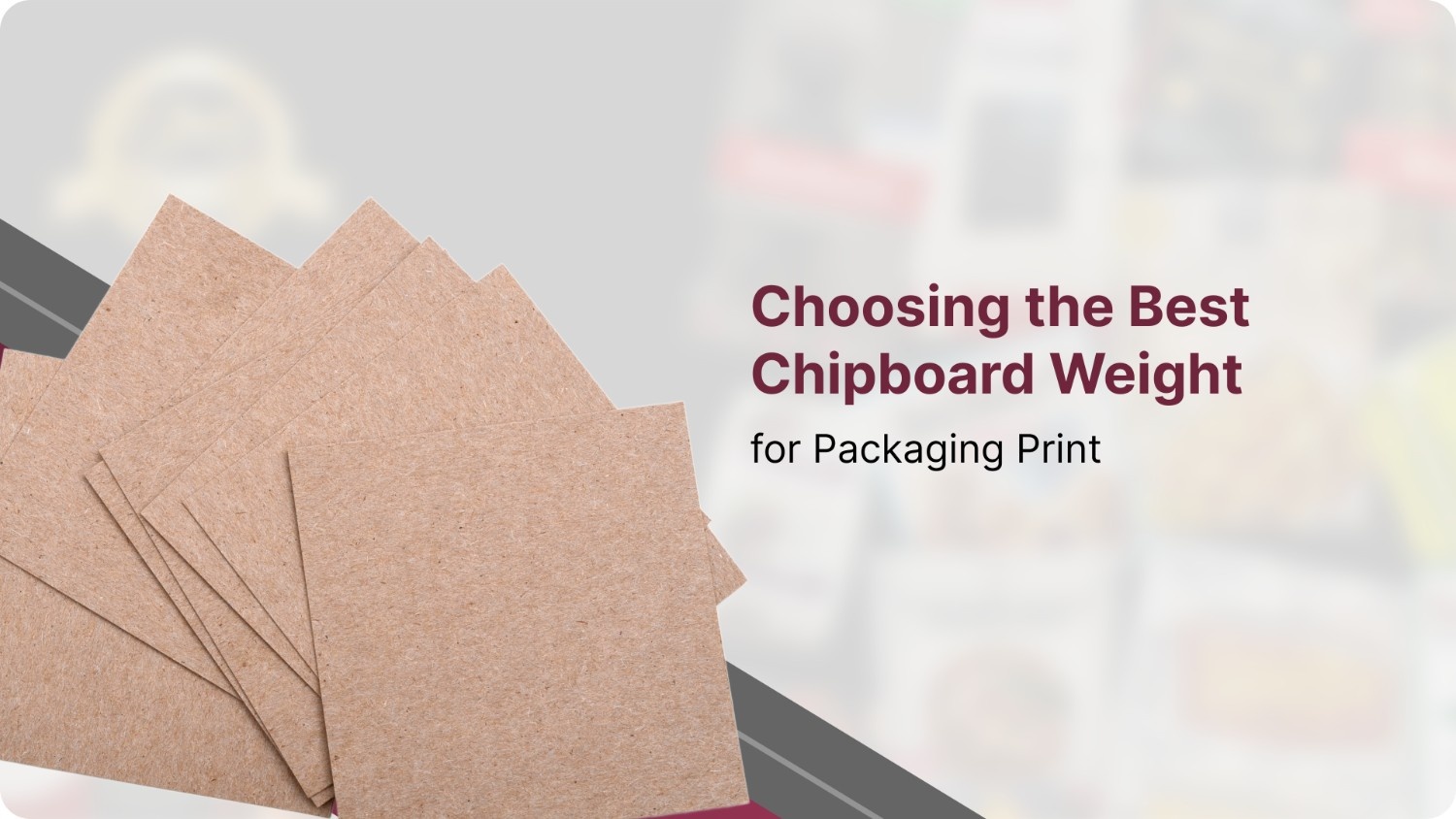
Chipboard is a single-layer paperboard made from compressed recycled paper fibers.
It has a dense, smooth surface that prints cleanly and folds neatly, making it ideal for retail cartons, inserts, and lightweight product boxes.
Because it is thinner and lighter than corrugated board, chipboard supports compact packaging that saves space and shipping weight.
Common applications include cosmetics, pharmaceuticals, cereal boxes, and retail displays.
Cardboard (Corrugated or Heavy Paperboard)
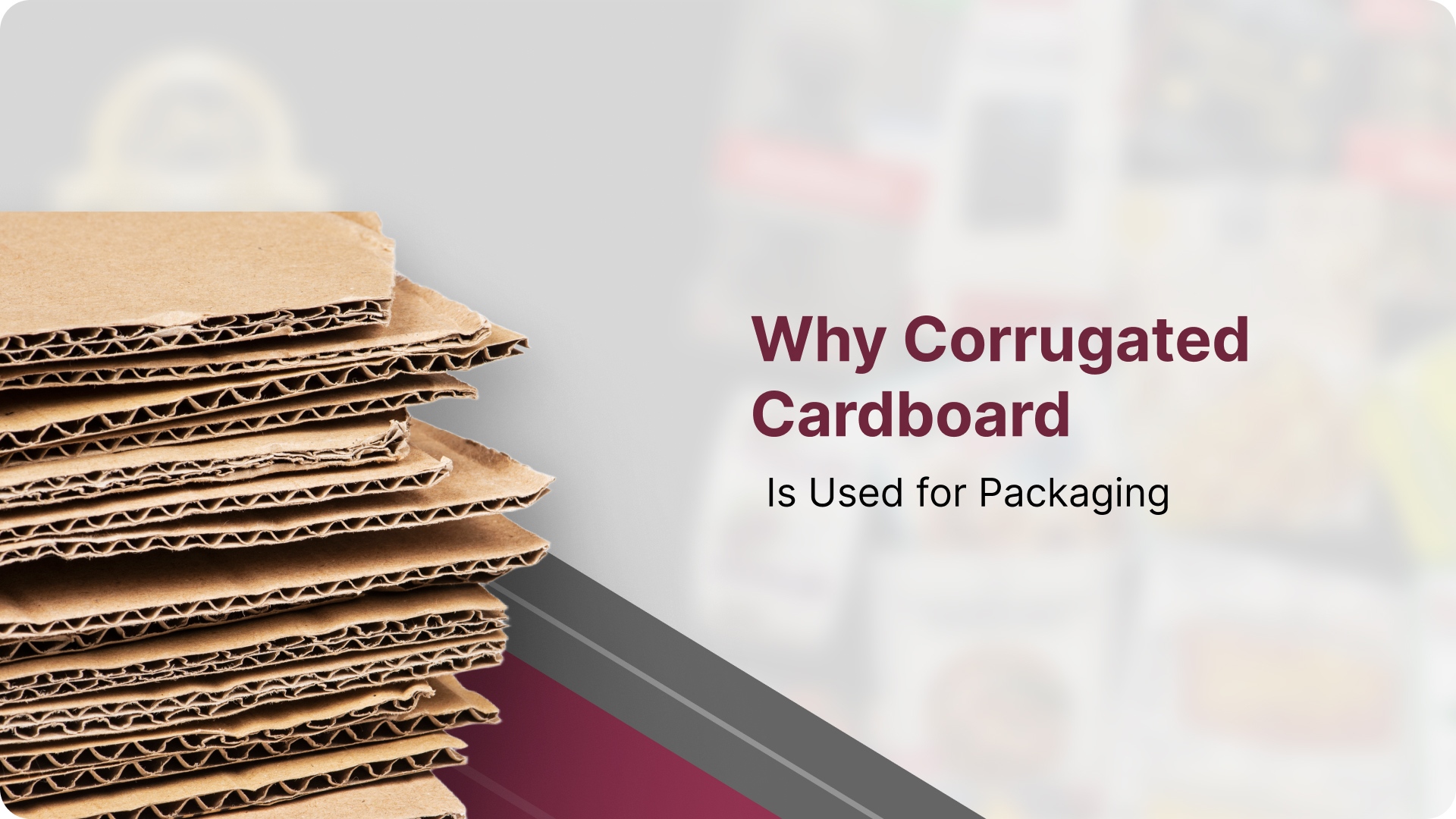
“Cardboard” is a broad term that often refers to corrugated fiberboard, a material made from multiple layers, including fluted inner sheets that create air pockets for cushioning.
This structure provides rigidity, impact resistance, and stacking strength, making it suitable for shipping boxes, logistics packaging, and industrial use.
In some contexts, “cardboard” can also describe heavier grades of paperboard used for premium packaging or outer sleeves.
Why Terminology Matters
The word cardboard is widely used in everyday language but is not a technical classification.
Misunderstanding the term can lead to over- or under-specifying material requirements, which affects both cost and product safety.
Knowing whether a supplier means corrugated cardboard or solid paperboard helps procurement teams make accurate purchasing and design decisions.
GMS Industries supports packaging engineers and brand teams by clarifying these distinctions early in the design process, ensuring that every box, carton, or display is built from the most suitable material for its purpose.
Material Properties Compared: Strength, Rigidity, Weight, and Surface Finish
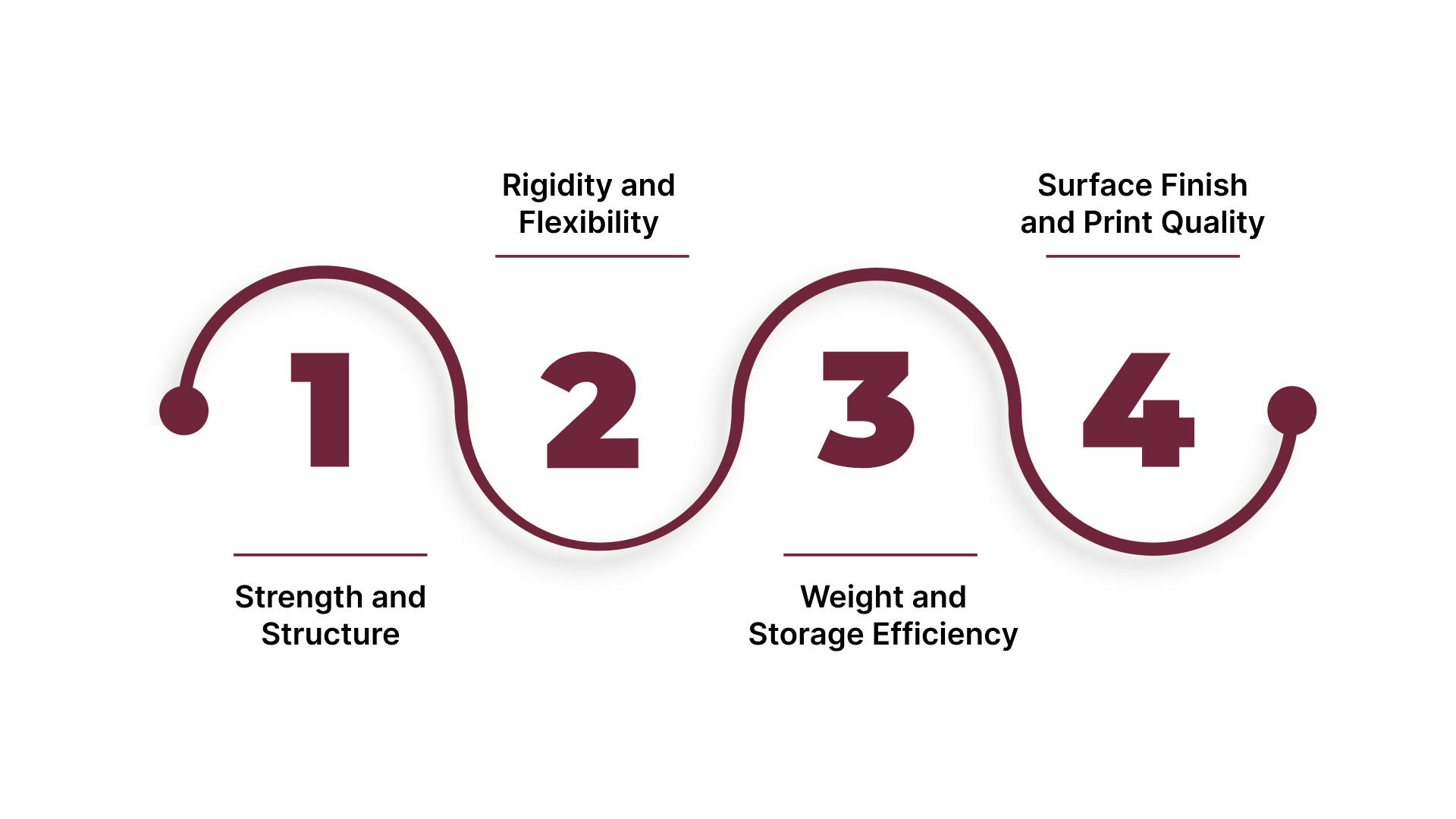
Understanding the physical differences between chipboard and cardboard helps businesses choose the right packaging for protection, presentation, and cost control.
1. Strength and Structure
Chipboard is a single-ply board made from compressed paper fibers. It is flat and rigid but lacks internal fluting, so it offers minimal cushioning. It performs well for light to medium-duty packaging where protection from drops or compression isn’t critical.
Cardboard, especially corrugated, has three or more layers, including a wavy (fluted) core. This creates air gaps that absorb impact, resist bending, and allow stacking without deformation. It’s preferred for heavy, fragile, or shipping-intensive applications.
2. Rigidity and Flexibility
Chipboard folds cleanly, making it suitable for die-cut packaging with precise edges and creative shapes. Cardboard resists bending, making it ideal for structural strength but less flexible for fine design details or tight folds.
3. Weight and Storage Efficiency
Chipboard is lighter and takes up less storage space. This reduces shipping costs for high-volume, low-weight items. Cardboard, with its layered build, is heavier but offers better load-bearing capacity, allowing products to be stacked and transported securely.
4. Surface Finish and Print Quality
Chipboard: Smooth, even surface, ideal for high-resolution graphics, branding, and premium finishes.
Cardboard: Coarser texture, especially in corrugated formats; can still be printed, but typically requires coated liners or digital finishing for detailed designs.
In short, chipboard favors aesthetics and compactness, while cardboard prioritizes protection and strength.
GMS Industries works with both materials, guiding clients toward the best balance of strength, cost, and appearance based on product weight, transport distance, and brand requirements.
Practical Use Cases: When to Use Chipboard vs When Cardboard Wins
Different packaging applications demand different performance characteristics. Below are practical scenarios that help decision-makers select the right board type.
Application Area | Best Material | Reason |
Retail Packaging | Chipboard | Smooth surface, precise folding, premium look for branded cartons. |
Shipping & Logistics | Cardboard | High strength, impact resistance, and stackability. |
Product Inserts / Partitions | Chipboard | Compact, easy to cut, ideal for lightweight inner supports. |
Industrial & Bulk Packaging | Cardboard | Handles heavy loads, suitable for long-distance transport. |
Cosmetic or Specialty Packaging | Chipboard | Allows detailed printing and shaped die-cuts. |
E-commerce & Subscription Boxes | Cardboard | Provides product protection and dimensional stability. |
Business Insight:
Chipboard performs best in controlled retail environments, where packaging serves branding and shelf presentation.
Cardboard excels in distribution and fulfillment, where protection and stacking strength outweigh appearance.
GMS Industries helps clients integrate both materials in a single packaging strategy, using chipboard for product presentation and corrugated cardboard for outer shipping cartons.
This hybrid approach optimizes cost, sustainability, and performance, especially for brands balancing e-commerce and in-store distribution.
Cost, Efficiency, and Supply-Chain Considerations for Businesses
Packaging decisions influence more than product appearance; they shape production efficiency, shipping cost, storage space, and material sustainability.
Here’s how chipboard and cardboard differ from an operational and financial perspective.
1. Material and Production Costs
Chipboard is generally less expensive to produce because it uses recycled fibers and less raw material.
It’s ideal for companies managing high-volume, low-weight packaging or short-run product lines.
Cardboard, especially corrugated, costs more due to multi-layer construction but provides greater protection per unit.
This can reduce hidden costs from product damage, returns, and replacements during shipping.
Key takeaway: Cardboard may carry a higher upfront cost, but often results in lower total landed cost for heavy or fragile goods.
2. Handling, Storage, and Logistics
Chipboard saves warehouse space; its flat sheets store easily and weigh less.
It’s efficient for retail packaging and in-house assembly lines where protection demands are low.Cardboard requires more space but enables secure stacking and palletization, critical in large-scale distribution or export shipping.
Companies often use both materials together, chipboard for inner packaging and cardboard for shipping, to balance volume efficiency and product protection.
3. Print Efficiency and Branding
Chipboard’s smooth surface supports high-quality printing, coatings, and custom finishes.
This makes it ideal for product packaging that represents a brand on the shelf.
Cardboard, though less smooth, is still printable using coated liners or digital processes, suitable for branded shipping boxes or display-ready packaging.
GMS Industries helps brands align print quality with production scale, ensuring that design and cost objectives are met without compromising durability or lead time.
4. Sustainability and Waste Reduction
Both materials are recyclable and often produced from recycled paper.
However, chipboard usually contains a higher recycled content, making it suitable for sustainability-focused brands.
Cardboard, while sometimes using more virgin pulp, can be reused multiple times, an advantage in closed-loop logistics.
Common Misconceptions & Terminology Traps: What Buyers Should Watch Out For
Even experienced buyers can misinterpret board types, leading to costly or impractical packaging choices.
Here are some misconceptions worth clarifying before finalizing specifications.
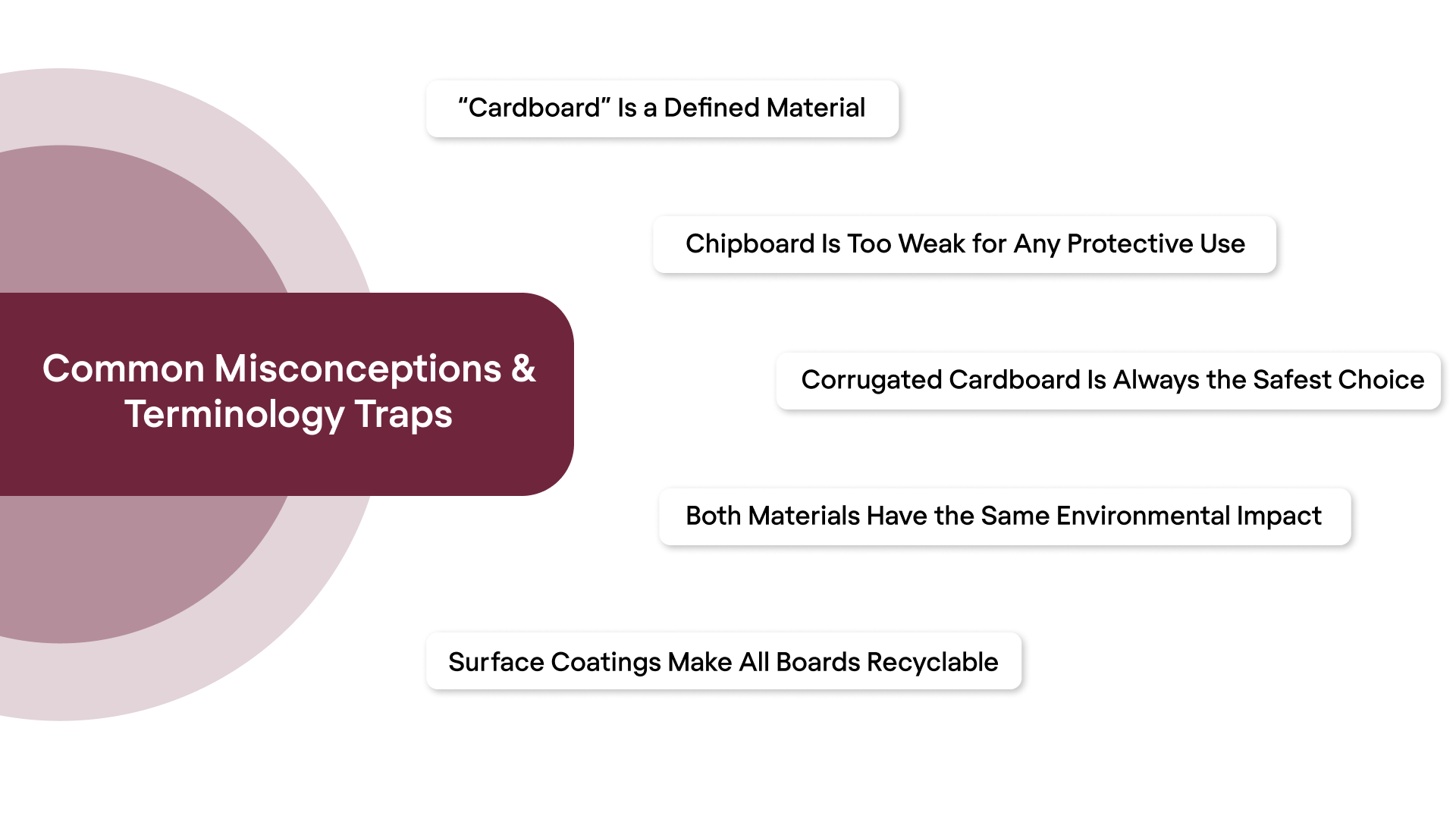
1. “Cardboard” Is a Defined Material
In reality, cardboard is a generic word. It can describe corrugated fiberboard, paperboard, or even chipboard, depending on context.
This ambiguity often causes mismatched supplier quotes or incorrect performance expectations.
Tip: Always confirm the exact board type, “chipboard,” “paperboard,” or “corrugated”, when sourcing packaging materials.
2. Chipboard Is Too Weak for Any Protective Use
Not true. While chipboard isn’t meant for heavy shipping, it performs well as inner packaging, retail cartons, and product sleeves. Its dense, smooth structure protects against scratching and surface wear, especially for cosmetics, electronics, or folding cartons.
3. Corrugated Cardboard Is Always the Safest Choice
Over-specifying packaging can waste material and increase cost. If your product is light, compact, or sold in bulk displays, chipboard can meet requirements at a lower cost and weight.
4. Both Materials Have the Same Environmental Impact
While both are recyclable, their environmental footprints differ. Chipboard often contains a higher percentage of post-consumer recycled fiber, while corrugated cardboard offers reusability and return logistics benefits for closed-loop systems.
5. Surface Coatings Make All Boards Recyclable
Coatings, laminates, or metallic finishes can affect recyclability. GMS Industries helps clients choose eco-compliant coatings and finishes that maintain recyclability while improving presentation.
Quick Decision Checklist for Buyers
Factor | Choose Chipboard If | Choose Cardboard If |
Product Weight | Lightweight (under 1–2 lb) | Medium to heavy (2 lb+) |
Primary Purpose | Retail packaging or inserts | Shipping, storage, bulk handling |
Branding Need | High-quality printing and finish | Functional labeling and protection |
Cost Focus | Reducing material and shipping costs | Reducing product damage and returns |
Sustainability Goal | High recycled content | Reusable/recyclable outer packaging |
Handling Condition | Controlled, indoor environments | Rough handling, long-distance transport |
Conclusion
The debate between chipboard and cardboard is not about which is better; it’s about which is better suited to your product, shipping route, and brand priorities.
Each material plays a distinct role:
Chipboard supports clean printing, creative designs, and lightweight protection for retail and cosmetic goods.
Cardboard delivers structural strength and impact resistance for shipping, storage, and bulk transport.
Choosing correctly helps reduce costs, prevent damage, and meet sustainability standards.
When managed together through a full-service partner, both materials can work in harmony, chipboard for presentation and cardboard for protection.
Packaging should support operations, not complicate them.
GMS Industries combines chipboard precision with cardboard strength, helping businesses create packaging that looks good, performs well, and delivers reliably, every time.
Ready to optimize your packaging materials?
Connect with GMS Industries to explore customized chipboard and cardboard solutions built for your products and processes.
Frequently Asked Questions
Q1. What’s the main difference between chipboard and cardboard?
Chipboard is a single-layer, dense paperboard used for retail packaging. Cardboard, often corrugated, has multiple layers and provides more strength for shipping.
Q2. Is chipboard the same as corrugated cardboard?
No. Chipboard is flat and smooth; corrugated cardboard has a fluted middle layer for cushioning and load-bearing strength.
Q3. Which is stronger, chipboard or cardboard?
Cardboard is stronger and more impact-resistant. Chipboard is lighter and better for folding cartons and product displays.
Q4. Which is more eco-friendly?
Both are recyclable, but chipboard typically contains higher recycled fiber content.
Q5. Can I print directly on both materials?
Yes. Chipboard offers a smoother surface for detailed printing, while cardboard may require coated liners for clear graphics.
Q6. Which material is more cost-effective?
Chipboard is cheaper for lightweight, short-distance packaging. Cardboard offers better long-term value for shipping and storage.