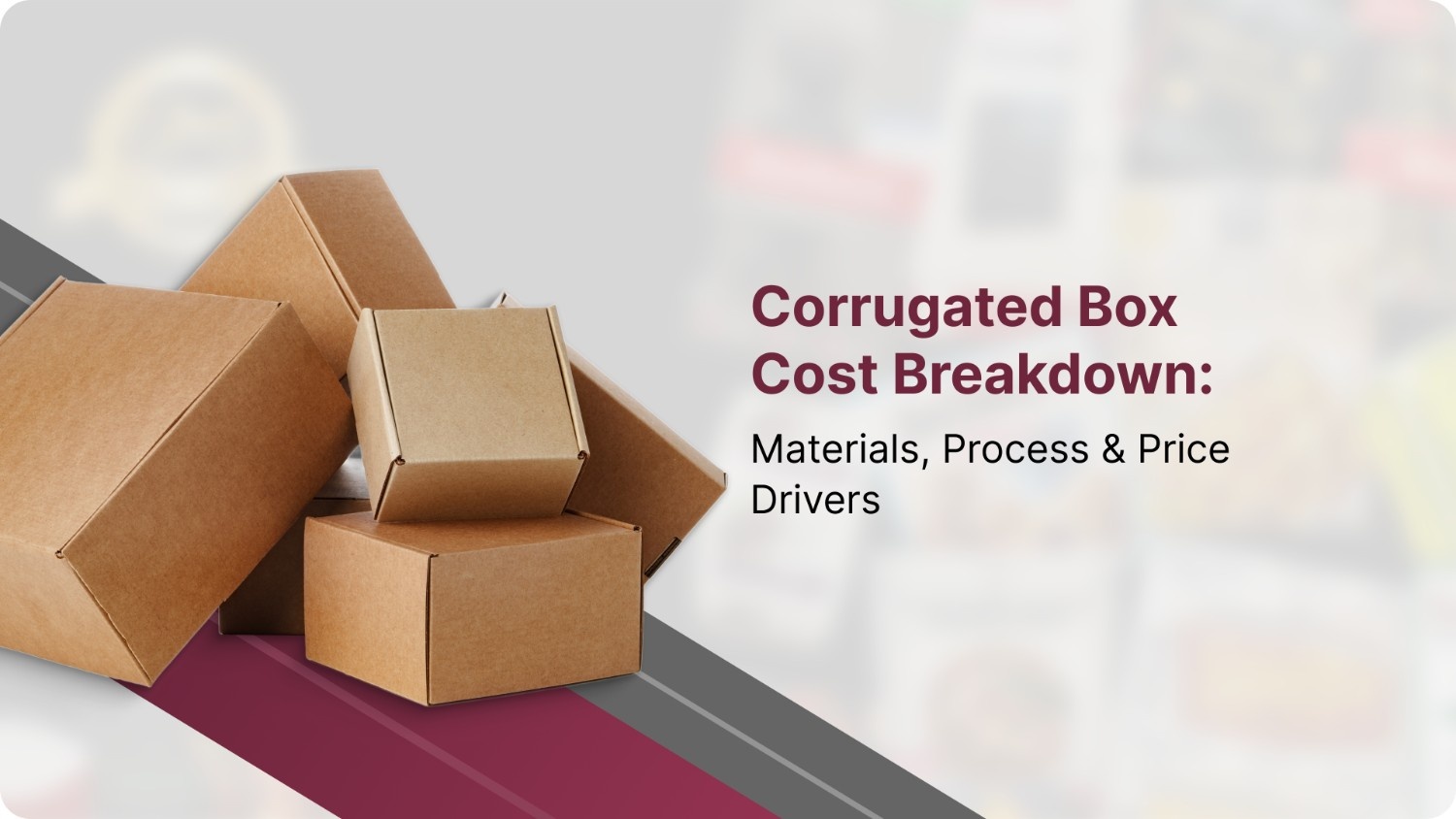
Corrugated boxes may look simple, but the cost behind each unit is shaped by a wide mix of inputs, from raw material pricing to manufacturing steps, tooling, labor, overhead, freight, and order quantity. As containerboard prices fluctuate and packaging demand continues to rise across e-commerce, food, healthcare, electronics, and retail, understanding how box pricing works has become essential for procurement teams and growing businesses.
A clear cost breakdown helps companies compare suppliers more effectively, avoid overpaying for unnecessary specifications, and make smarter decisions about board grade, printing, order volumes, and packaging structure. This guide explains the true cost components behind corrugated boxes and how each one affects the final price you pay.
TL;DR
Material is the largest cost component in corrugated boxes and typically drives more than half of the final price.
Manufacturing steps, corrugating, cutting, printing, gluing, add machine time, labor, and energy costs.
Tooling and setup have a major impact on small-order pricing.
Order quantity significantly influences per-unit cost through economies of scale.
Structural complexity, printing, and freight can shift pricing more than many buyers expect.
What Determines the Cost of a Corrugated Box
While suppliers have their own costing methods, the underlying structure is similar across the packaging industry. A corrugated box’s final price is shaped by a combination of material usage, production time, tooling, labor, plant overhead, and freight. The more complex the design or printing, the higher the setup and production cost.
The core factors include:
Materials (linerboard, fluting, GSM, board grade)
Manufacturing processes (corrugating, cutting, printing)
Tooling and setup (dies and plates)
Order quantity (economies of scale)
Structural design complexity
Printing and finishing
Labor, energy, and overhead
Freight and delivery distance
Each of these contributes a measurable portion to the total cost, and understanding them helps businesses make more informed purchasing and budgeting decisions.
Material Costs: The Biggest Cost Driver
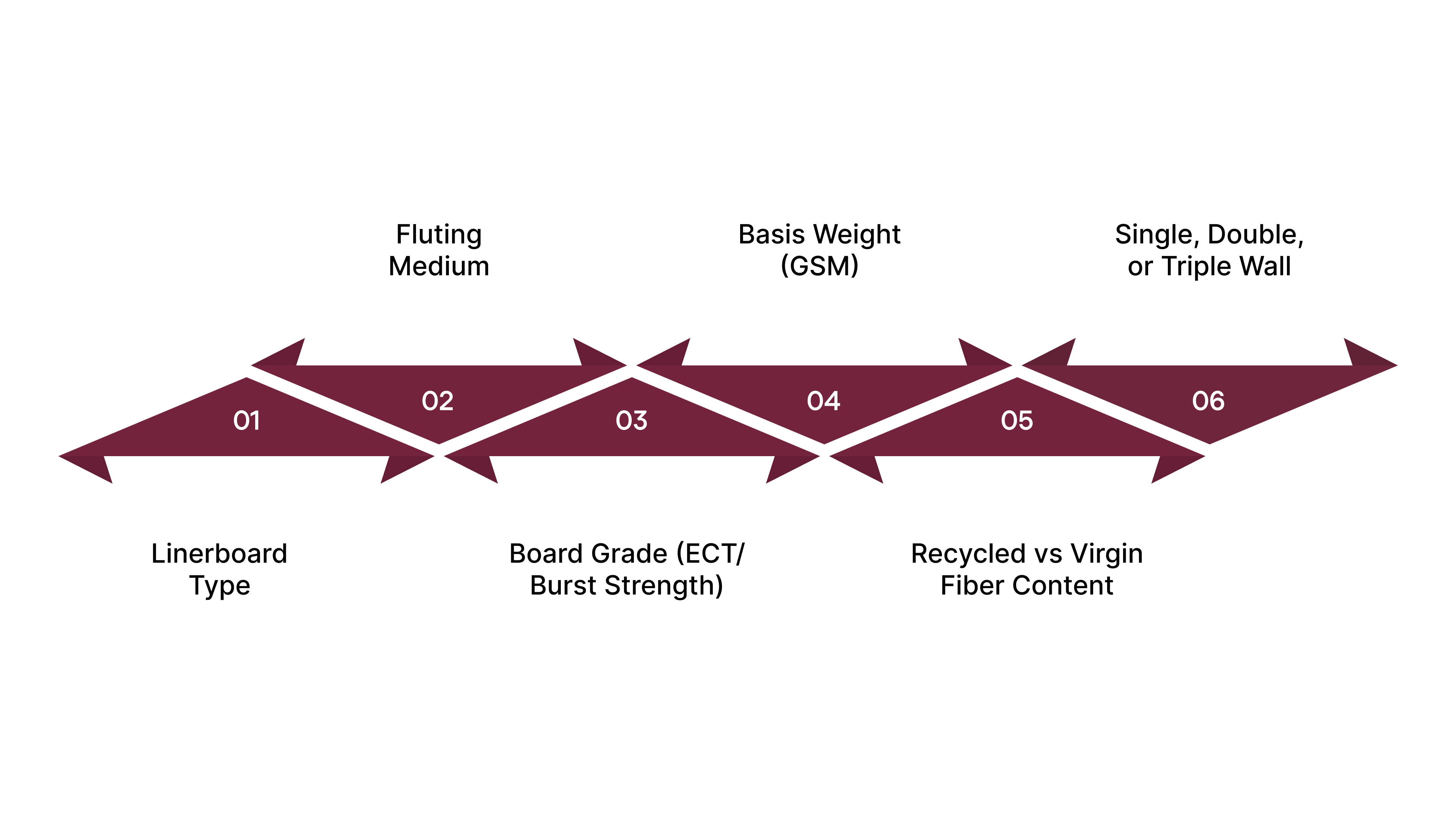
Material cost is almost always the largest part of a corrugated box’s price. The cost depends on the type of paper used, the structure of the board, and the performance requirements of the application.
1. Linerboard Type
Corrugated boxes use two types of liners:
Kraft liner is made from virgin fibers, which costs more due to its strength, moisture resistance, and clean appearance.
Testliner is made from recycled fibers, which is more economical and widely used for standard shipping boxes.
The choice between Kraft and Testliner influences both strength and price.
2. Fluting Medium
The wavy middle layer (the medium) varies in weight and quality. Heavier or stronger mediums increase durability and cost. Flute profiles, A, B, C, E, F, also affect strength, cushioning, and price.
3. Board Grade (ECT/Burst Strength)
Higher-strength grades require more fiber, increasing material cost. For example:
Common e-commerce boxes use 32 ECT.
Heavy-duty packaging may require 44 ECT, 48 ECT, or double-wall grades.
4. Basis Weight (GSM)
Higher GSM increases the amount of fiber per square meter, raising the cost. Selecting the right GSM prevents over-specification.
5. Recycled vs Virgin Fiber Content
Virgin fiber costs more; recycled fiber is more economical. Many boxes blend the two depending on strength requirements.
6. Single, Double, or Triple Wall
Adding more layers increases strength but significantly raises material usage and cost.
Material alone can represent more than half of the box’s total cost, which is why board grade, liner choice, and optimized sizing matter so much.
Manufacturing Process Costs
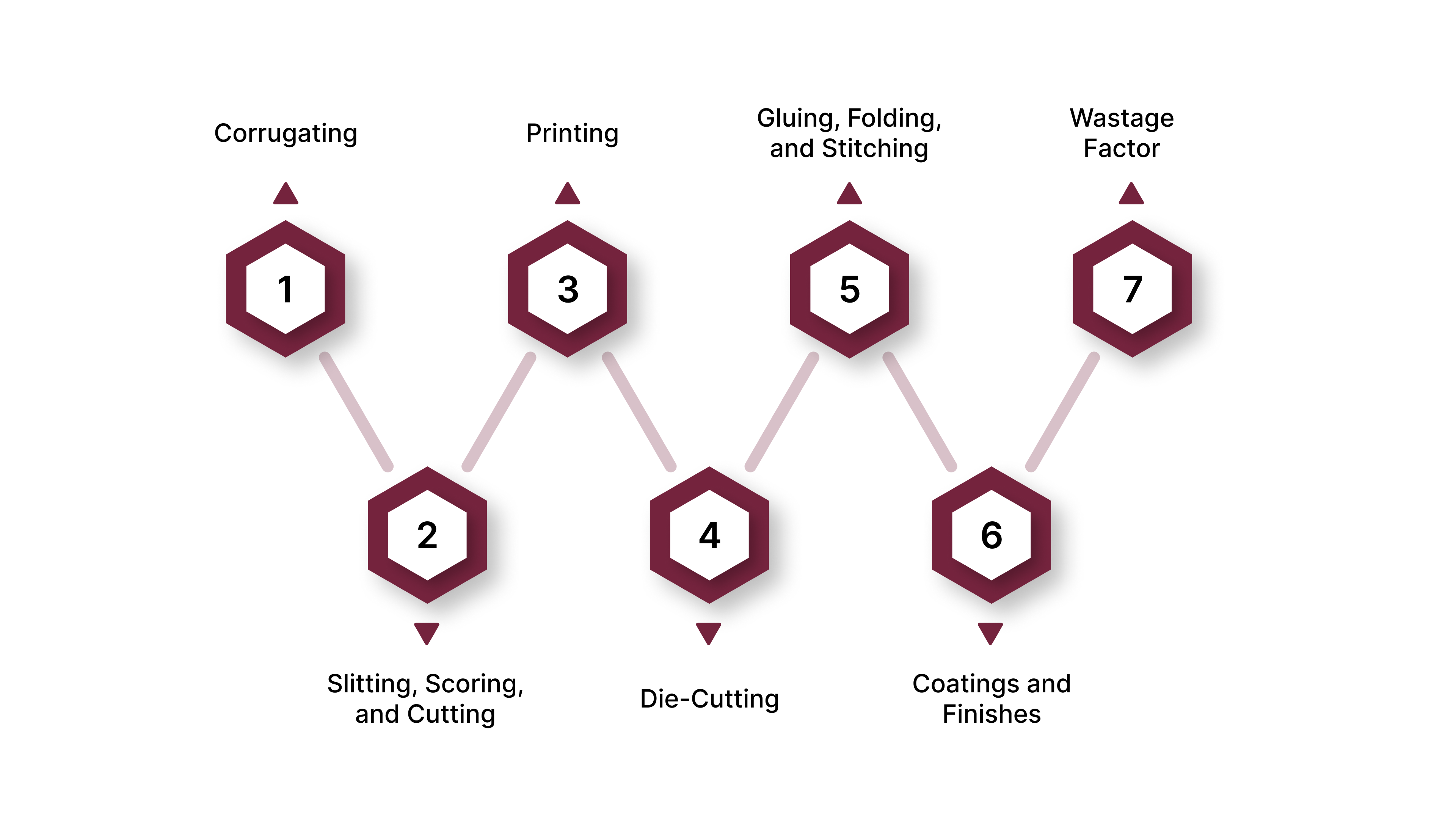
Beyond material, the manufacturing process plays a major role in determining the final price of a corrugated box. Each stage of production involves labor, machine time, setup, adhesives, inks, and energy. The more complex the process, the higher the cost.
Here’s how each step contributes:
1. Corrugating
This is where linerboard and fluting medium are bonded together using heat, pressure, and starch adhesive. Corrugators run at high speeds, but they consume significant energy, require skilled operators, and incur steady maintenance costs. Any change in paper quality or humidity can affect performance, which impacts setup time and wastage.
2. Slitting, Scoring, and Cutting
Once the corrugated board is produced, it is cut and scored into panels. Simple RSC boxes move through quickly and efficiently. More complex cuts, tighter tolerances, or multi-out layouts slow down production and add cost.
3. Printing
Printing is one of the biggest variables in manufacturing cost. Factors that influence cost include:
Number of colors
Ink coverage
Print resolution
Print method (flexo, digital, litho-laminate)
Flexographic printing is the most economical, while digital offers flexibility at a higher unit cost. Litho-laminate delivers high-end finishes but is the most expensive due to plates, laminates, and slower production speeds.
4. Die-Cutting
Die-cut mailers, self-locking structures, and specialty shapes require steel-rule dies and additional setup. While efficient at scale, die-cutting increases per-unit cost for smaller runs.
5. Gluing, Folding, and Stitching
Some box styles require simple single-point gluing, while others require multi-point gluing or stitching for added strength. Additional steps increase labor and machine time.
6. Coatings and Finishes
Moisture-resistant coatings, varnishes, or print protection layers add cost due to extra materials and curing or drying time.
7. Wastage Factor
Corrugated manufacturing involves unavoidable waste, often driven by machine setup, design complexity, sheet layout, or tight print tolerances. Higher complexity typically increases waste, which in turn raises material cost.
A “cheap” corrugated box often reflects shorter setup time, fewer manufacturing steps, minimal printing, simpler structure, and lower-grade materials, all of which reduce cost but may also reduce stacking strength, durability, or appearance.
Tooling and Setup Costs
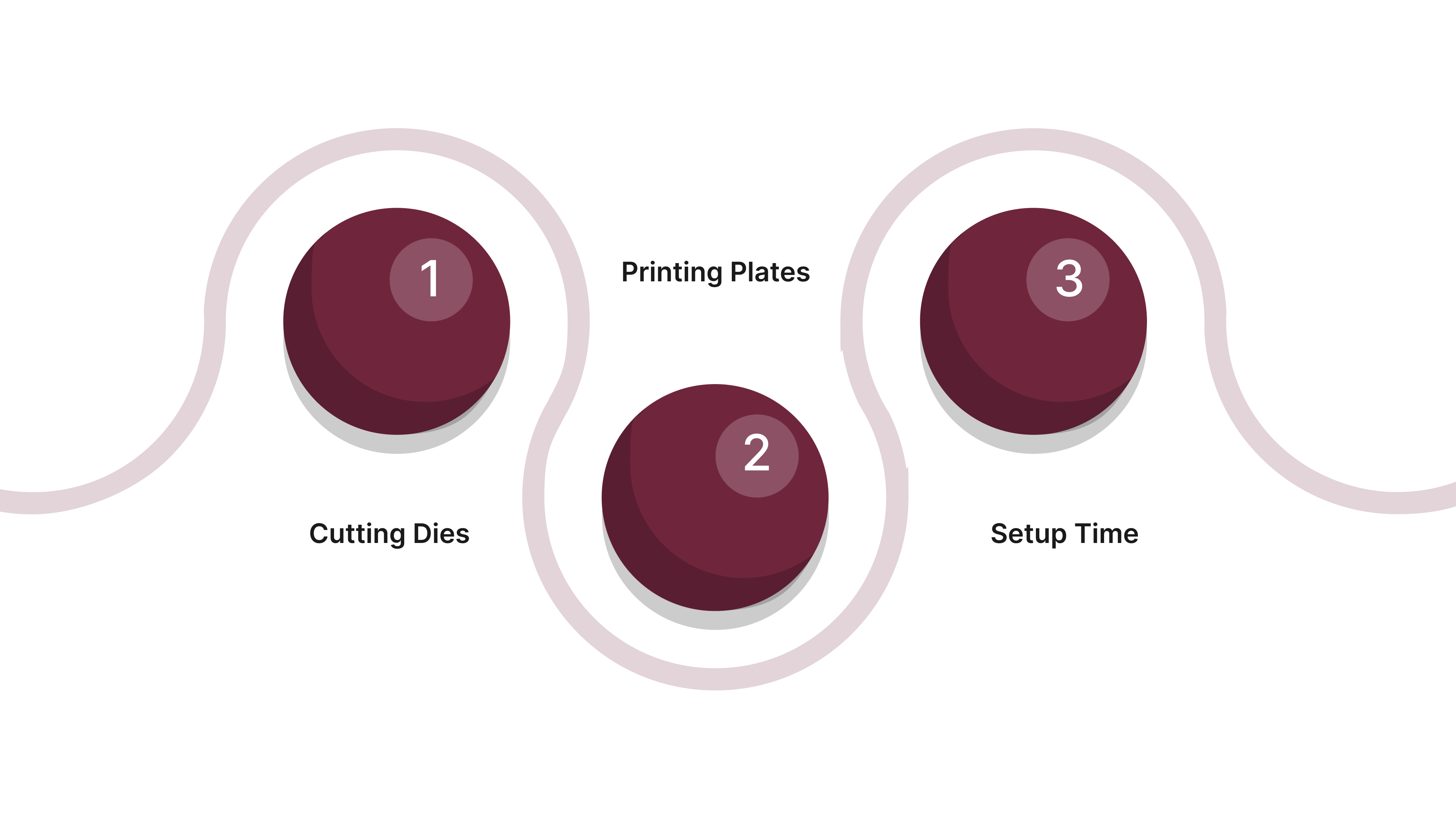
Tooling and setup are major contributors to small-order pricing. Even when the material or box design is simple, tooling costs must be absorbed across the order quantity.
1. Cutting Dies
Custom die-cut boxes require a steel-rule die. Dies vary in complexity and may include perforations, locking mechanisms, windows, or multiple cavities. These add a one-time cost that must be amortized across production volume.
2. Printing Plates
Flexographic printing requires one plate per color. Artwork with multiple colors requires multiple plates, increasing cost. Digital printing eliminates plate costs but carries a higher per-unit print rate for larger runs.
3. Setup Time
Machines must be calibrated for each job, mounting plates, adjusting knives, setting crease depth, aligning print, and testing samples. Setup time is nearly the same whether the order is 100 boxes or 10,000 boxes, which is why small volumes have a higher cost per unit.
Tooling becomes a smaller percentage of total cost as order volumes increase.
Order Quantity and Economies of Scale
Order volume is one of the strongest cost drivers in corrugated packaging. Large orders benefit from lower material waste, faster run speeds, and efficient amortization of setup and tooling. Small orders absorb the full setup cost across fewer units.
1. Fixed Costs vs Variable Costs
Fixed costs, like setup, dies, plates, and machine calibration, remain the same regardless of the number of boxes produced.
Variable costs, materials, labor, ink, and glue increase with volume.
As quantities increase, fixed costs are divided across more units, reducing the per-unit price.
2. Efficiency at Scale
Longer runs reduce stoppages, improve machine efficiency, and minimize waste. However, diminishing returns occur at very high volumes, where additional scale no longer significantly reduces unit price.
Practical Example
A medium single-wall shipping box might cost:
higher per unit in the 1–99 quantity range
slightly less in the 100–499 range
significantly less in the 500–999 range
lowest in 1,000+ quantities
The relationship is driven entirely by how fixed and variable costs spread across volume.
Box Style and Structural Complexity
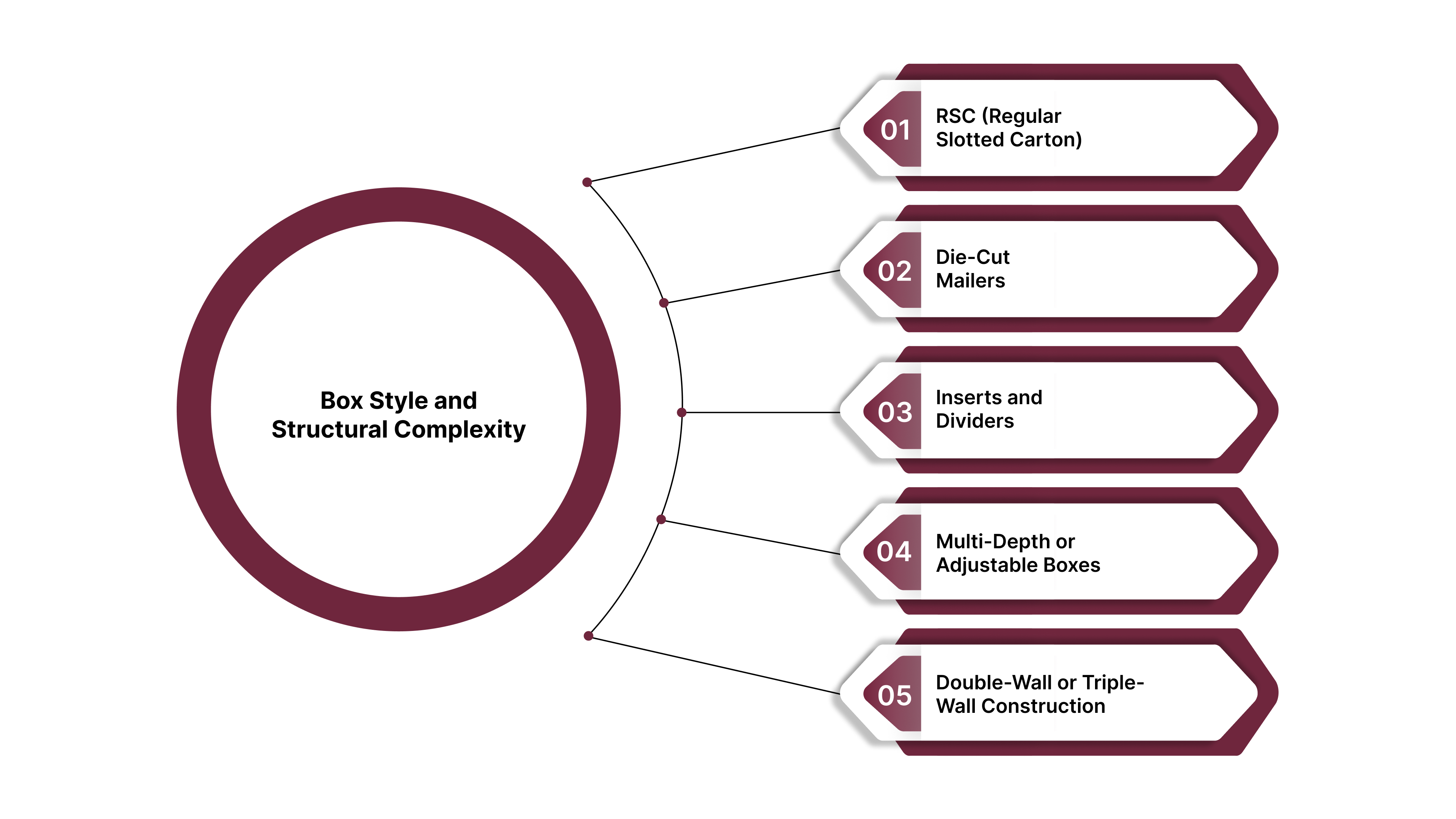
Different corrugated structures require different levels of material, tooling, and machine processing, which directly impact cost.
1. RSC (Regular Slotted Carton)
The most economical style. Efficient to produce and suitable for many shipping applications.
2. Die-Cut Mailers
Self-locking, custom-shaped, or e-commerce-style mailers require a cutting die and additional setup. They cost more per unit, especially at low volumes.
3. Inserts and Dividers
Custom internal components add extra material and separate manufacturing steps. They increase cost but improve product protection.
4. Multi-Depth or Adjustable Boxes
More complex scoring and cutting make these styles more expensive than standard RSC boxes.
5. Double-Wall or Triple-Wall Construction
Designed for heavy or industrial loads. These require significantly more material and higher-strength grades, which raises cost.
Structural complexity is one of the easiest ways to control or increase cost, depending on packaging requirements.
Printing and Branding Costs
Printing can significantly influence the final price of a corrugated box. Depending on the artwork, ink coverage, and print method, printing may be a small cost addition or a major one.
1. Number of Colors
Each ink color typically requires its own printing plate during flexographic printing. More colors increase plate cost and setup time.
2. Coverage and Artwork Complexity
Large solid areas, full-panel coverage, fine details, gradients, or tight registration slow down production and increase ink usage.
3. Print Methods
Flexographic printing is the most economical and widely used for shipping boxes.
Digital printing offers flexibility without plates but costs more per unit for mid- to high-volume orders.
Litho-laminate provides premium graphics but carries the highest cost due to plates, laminating sheets, and slower production cycles.
For many businesses, printing adds anywhere from a small increment to a noticeable increase, depending on complexity. A basic one-color logo adds minimal cost, while multi-color branding, panels, or retail graphics increase unit price.
Operational and Overhead Costs
Every box produced includes indirect costs that support manufacturing operations. These costs don’t appear as line items but are built into a supplier’s pricing.
1. Labor
Skilled operators run corrugators, die-cutters, printers, gluers, and material handling equipment. Labor contributes to the overall cost based on local wage rates, staffing levels, and plant scheduling.
2. Overhead
Overhead includes facility rent, maintenance, insurance, administration, compliance, safety equipment, machine depreciation, and quality control systems. Plants with newer or highly automated equipment often operate more efficiently but still carry substantial overhead.
3. Energy Usage
Corrugating consumes significant energy, heat for bonding liner and medium, power for drying, electrical load for motors, and air compression. Energy prices can meaningfully influence total production cost, especially for long-run jobs.
Labor, overhead, and energy costs tend to remain stable on a per-hour basis, but how efficiently a job runs (clean artwork, correct board grade, consistent sheet quality) affects how those costs spread across each unit.
Logistics and Freight Costs
Freight can make up a surprisingly large portion of corrugated box cost because corrugated packaging is bulky, even when delivered flat.
1. Distance and Fuel
The farther the plant is from the delivery point, the higher the freight cost. Fuel price fluctuations also impact shipping fees.
2. Truckload Utilization
Boxes ship flat, but large dimensions reduce how many units fit in a truck. Lower truck utilization increases per-unit shipping cost.
3. Lead Time Pressure
Expedited shipments or split deliveries increase freight cost due to smaller loads or rush scheduling.
For many businesses, freight represents a meaningful portion of total packaging cost and is often reduced through strategic sourcing, choosing closer suppliers, or optimizing box dimensions.
Typical Corrugated Box Cost Breakdown (Example)
While exact percentages vary by design, order volume, and supplier capabilities, a typical cost breakdown for a standard corrugated shipping box looks like this:
Material: 55–70 percent
Manufacturing: 10–20 percent
Printing: 5–15 percent
Tooling and setup: 5–10 percent
Labor and overhead: 10–15 percent
Freight: 5–12 percent
This range represents common industry behavior and reflects how heavily corrugated pricing depends on material usage and order quantity. Manufacturing steps, printing complexity, and structural choices shift the remaining costs.
Estimated Cost Ranges for Common Corrugated Box Types
These tables provide realistic price ranges based on current U.S. market conditions. Values reflect typical industry averages and may vary by supplier, board grade, printing, and order volume.
1. Standard Shipping Box (RSC) – Single Wall
Typical uses: e-commerce, retail shipping, general fulfillment.
Size (L × W × H) | Cost per Unit (Plain, 1,000+ qty) |
Extra-small (6 × 6 × 6) | $0.55–$0.75 |
Small (12 × 9 × 4) | $0.65–$0.85 |
Medium (16 × 12 × 10) | $1.10–$1.40 |
Large (20 × 16 × 12) | $1.80–$2.30 |
2. Double-Wall Heavy-Duty Shipping Boxes
Used for industrial items, heavy components, and automotive parts.
Size | Cost per Unit (1,000+ qty) |
Small | $1.20–$1.60 |
Medium | $2.20–$3.00 |
Large | $4.50–$6.00 |
3. Custom Die-Cut Mailer Boxes
Used for e-commerce brands, subscription boxes, and retail presentation.
Size | Kraft (Each) | White (Each) |
Small | $0.70–$1.10 | $0.90–$1.40 |
Medium | $1.20–$1.70 | $1.40–$2.20 |
Large | $2.10–$2.70 | $2.40–$3.20 |
4. Eco-Friendly Corrugated Options
Recycled, FSC-certified, or low-impact fiber blends.
Size | Recycled Content | Premium Compostable |
Small | $0.80–$1.10 | $1.00–$1.30 |
Medium | $1.50–$2.10 | $2.10–$2.70 |
Large | $2.50–$3.50 | $3.50–$4.60 |
Notes
Adding printing generally increases cost by $0.20–$1.00, depending on colors and coverage.
Smaller quantities (under 500) often cost 20–40 percent more due to setup and tooling.
Cost-Reduction Strategies That Actually Work
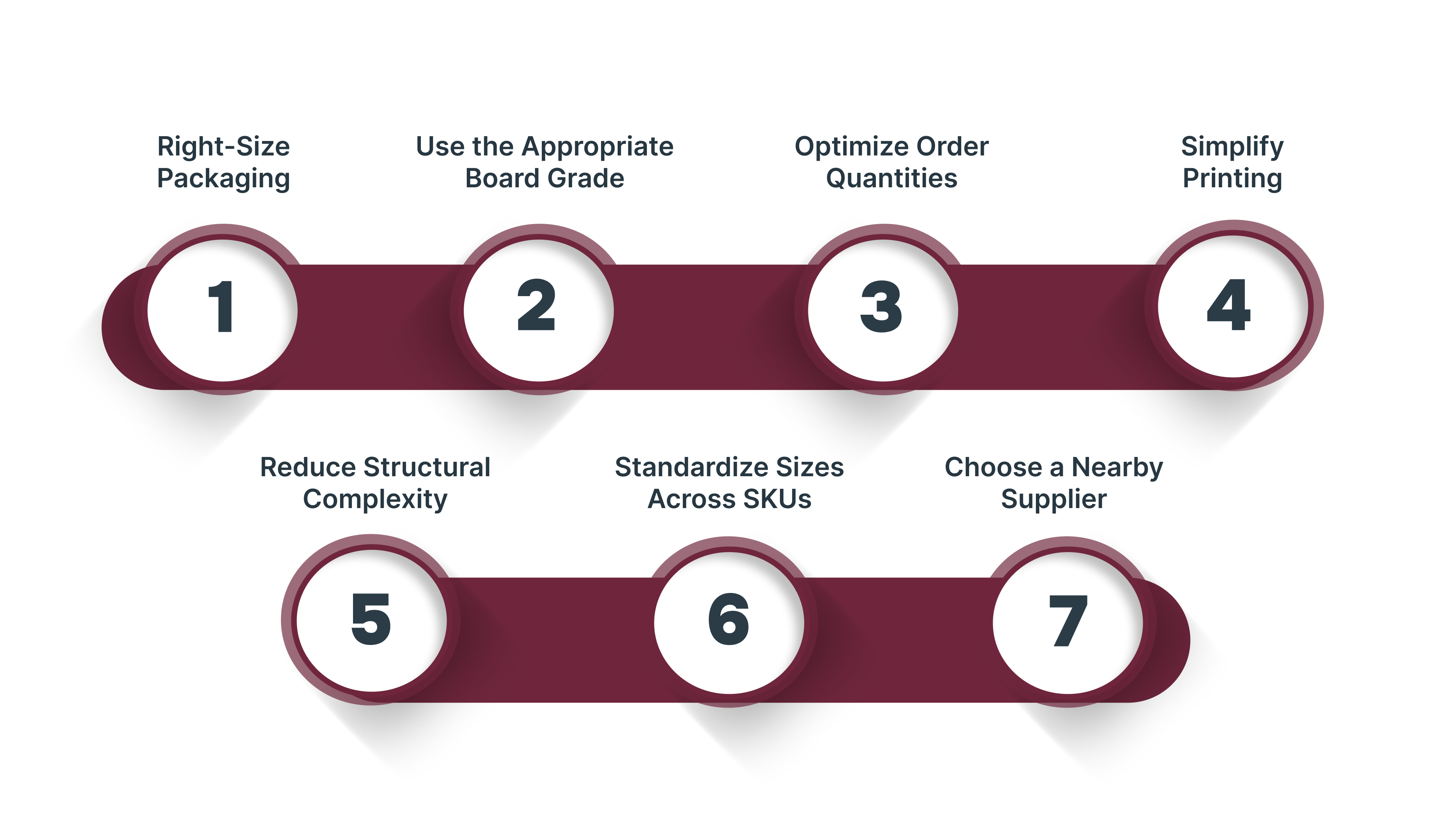
Many businesses overspend on corrugated packaging without realizing it. These strategies focus on lowering cost without reducing protection or performance.
1. Right-Size Packaging
Oversized boxes use more fiber, cost more to ship, and reduce pallet efficiency. A correctly sized box immediately cuts material and freight costs.
2. Use the Appropriate Board Grade
Switching from a higher-than-needed grade (for example, 44 ECT when 32 ECT is sufficient) can lower costs meaningfully. Many businesses unknowingly over-specify.
3. Optimize Order Quantities
Ordering in runs of 1,000+ usually reduces per-unit pricing by 20–30 percent due to economies of scale.
4. Simplify Printing
Reducing colors, coverage, or switching from litho to flexo can significantly lower cost.
5. Reduce Structural Complexity
An RSC is usually cheaper than a custom die-cut mailer. Evaluate whether the structure actually needs a custom die or premium closure.
6. Standardize Sizes Across SKUs
Using the same box footprint for multiple products improves supplier efficiency and reduces unit cost.
7. Choose a Nearby Supplier
Freight can add 5–12 percent to the total cost. A closer domestic partner reduces shipping expense and lead time.
These strategies provide immediate cost optimization while keeping performance intact.
How Suppliers Typically Build a Corrugated Box Quote
Understanding how manufacturers assemble a quote helps buyers negotiate better and avoid unnecessary cost increases.
1. Material Consumption
The supplier calculates the exact board area needed per box, multiplied by the current cost of linerboard and medium. This is the base cost.
2. Board Grade Requirements
Higher ECT or burst strength raises material cost. Double-wall and triple-wall multiply costs significantly.
3. Manufacturing Time
Corrugator time, die-cutting, printing, folding, gluing, and inspection each add machine and labor costs.
4. Setup and Tooling
Dies, plates, artwork prep, and machine setup time are amortized into the order price.
5. Print Method
Flexo is economical. Digital adds flexibility but is costlier. Litho-lamination is premium.
6. Freight Calculation
Distance, truck utilization, and fuel influence the final delivered cost.
7. Margin
Manufacturers apply a margin that accounts for plant overhead, risk, and customer service.
Understanding these elements allows businesses to ask precise questions, compare quotes accurately, and select the right supplier.
Why Many Businesses Prefer Working with GMS Industries
While the U.S. packaging market includes many large suppliers, businesses seeking dependable communication, quick turnaround, and tailored corrugated solutions often prefer working with a specialized, service-driven partner like GMS Industries.
What Makes GMS a Strong Choice
Custom-focused corrugated boxes: Designed for exact specifications rather than one-size-fits-all catalog boxes.
Flexible runs: Supports small and mid-volume orders that large integrated plants often deprioritize.
Fast response and reliable lead times: A major advantage for growing businesses that need consistency.
Hands-on design support: Helps customers avoid over-specifying board grades, saving material cost.
Integrated offerings: Corrugated, chipboard, labels, instruction sheets, and POP displays, all under one roof.
Strong customer relationships: Long-term clients value responsiveness, clear communication, and consistency.
Unlike large conglomerates that focus on mass production, GMS provides tailored service and packaging built around individual business needs, making it a preferred partner for cost-effective corrugated solutions.
Conclusion
A corrugated box may look simple, but its final cost reflects material usage, board grade, manufacturing steps, tooling, printing, labor, overhead, and freight. Once you understand what drives cost, it becomes much easier to compare quotes, optimize specifications, and avoid paying for unnecessary upgrades.
Right-sizing packaging, choosing the correct board grade, simplifying printing, and optimizing order quantities can create meaningful savings without compromising performance. Supplier selection matters too. Large-scale manufacturers offer volume capacity, but many businesses benefit from working with a partner that supports custom runs, faster communication, and flexible order sizes.
GMS Industries is well-suited for companies looking for that balance. Its ability to deliver tailored corrugated boxes, manage mixed packaging needs, and maintain reliable service makes it a strong choice for businesses seeking cost-effective packaging with consistent quality. Get in touch!
FAQ
1. What is the biggest factor in corrugated box cost?
Material cost is the single largest contributor, often representing more than half of the final unit price. Board grade, GSM, and liner type have the strongest influence.
2. Why do small-volume box orders cost more?
Small orders absorb the same setup, tooling, and calibration costs as large orders. Since these fixed costs are spread across fewer units, the price per box increases.
3. How much does printing add to the cost of a corrugated box?
Basic one-color flexo adds very little. Multi-color artwork, high coverage, or premium methods (like litho-laminate) can add $0.20–$1.00 per unit depending on complexity.
4. Does using recycled material make boxes cheaper?
Recycled-content linerboard is generally more economical than virgin kraft. However, the difference varies with market conditions and required board strength.
5. How do I reduce corrugated packaging costs without reducing quality?
Right-size your packaging, choose the correct board grade, simplify printing, standardize sizes, and increase order quantities. Also consider working with a supplier that helps optimize specifications rather than just quoting board grades.
6. Is freight a major part of the corrugated box cost?
Yes. Corrugated boxes are lightweight but bulky, so freight commonly adds 5–12 percent to total cost. Local suppliers can help lower shipping expenses.