Selecting the right packaging material directly affects product protection, shipping cost, and customer experience.
Corrugated cardboard has become the preferred choice for many manufacturers and distributors because it balances strength, light weight, and flexibility. It supports reliable shipping, easier handling, and lower overall packaging costs.
This article explains why corrugated cardboard is widely used in business packaging and how its structure, performance, and sustainability benefits help companies improve operational stability and efficiency across their supply chain.
Key Takeaways:
Corrugated packaging protects more with less weight, keeping shipments safer and costs lower.
Its custom design and print flexibility help businesses align protection with brand presentation.
Made from recyclable materials, corrugated packaging supports sustainability goals without complexity.
A full-service partner like GMS Industries helps you turn packaging into an operational advantage.
What Is Corrugated Cardboard (vs. Standard Cardboard)
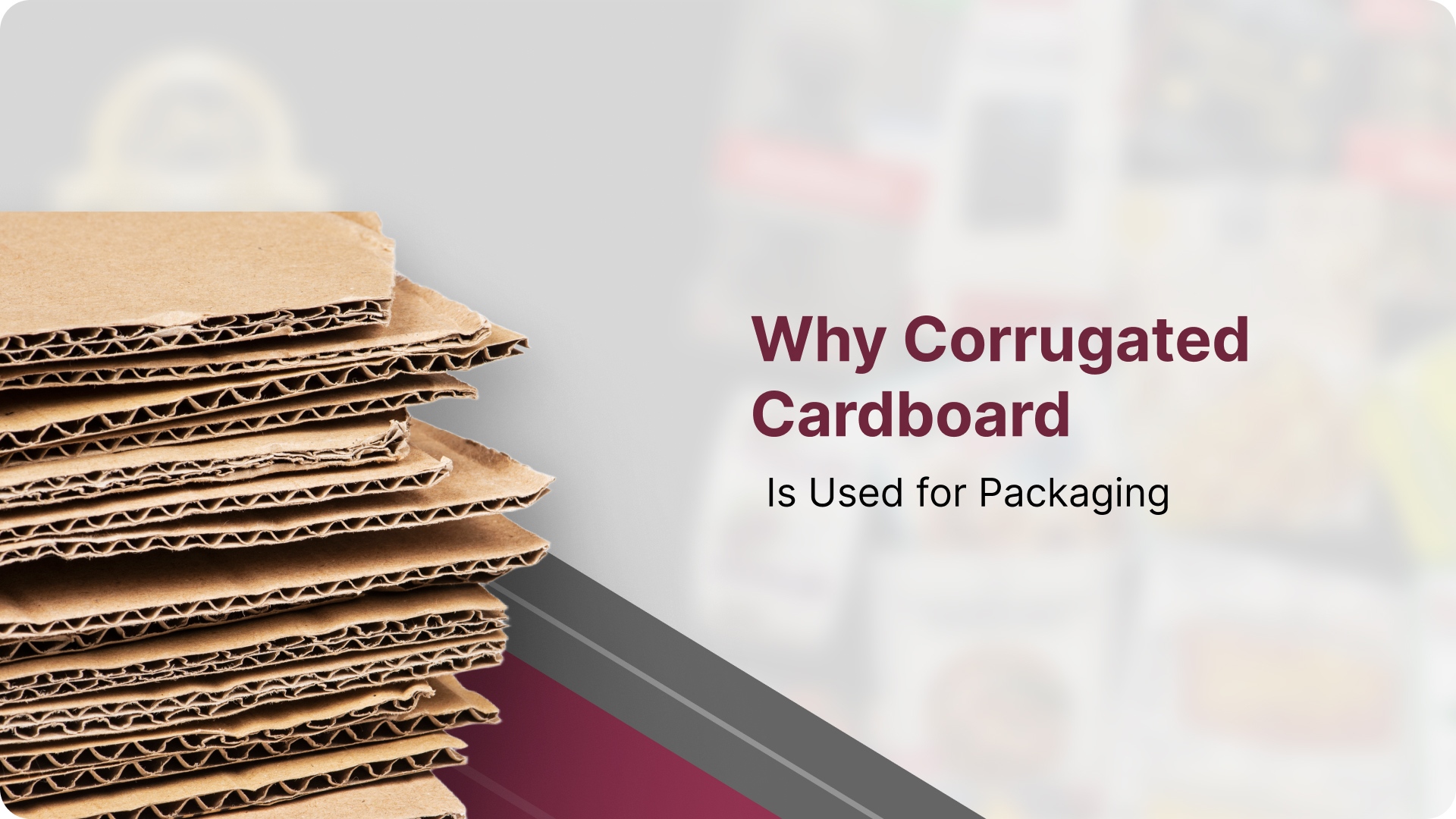
Corrugated cardboard is a multi-layered packaging material made from two flat sheets of linerboard enclosing a fluted inner layer. This fluted core creates rigidity and cushioning without adding unnecessary weight.
Unlike standard cardboard (single-layer paperboard used for lightweight retail boxes), corrugated material is built to endure mechanical stress during storage and transit.
Key differences include:
Structure: Corrugated includes a fluted middle layer for strength; standard cardboard is flat and less durable.
Performance: Corrugated withstands stacking, vibration, and impact better during shipping.
Application: Standard cardboard suits product displays or folding cartons, while corrugated is chosen for bulk, e-commerce, or industrial packaging.
This combination of strength and lightness helps reduce material waste while supporting consistent protection and shipping reliability.
Core Business Benefits of Corrugated Packaging
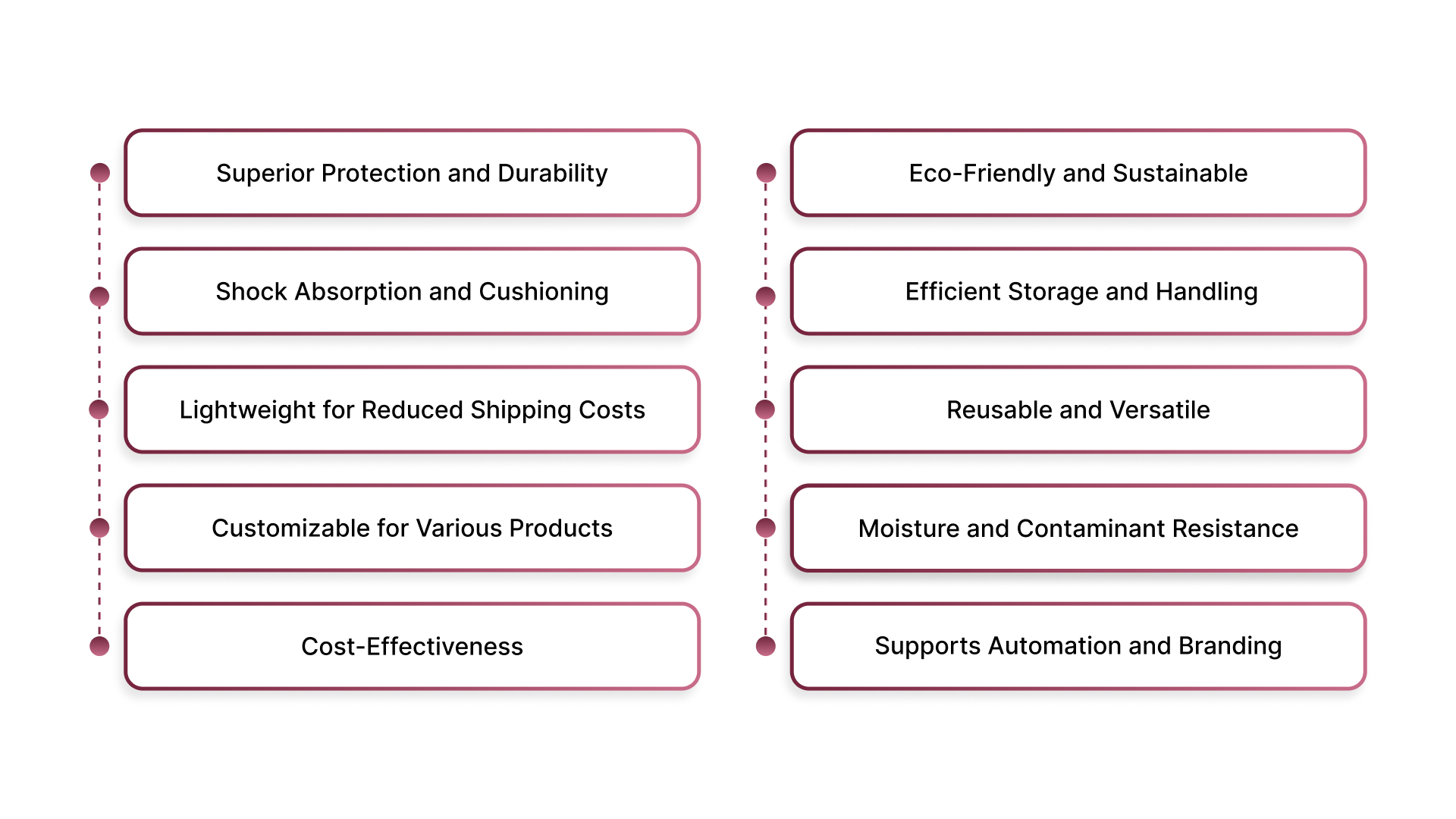
Corrugated packaging offers several measurable advantages that directly affect product safety, logistics efficiency, and total cost of ownership. Each benefit supports better stability and throughput in packaging, storage, and shipping operations.
1. Superior Protection and Durability
Corrugated boxes provide strong resistance to compression and impact. Their fluted middle layer absorbs force, reducing the risk of crushed or damaged goods during transit or stacking.
For manufacturing and logistics teams, this means:
Fewer damaged shipments and returns
Lower replacement and warranty costs
Improved customer satisfaction and brand reliability
Strong packaging also supports consistent lead times, as fewer shipments are delayed due to repacking or product loss.
2. Shock Absorption and Cushioning
The fluted structure of corrugated cardboard functions as a built-in shock absorber. It disperses pressure from handling or vibration across the box surface instead of transferring it to the product.
This natural cushioning helps protect:
Fragile or precision items during long-distance transport
Equipment components that cannot be exposed to vibration or impact
Packaged goods in automated distribution systems
Using corrugated materials can help reduce the need for additional fillers, lowering both material use and packing time.
3. Lightweight for Reduced Shipping Costs
Corrugated boxes are strong yet light. For many businesses, this translates to reduced freight costs and easier manual handling.
Key operational benefits include:
Lower cost per shipped unit
Less strain on packaging and transport staff
Higher stacking efficiency without structural compromise
When folded and stored flat before use, corrugated sheets also save warehouse space and streamline packing-line operations.
4. Customizable for Various Products
Corrugated packaging can be tailored to product dimensions, weight, and handling conditions. Businesses can choose from different flute profiles, wall strengths, or box designs to match load and transport requirements.
Examples of customization include:
Die-cut shapes for product fit and stability
Double-wall designs for heavier goods
Special coatings for moisture resistance
Printed surfaces for branding or regulatory labeling
This adaptability helps companies simplify procurement and reduce the need for multiple packaging types across product lines.
5. Cost-Effectiveness
Corrugated packaging delivers an effective balance of performance and cost.
Compared to rigid plastics or metal containers, it offers:
Lower material and transport expenses
Fewer damages and repackaging incidents
Efficient use of space during storage and shipping
Because boxes can be sourced in standard or custom sizes, businesses can optimize unit packaging costs without sacrificing protection or presentation.
6. Eco-Friendly and Sustainable
Corrugated cardboard is typically made from recycled and renewable fibers, and it is fully recyclable after use.
For companies with sustainability goals, this supports measurable progress in:
Reducing landfill waste
Meeting packaging compliance targets
Lowering environmental footprint through renewable sourcing
Many manufacturers now specify corrugated materials to align with sustainability reporting and eco-certification standards.
7. Efficient Storage and Handling
Corrugated boxes can be stored flat, stacked efficiently, and assembled quickly when needed.
This simplicity supports:
Faster packaging-line throughput
Reduced downtime due to packaging material shortages
Improved warehouse space utilization
Their consistent dimensions and light weight also integrate well with automated pick-and-pack systems, helping operations teams maintain steady output.
8. Reusable and Versatile
High-quality corrugated packaging can be reused multiple times before recycling. This makes it cost-efficient for closed-loop distribution systems and intra-plant logistics.
Its versatility extends across industries, electronics, food, retail, and industrial goods, allowing standardization of packaging materials across different product categories.
9. Moisture and Contaminant Resistance
When coated or laminated, corrugated materials can resist humidity, grease, and light moisture.
This protects goods that must maintain hygiene or surface quality during storage or shipping.
Industries that benefit include:
Food and beverage
Healthcare and pharmaceuticals
Industrial components and lubricated machinery parts
Selecting the right board grade and coating helps maintain product quality even under fluctuating environmental conditions.
10. Supports Automation and Branding
Corrugated boxes are compatible with automated folding, taping, and labeling lines, which helps reduce manual handling time.
In addition, their printable surface supports direct branding and identification, including:
Logos, handling instructions, and barcodes
Color-coded designs for product categories
High-visibility labels for traceability and compliance
This dual advantage, automation readiness and visual presentation, makes corrugated packaging a practical, brand-consistent choice for scaling businesses.
When Corrugated Packaging Makes Most Sense: Decision Criteria for Businesses
Corrugated packaging supports a wide range of applications, but it delivers the most value when used in operations where protection, consistency, and logistics efficiency directly affect cost or uptime.
Below are practical criteria to help decision-makers assess when corrugated materials are the best fit.
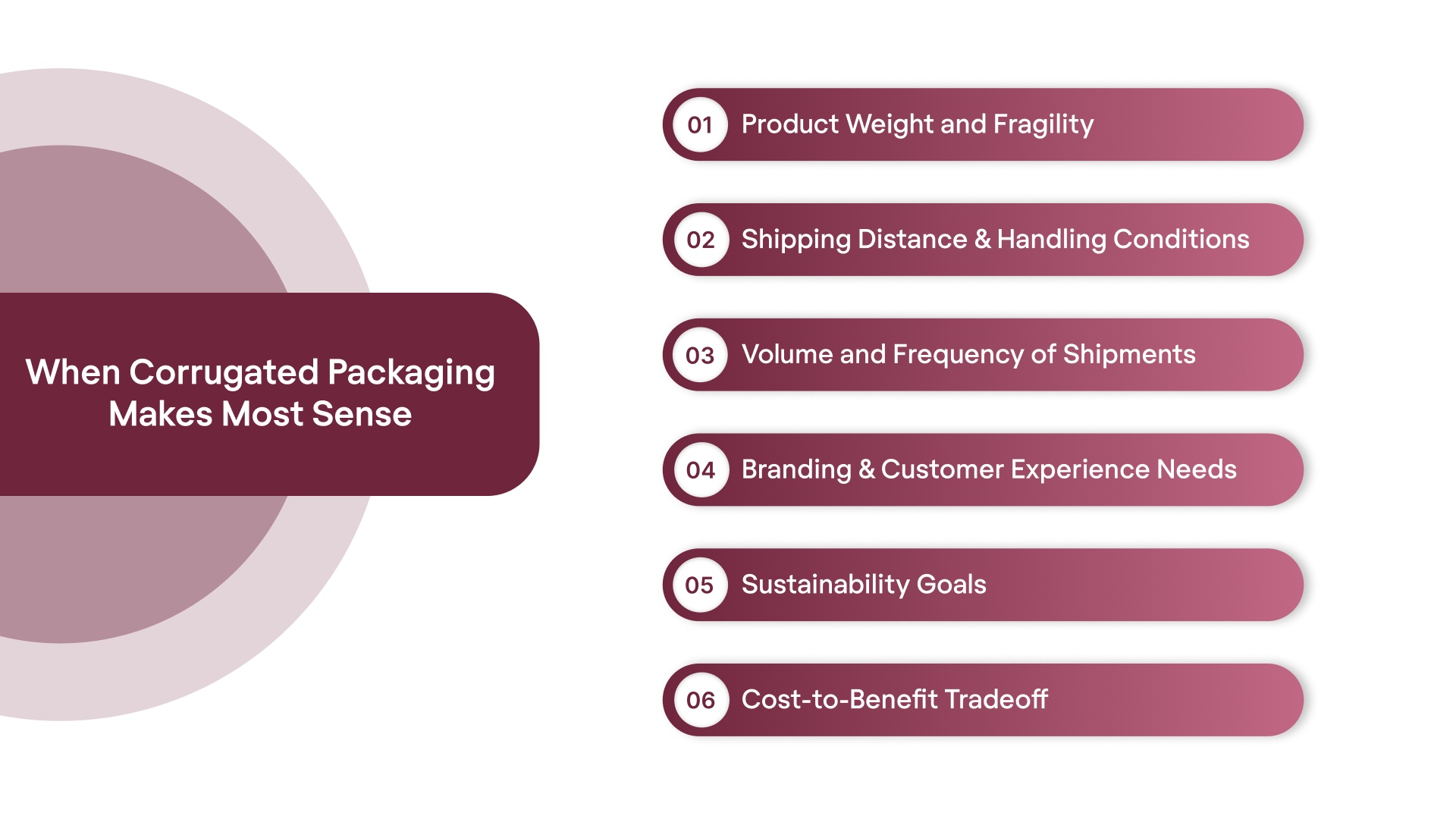
1. Product Weight and Fragility
Corrugated boxes are ideal for products that are heavy, fragile, or sensitive to vibration.
Single-wall corrugated boxes handle moderate weights.
Double- or triple-wall structures suit machinery parts, electronics, or dense bulk items.
Choosing the correct wall strength helps prevent breakage and reduces packaging-related downtime.
2. Shipping Distance and Handling Conditions
For goods shipped long distances or through multiple handling points, corrugated packaging provides reliable durability.
Maintains compression strength during stacking.
Resists mechanical shock from conveyor belts or forklifts.
Supports consistent packaging performance even under repeated handling.
These features help keep transit reliability and lead times stable, especially in distribution networks with variable conditions.
3. Volume and Frequency of Shipments
Businesses managing high-frequency shipments or continuous production runs benefit from corrugated packaging’s availability and repeatable performance.
Readily available in standard and custom sizes.
Simplifies reordering and inventory management.
Reduces risk of production delays due to packaging shortages.
This consistency supports predictable throughput and lowers supplier coordination time.
4. Branding and Customer Experience Needs
Corrugated materials combine strength with custom print capability. For brands where presentation and protection both matter:
Boxes can carry printed logos, handling instructions, and marketing elements.
Visual consistency reinforces professionalism and brand recognition.
Durable construction ensures the package arrives in good condition, protecting brand image.
This is especially useful for e-commerce and retail packaging where the box doubles as a customer-facing touchpoint.
5. Sustainability Goals and Compliance Requirements
Companies with sustainability or environmental reporting goals often prefer corrugated packaging because it aligns with circular economy principles.
Made from recycled or renewable materials.
Fully recyclable at end-of-life.
Helps meet corporate sustainability commitments without complex process changes.
For many buyers, sustainability is no longer optional; it supports both regulatory compliance and corporate reputation.
6. Cost-to-Benefit Tradeoff
When evaluating packaging, businesses often compare material cost with potential losses from damage, handling inefficiencies, or storage issues. Corrugated packaging usually offers an optimal balance:
Lower unit cost than rigid materials.
Reduced freight weight, which saves shipping costs.
Improved protection, reducing waste and product returns.
In operational terms, this means lower cost per delivered unit and better budget predictability.
Practical Considerations & Limitations — What Corrugated Doesn’t Solve
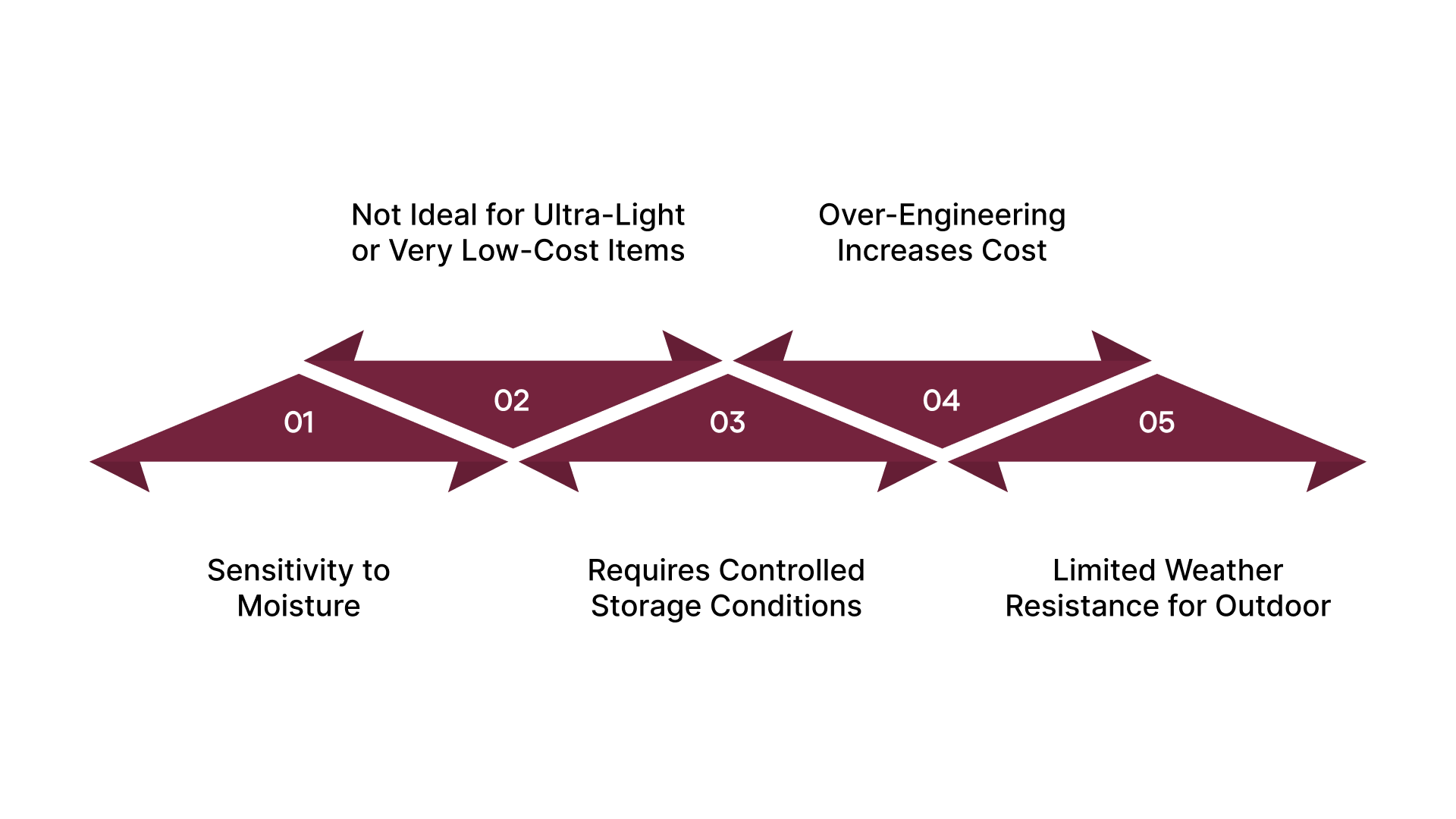
While corrugated packaging offers strong all-round performance, it is not suited for every application. Understanding its limits helps companies choose the right combination of materials for each use case.
1. Sensitivity to Moisture
Standard corrugated board can lose strength if exposed to high humidity or direct moisture for long periods.
Businesses shipping in damp environments can address this with:
Wax-coated or laminated liners
Water-resistant adhesives or inner barriers
Plastic- or foil-lined variants for specific industries
Using treated materials helps maintain packaging integrity in demanding conditions.
2. Not Ideal for Ultra-Light or Very Low-Cost Items
For inexpensive or extremely light products, corrugated packaging may be over-specified and raise material costs unnecessarily. In these cases, folding cartons or thin paperboard may be more economical while still providing sufficient protection.
3. Requires Controlled Storage Conditions
Corrugated materials should be stored in dry, stable environments to prevent warping or deformation. Warehouses must maintain consistent temperature and humidity levels to preserve board strength and shape.
4. Over-Engineering Increases Cost
Using a thicker board or excessive reinforcement can drive up material use and cost without improving performance. Periodic packaging reviews help identify where specifications can be simplified while still meeting protection standards.
5. Limited Weather Resistance for Outdoor or Long-Term Use
Corrugated boxes are best for short- to medium-term applications. For outdoor, long-duration, or exposure-heavy storage, stronger or waterproof alternatives (plastic crates, metal containers) are more appropriate.
Operational Note:
Many companies use a hybrid approach, corrugated for most logistics and lighter cartons or returnable crates for specialized uses. This balance helps reduce waste, manage cost, and maintain supply chain efficiency.
How a Full-Service Packaging Partner Adds Value
Corrugated packaging delivers its best results when combined with the right design, production, and fulfillment support. Working with a full-service partner helps businesses convert packaging from a routine cost item into a performance advantage.
1. Simplified Sourcing and Standardization
A single partner can manage design, prototyping, printing, and production—reducing supplier complexity. For manufacturing and procurement teams, this means:
Fewer supplier handoffs
Better coordination between design and production
Faster approval and reordering cycles
When specifications are standardized across product lines, companies gain predictable quality and stable lead times.
2. Design Expertise for Product Fit and Brand Alignment
A full-service provider can adjust box structure, board type, and print design to suit product requirements and brand visuals. This integrated approach helps:
Optimize board strength for protection and cost balance
Maintain consistent branding across packaging lines
Ensure packaging compatibility with automated lines and labeling systems
This alignment reduces rework and supports faster packaging line changeovers during production shifts.
3. End-to-End Logistics and Fulfillment Support
Beyond manufacturing, a capable packaging partner manages inventory, warehousing, and delivery to multiple locations.
This helps businesses:
Reduce internal storage and handling costs
Maintain a steady packaging supply
Support just-in-time manufacturing schedules
For distributed operations, reliable fulfillment minimizes unplanned downtime due to material shortages.
4. Technical Guidance and Continuous Improvement
Experienced partners monitor board performance and recommend improvements based on real operational data.
Helps prevent over- or under-specification
Reduces material waste
Maintains compliance with sustainability standards
This ongoing collaboration ensures packaging continues to meet changing production and regulatory requirements.
5. Example of Full-Service Impact
Capability | Operational Advantage | Business Impact |
Design + Manufacturing | Optimized strength-to-cost ratio | Fewer damages, lower spend |
Warehousing + Fulfillment | Consistent material supply | Reduced downtime |
Printing + Branding | Streamlined product presentation | Stronger brand visibility |
Technical Guidance | Periodic specification updates | Improved material efficiency |
A full-service partner allows packaging to evolve with product needs, supporting both efficiency and brand goals without adding internal workload.
Conclusion
Corrugated cardboard remains one of the most reliable and adaptable packaging materials for modern businesses. Its strength, low weight, and flexibility help reduce product damage, improve shipping efficiency, and support sustainability goals.
GMS Industries provides a complete suite of packaging solutions that extend these benefits even further, including:
Custom corrugated box design and manufacturing
Label printing and specialty finishing
Warehousing, fulfillment, and distribution support
Digital and large-format printing for branded packaging
With over three decades of experience, GMS helps businesses streamline packaging operations, improve supply consistency, and align packaging with brand standards.
Ready to simplify your packaging process?
Connect with the GMS Industries team today to discuss a solution that fits your products, operations, and growth goals.
FAQs
Q1: Why is corrugated cardboard used for packaging instead of regular cardboard?
Corrugated cardboard uses a fluted middle layer between flat liners. That structure gives it strength and cushioning. As a result, it protects products better under stress, during stacking, handling, or shipment.
Q2: Are corrugated boxes good for heavy or fragile items?
Yes. The layered and fluted design absorbs shock and distributes pressure evenly. This makes corrugated shipping boxes suitable for heavy, fragile, or sensitive items needing careful handling and long-distance transport.
Q3: Is corrugated packaging environmentally friendly?
Corrugated boxes are often made from recycled paper and are widely recyclable. They support reuse or recycling after use, which helps companies meet sustainability or waste-reduction goals.
Q4: Does corrugated packaging always cost more than simple alternatives?
Not necessarily. While corrugated may have a higher base material cost than simple paperboard or thin cartons, it balances cost with protection, reduces risk of product damage or returns, and lowers shipping expenses due to lighter weight. For many businesses, this improves total cost per unit shipped.
Q5: Can corrugated boxes be reused or recycled after one use?
Yes. Corrugated packaging is among the most commonly recycled paper products. Boxes can be reused several times when handled well, especially in closed-loop or internal logistics systems, before being recycled.
Q6: Does corrugated packaging suit every product or situation?
No. Corrugated performs best when used for shipping, storage, or handling. It may not be ideal for ultra-light or very low-cost items where simpler packaging suffices. Also, untreated corrugated can weaken under high humidity or moisture, so water exposure must be considered.
Q7: Is corrugated packaging better than plastic or metal containers?
Corrugated ranks high when the balance of light weight, strength, cost, and recyclability matters. Plastic or metal may offer better water/moisture resistance or long-term durability in extreme conditions, but corrugated remains more sustainable and cost-efficient for standard shipping, warehousing, and distribution.