In every facility, there are problems people talk about and problems people work around. Packaging often falls into the second category. When a box collapses in storage, when a crate arrives scuffed, or when a pallet needs to be rewrapped for the third time, the immediate fix usually overshadows the root cause.
Yet those small disruptions accumulate in time, in cost, and in the reliability of shipments moving across long supply chains.
Corrugated boxes sit at the center of this pattern. They’re used in almost every industry, trusted to protect everything from lightweight components to high-value equipment, and expected to perform without question.
Because they look simple, they rarely get the scrutiny they deserve. But their design, strength, and sourcing choices influence how smoothly goods travel, how often teams rework shipments, and how predictable operational performance remains.
This article provides a clear explanation of corrugated packaging and highlights the factors that influence its performance in modern supply chains.
Let's get right into it.
Key Takeaways
A corrugated box is a layered, paper-based shipping container engineered to protect products through storage, handling, and transit.
The performance of corrugated packaging directly affects damage rates, labor time, rework, and the reliability of global shipments.
Box design and material quality influence stacking stability, handling efficiency, and the consistency of day-to-day operations.
Understanding how corrugated packaging works helps teams choose options that fit their shipping environment, product sensitivity, and performance needs.
Many packaging problems, crushed loads, moisture impact, and inconsistent batch quality stem from selecting the wrong box or supplier; better choices reduce disruptions.
What Is a Corrugated Box?
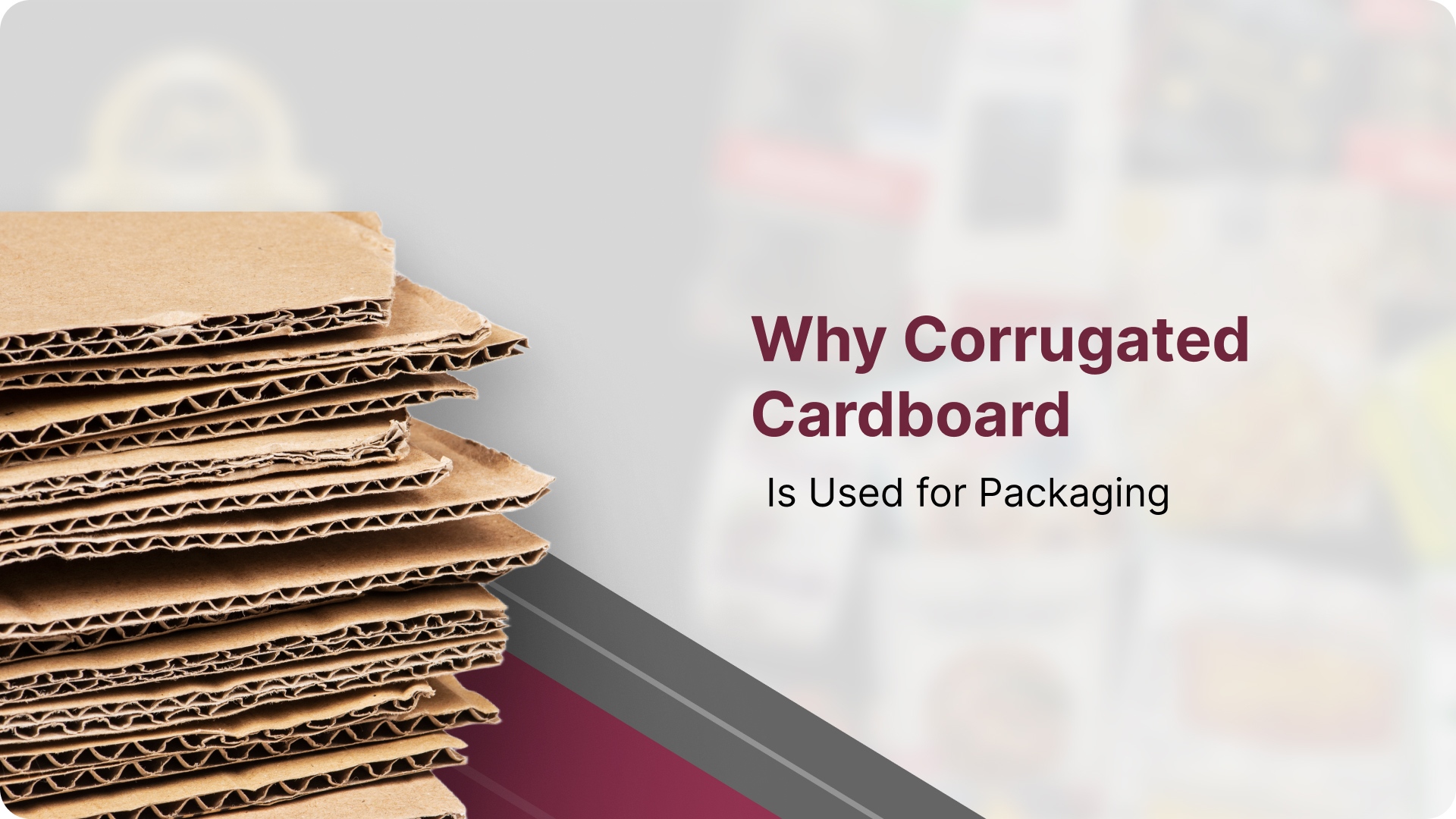
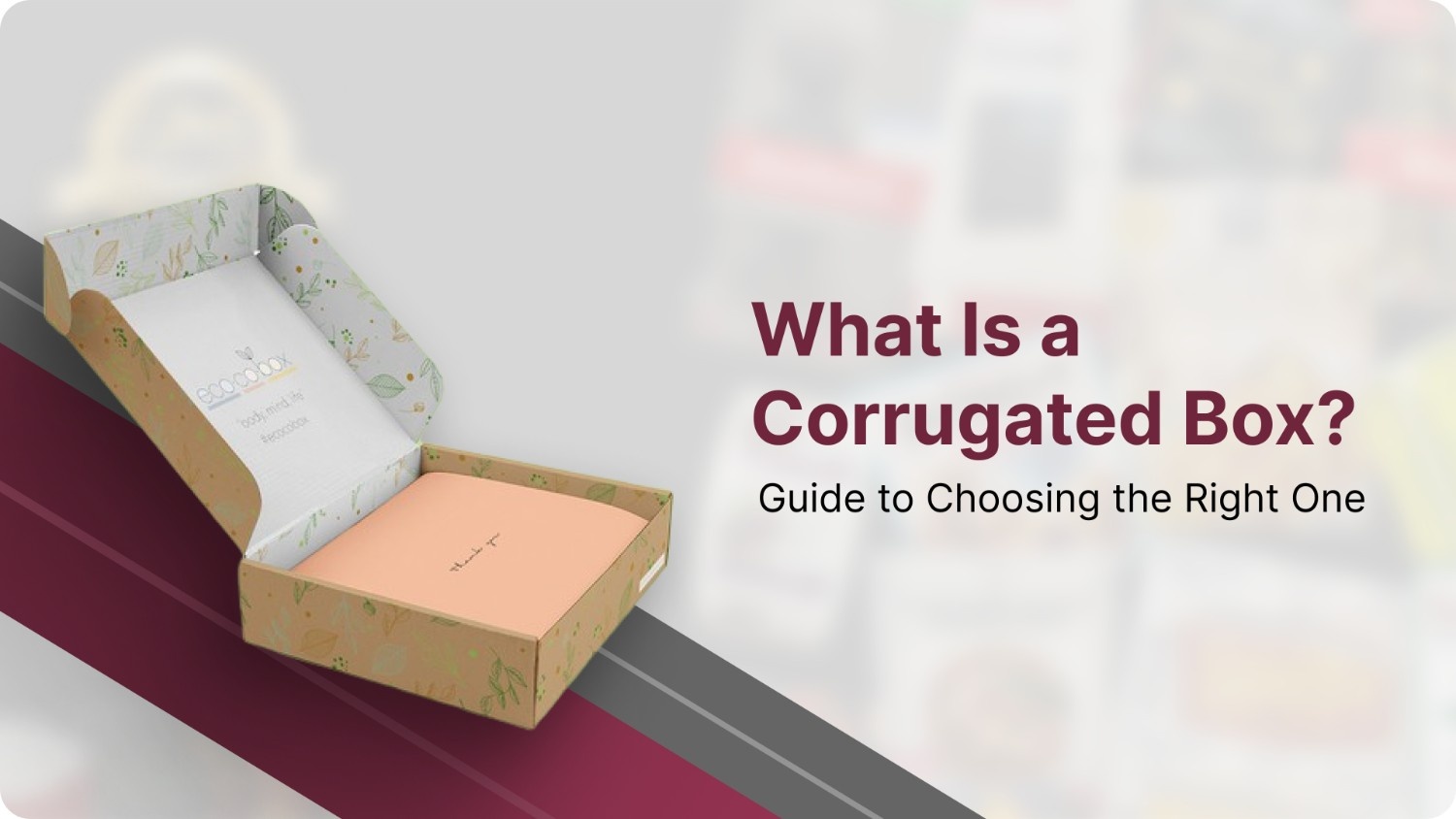
A corrugated box is a container made from multiple layers of paper that work together to create a lightweight but durable structure. It is designed to withstand the demands of storage and transport, offering more strength and stability than single-layer paperboard that is often referred to as “cardboard.”
Every corrugated box has a simple architecture built for protection:
Fluted Medium: This wavy inner layer creates a series of arches. These arches form air pockets that absorb pressure, cushion contents, and distribute weight evenly.
Liners: These are the flat outer and inner surfaces. They provide rigidity, resist scuffing, and protect the edges, allowing the box to maintain its shape under load.
This combination allows corrugated material to remain rigid without adding unnecessary weight.
The primary difference between corrugated and non-corrugated paperboard is its resistance to pressure. While standard paperboard works well for lightweight, retail-oriented packaging, corrugated packaging is specifically built for logistics environments where boxes must support weight, protect contents through multiple touches, and remain stable over long distances.
Why Corrugated Boxes Matter for Manufacturing & Operations?
Once products leave the line, packaging becomes part of the operational chain that carries them through facilities. Corrugated boxes matter because their performance directly shows up in day-to-day workflow efficiency and avoidable losses.
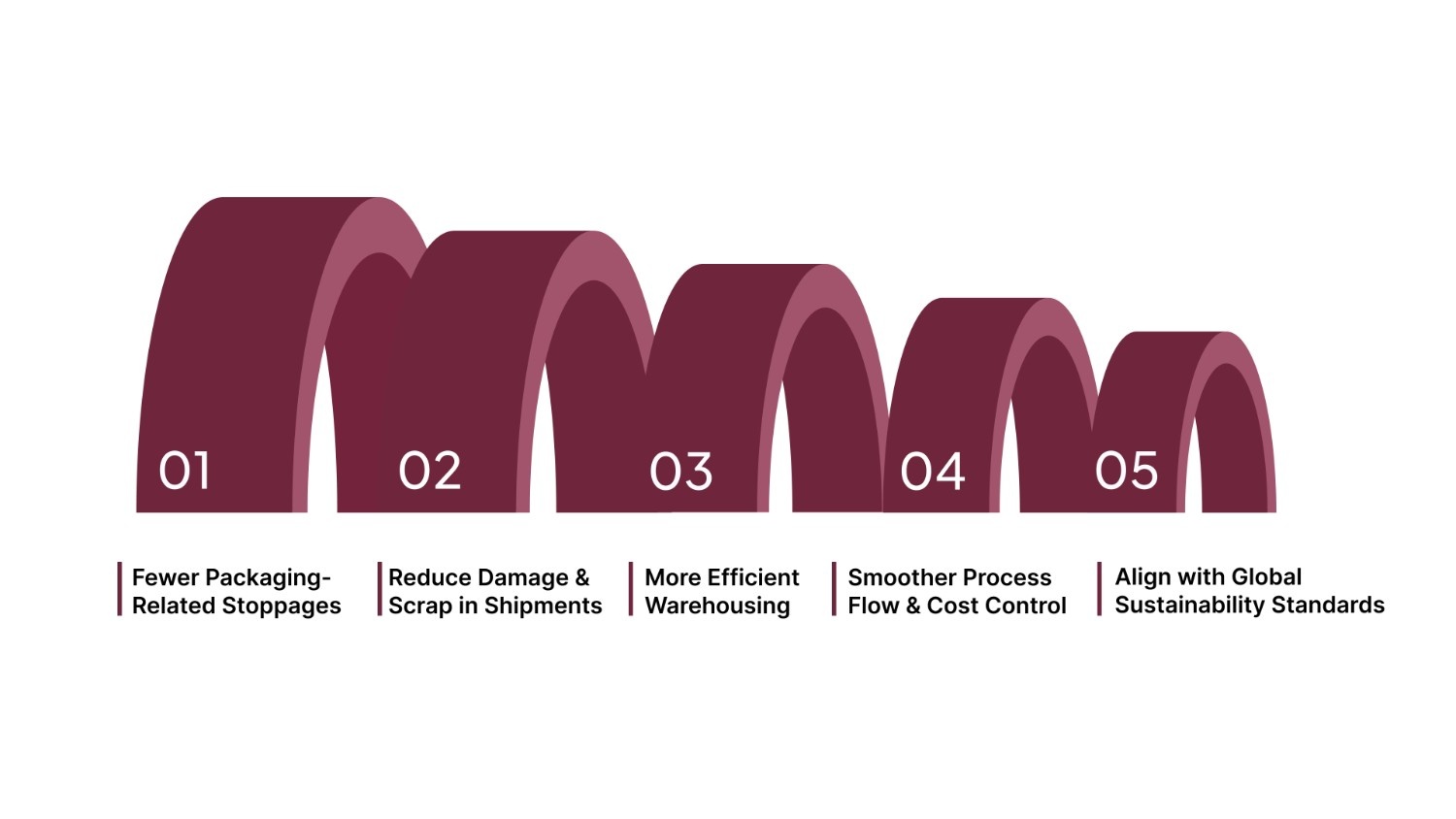
1. Fewer Packaging-Related Stoppages
Reliable box structure helps prevent interruptions caused by:
Cartons collapsing on conveyors
Loads shifting during movement
Extra repacking before dispatch
Stable packaging keeps equipment running as intended.
2. Lower Damage and Scrap Across Shipments
When a box distributes weight evenly and resists compression:
Products experience fewer dents, scuffs, and internal shifts
Fragile or precision components face a lower impact risk
Teams spend less time managing replace-and-repack tasks
Returns and scrap rates stabilize across shipping cycles
Small improvements here protect margins and reduce workflow disruptions.
3. More Efficient Warehousing and Handling
Consistent box strength supports more predictable movement across facilities:
Safer and more uniform palletisation
Better use of vertical and trailer space
Reduced double-handling caused by unstable stacks
More accurate load planning and dispatch timing
Reliable stacking behavior directly contributes to smoother logistics flow.
4. Smoother Process Flow and Cost Control
Reliable packaging reduces variability between steps, supporting:
More dependable throughput
Fewer unplanned handling tasks
Better control over cost-per-unit drivers
Small efficiencies add up across shifts and locations.
5. Alignment with Global Sustainability Expectations
Corrugated material is widely recyclable, accepted across regions, and easier to manage in cross-border shipments, reducing compliance friction.
How to Evaluate Corrugated Packaging Before You Buy It?
Selecting corrugated packaging is more than comparing prices or choosing a familiar box style. The right option must work reliably across the actual conditions your products move through.
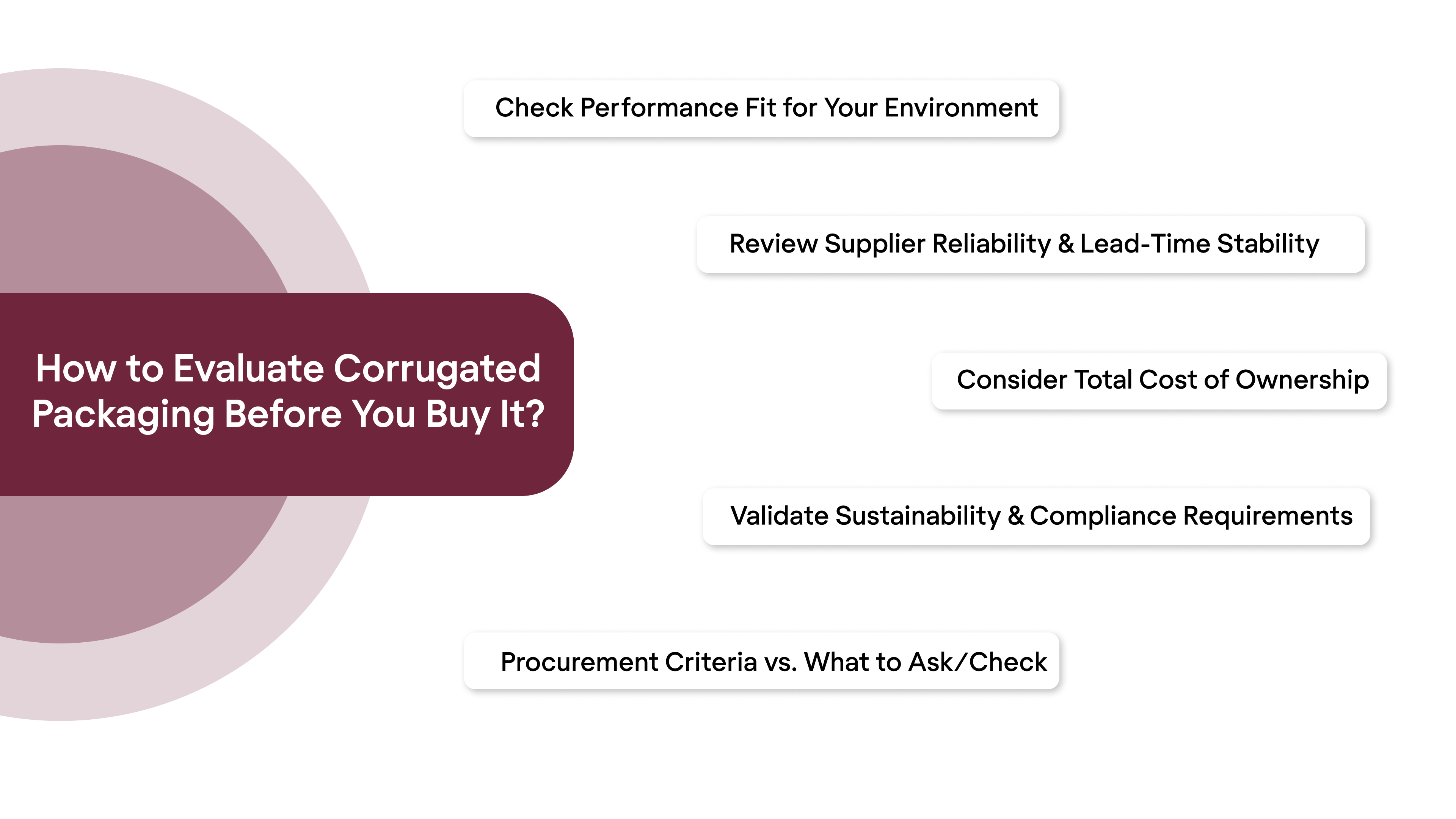
A structured evaluation helps teams avoid the issues that come from selecting packaging without understanding its performance limits.
A. Check Performance Fit for Your Environment
Corrugated packaging behaves differently depending on how it is stored, handled, and transported. Assess performance in the context of your real workflows:
Storage duration: Short-term staging vs. long-term stacking
Handling method: Manual, automated, or mixed handling
Transport conditions: Local vs. long-distance movement
Stacking demands: Height, weight distribution, pallet patterns
Environmental exposure: Humidity, temperature, compression risk
Product sensitivity: Edges, surfaces, vibration, and impact tolerance
This ensures the box is suitable for the conditions it will encounter, not just how it looks on paper.
B. Review Supplier Reliability and Lead-Time Stability
Packaging interruptions rarely start with the box itself; they often come from inconsistent supply. Evaluate suppliers based on:
Geographic coverage and proximity to your facilities
Lead-time consistency during peak demand
Material availability and sourcing stability
Batch-to-batch quality variation
Ability to scale volumes as needs shift
Reliable supply reduces delays, last-minute substitutions, and reactive ordering.
C. Consider Total Cost of Ownership (TCO)
The cheapest box can become the most expensive once indirect costs show up. Look at the full cost chain:
Extra handling or repacking
Damage-related replacements
Scrap and returned shipments
Inefficient pallet utilisation
Wasted trailer space
A well-chosen box helps avoid these downstream losses.
D. Validate Sustainability and Compliance Requirements
Corrugated packaging must align with environmental and regulatory expectations across regions. Confirm:
Recyclability in your destination markets
Compliance with local packaging rules
Documentation for audits and certifications
Material transparency from suppliers
This reduces compliance friction in cross-border shipments.
E. Procurement Criteria vs. What to Ask/Check
Criteria | What to Ask or Verify |
|---|---|
Performance fit | Has this box been tested under conditions similar to ours? |
Lead-time stability | What are the typical and worst-case delivery timelines? |
Material sources | Where are liners and medium sourced from? |
Quality consistency | What controls ensure uniformity across batches? |
Sustainability | Is the material recyclable across all regions we ship to? |
Handling efficiency | How does this box perform in our picking, loading, and stacking processes? |
A structured evaluation ensures corrugated packaging supports operations instead of adding avoidable friction. The goal is simple: choose packaging that performs reliably in the environments where it will actually be used.
If you want support navigating these checks or evaluating packaging for specific routes and conditions, GMS Industries is the partner that can help identify solutions that fit your requirements.
Global Sourcing & Supply-Chain Considerations
Corrugated packaging behaves differently depending on where it is sourced and how it moves across borders. Material availability, climate exposure, and transport timelines can all influence consistency.
Understanding these variables helps teams avoid disruptions that stem from regional gaps rather than product design.
Regional Availability of Materials
Paper-based materials vary in availability across markets. Some regions experience seasonal fiber shortages, while others rely heavily on imports to meet demand. These fluctuations can affect:
Production scheduling
Minimum order quantities
Batch consistency
Pricing stability
Choosing sourcing regions with a stable raw material supply reduces volatility.
Impact of Region on Lead Times & Cost Stability
The distance from production sites to your facilities directly affects:
Transit duration
Freight cost fluctuations
Response time during demand spikes
Buffer stock requirements
Longer supply lines introduce more variability. Shorter or regionalised sourcing can help maintain steadier replenishment cycles.
Climate, Humidity & Transit-Distance Factors
Different climates expose packaging to different risks:
High humidity can weaken paper fibers during long sea shipments
Extreme temperatures may affect structural integrity
Long-distance transit increases compression and vibration exposure
Understanding these environmental variables helps ensure the packaging you select performs consistently from origin to destination.
Trade, Tariffs & Cross-Border Risks
Cross-border sourcing adds layers of regulatory and cost exposure:
Sudden tariff changes
Customs delays
Documentation requirements
Transport strikes or port congestion
These factors can disrupt schedules even when suppliers perform reliably.
Global vs. Local Supplier Impact on Continuity
Both approaches offer advantages:
Global suppliers may provide broader capacity, diverse raw-material sources, and multi-country redundancy.
Local suppliers offer shorter lead times, faster issue resolution, and reduced transit risk.
A balanced mix of global volume stability and local responsiveness often delivers the strongest continuity.
Common Mistakes to Avoid
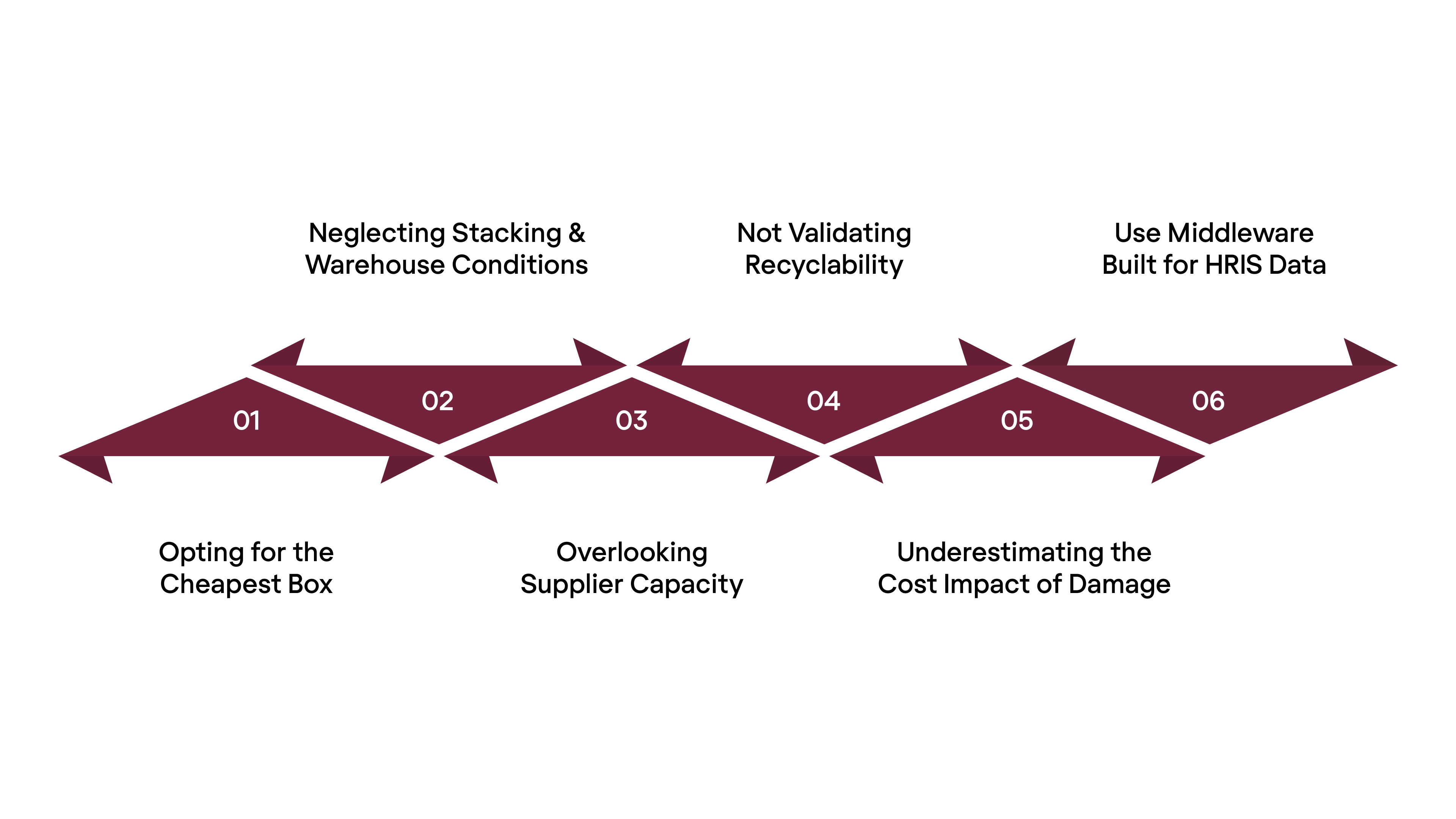
Even well-run operations experience preventable packaging issues when certain checks are overlooked. These are the most frequent mistakes teams encounter and how to avoid them before they impact day-to-day performance.
Choosing the Lowest-Cost Box Without Testing Performance
A low unit price can mask poor durability.
How to avoid it: Test box behavior under typical warehouse flow rather than relying on price comparisons alone.
Ignoring Stacking Requirements and Warehouse Conditions
Boxes that aren’t suited for the stacking height, pallet pattern, or storage climate can deform quickly.
How to avoid it: Match packaging strength to real warehouse conditions, including humidity, temperature, and expected load duration.
Overlooking Supplier Capacity or Geographic Constraints
A supplier may offer the right product but struggle with consistent output or long-distance fulfilment.
How to avoid it: Confirm production capacity, regional coverage, and delivery timelines during busy periods, not only during steady demand.
Not Validating Recyclability or Compliance Requirements
Some materials perform well but don’t meet regional recycling or documentation rules.
How to avoid it: Verify recyclability across destination markets and request relevant compliance documents upfront.
Underestimating the Cost Impact of Damage and Rework
A box that fails in transit can create hidden expenses across multiple teams.
How to avoid it: Track damage-related labour, scrap, and return rates to understand the real cost of packaging choices.
Relying on Generic Packaging Instead of Fit-for-Use Solutions
Standard boxes may not be suitable for products with specific handling or sensitivity requirements.
How to avoid it: Evaluate packaging against your actual workflow, not general assumptions or catalog descriptions.
Avoiding these issues starts with selecting packaging that’s suited to the conditions it will face. This is where the right partner makes a meaningful difference and where GMS Industries helps.
How GMS Industries Gets Packaging Right
GMS Industries supports companies that need packaging aligned with the operational environments their products move through.
Instead of offering generic options, GMS focuses on materials and configurations that fit the demands of everyday workflow, handling, and transport.
Comprehensive Packaging Solutions
GMS provides a broad range of packaging products used across different stages of distribution, including:
Custom corrugated boxes for shipping and storage
Chipboard packaging for smaller or lightweight items
Printed labels and instruction sheets for product identification
Pressure-sensitive labels for high-volume lines
POP (Point-of-Purchase) displays for retail settings
Rigid boxes and printed bags on request
This range allows teams to source multiple packaging components from one place, reducing fragmentation across vendors.
Consistent Quality Backed by Experience
With more than three decades in the industry, GMS follows established production controls and material selection standards to keep output uniform across orders. This helps ensure packaging behaves as expected throughout handling, storage, and movement along typical shipping paths.
Multi-Location Network for Better Continuity
GMS operates facilities across the U.S. and Mexico, offering:
More consistent replenishment across regions
Faster response during demand shifts
Reduced exposure to single-region constraints
Lead times that support steady planning
This footprint helps teams maintain packaging availability without building excessive buffer inventory.
Support Beyond the Box
GMS works closely with customers to understand shipping routes, product characteristics, and environmental exposure so packaging choices align with on-the-ground conditions, not just catalog descriptions.
If you’re evaluating packaging options or want support selecting materials that perform reliably across your supply chain, GMS Industries can walk you through the options and help identify what fits your requirements. Contact now!
Conclusion & Next Steps
Understanding what a corrugated box is, how it behaves in real conditions, and how to evaluate its fit helps teams avoid many of the issues that interrupt workflows or add avoidable cost.
A practical next step is to assess how current packaging performs across your shipping and storage environments. Look at where issues tend to appear: stacking, moisture exposure, long-distance transport, or handling changes between facilities.
Review lead-time patterns and identify whether your packaging supply is stable across seasons or volume shifts. These insights create a clearer picture of where improvements may be needed.
From there, involve your packaging partner early in the process. Share route details, warehouse conditions, and the handling methods used across touchpoints.
Data-led conversations make it easier to match materials to real-world requirements and avoid trial-and-error decisions.
Strong packaging doesn’t just protect products; it strengthens the reliability of the entire chain around them.
If you’re looking for corrugated packaging that performs reliably across real shipping and handling conditions, GMS Industries provides solutions built to support consistency, stability, and everyday operational demands.
FAQ
Is a corrugated box the same as cardboard?
No. Cardboard usually refers to single-layer paperboard used for retail packaging. Corrugated boxes use a layered structure that provides stronger protection for storage and shipping.
Can corrugated boxes be reused in manufacturing environments?
Yes, if the box remains structurally sound. Reuse depends on how much compression, moisture, or handling stress it has experienced.
What factors affect the durability of a corrugated box?
Key factors include material quality, fluting structure, storage conditions, stacking height, humidity exposure, and the handling methods used across facilities.
Is corrugated packaging suitable for global shipping?
Yes. Its layered construction supports long-distance transport, but performance depends on route conditions, climate exposure, and how well the box matches the demands of the supply chain.