Terms like cardboard, carton, and corrugated box are used interchangeably in everyday language, but in packaging, they mean very different things.
That confusion leads to real problems: choosing the wrong box type can increase shipping damage, raise freight costs, slow packing lines, and create unnecessary waste.
A carton that looks sturdy on a shelf might collapse in a warehouse stack. A corrugated box designed for shipping might be overkill (and overpriced) for retail packaging. Understanding the difference directly affects product protection, supply-chain reliability, and total cost per unit.
This guide breaks down the differences in plain language. You’ll learn what each material actually is, how carton boxes differ from corrugated boxes, when to use each, the industries each serves best, and which packaging design choices matter most for performance.
We’ll also clear up common myths and provide a simple decision framework to help you choose confidently.
Let's get started.
Quick Summary
Cardboard is a casual term, not a packaging specification.
Carton boxes (made from paperboard) are lightweight, printable, and best for retail displays and small products.
Corrugated boxes use a fluted, multi-layer structure built for strength, shipping, stacking, and protection.
Use cartons for branding-heavy shelf packaging; use corrugated for transport, warehousing, and anything fragile or heavy.
Choosing the wrong type affects cost, damage rates, and operational efficiency across the supply chain.
Definition: Cardboard, Cartons, and Corrugated Boxes
Most of the confusion in packaging starts because people use these words interchangeably. In reality, they refer to different materials and different box types. Here’s the simplest way to understand them.
Cardboard (A Generic, Non-Technical Term)
“Cardboard” isn’t a packaging specification.
It’s a casual word people use to describe any thick paper material, cartons, paperboard, or even corrugated boxes.
Examples of how people use it incorrectly:
Calling a cereal box “cardboard.”
Calling a shipping box “cardboard.”
Calling a mailer “cardboard.”
In packaging, the word has no technical meaning.
Paperboard / Carton Board (The Material)
Paperboard is a single-ply, smooth, relatively thin board used to make retail cartons.
Key characteristics:
Lightweight, clean printing surface
Ideal for branding and shelf visibility
Not designed for heavy loads, stacking, or shipping pressure
Used to make:
Cosmetic boxes
Cereal and snack boxes
Pharma cartons
Small retail packaging
Paperboard = the material.
Carton / Folding Carton (The Retail Box)
A carton is the finished retail box made by cutting, printing, and folding paperboard.
Key characteristics:
Designed for presentation, not transport
Great for branding, color accuracy, and print detail
Requires an external shipper for protection
Common examples:
Perfume boxes
Skincare cartons
Cereal boxes
Medication boxes
Carton = the product made from paperboard.
Corrugated Box (The Shipping Box)
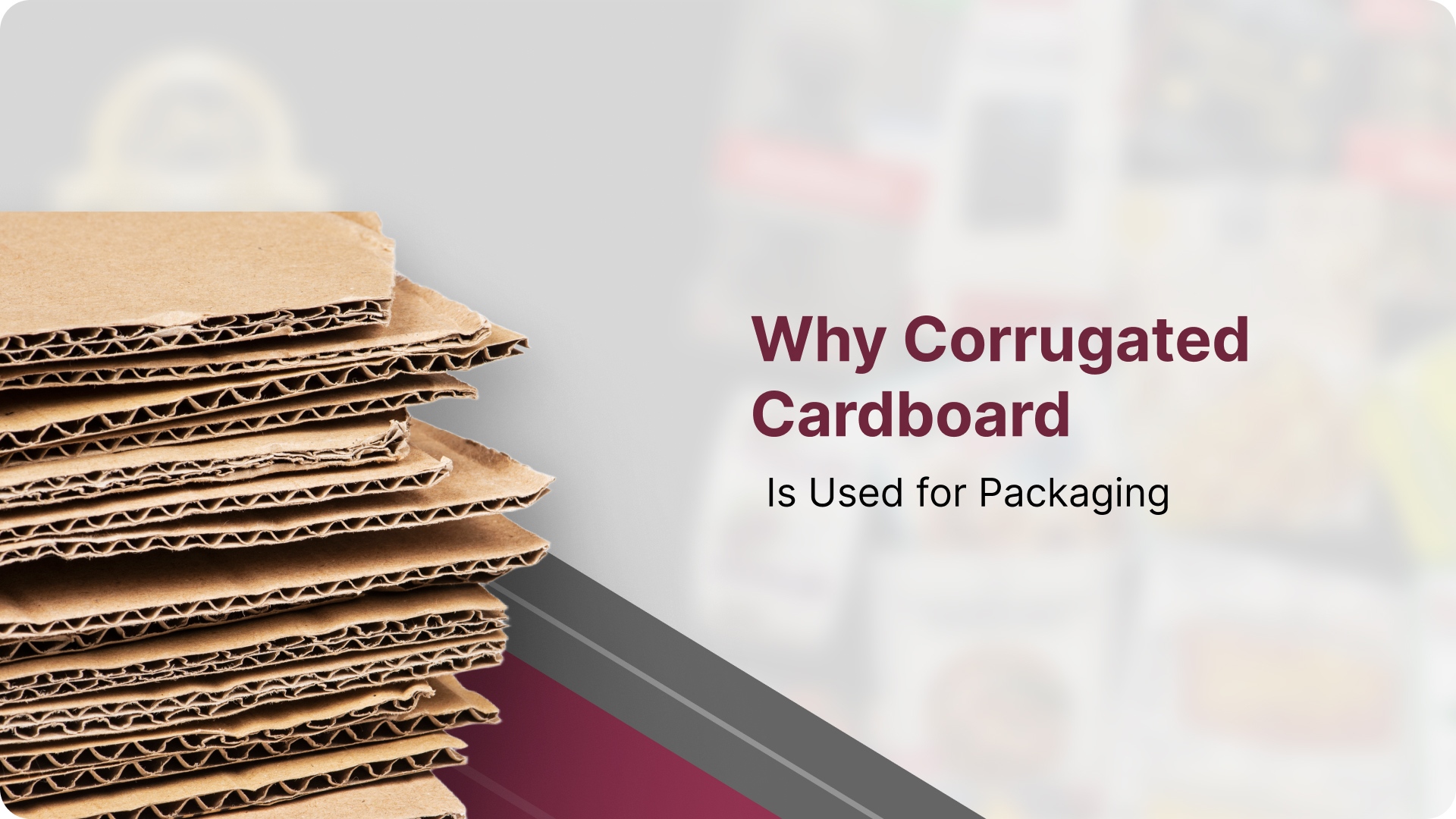
A corrugated box is a three-layer structure:
flat liner + fluted medium + flat liner.
This design creates a lightweight but strong shipping container.
Key characteristics:
Supports stacking and compression
Absorbs impact, vibration, and transit stress
Used for storage, warehousing, and global transit
Available in many strengths (without mentioning specs here)
Common examples:
E-commerce shippers
Logistics and warehouse boxes
Industrial parts packaging
Outer boxes protecting retail cartons during shipping
Corrugated = the box built for shipping and protection.
Corrugated Box vs Carton Box: The Real Difference
Once the definitions are clear, the real question is: how do corrugated boxes and carton boxes behave in real conditions?
This difference determines shipment success, damage rates, storage efficiency, and cost-per-unit.
Here’s how they differ where it matters most:
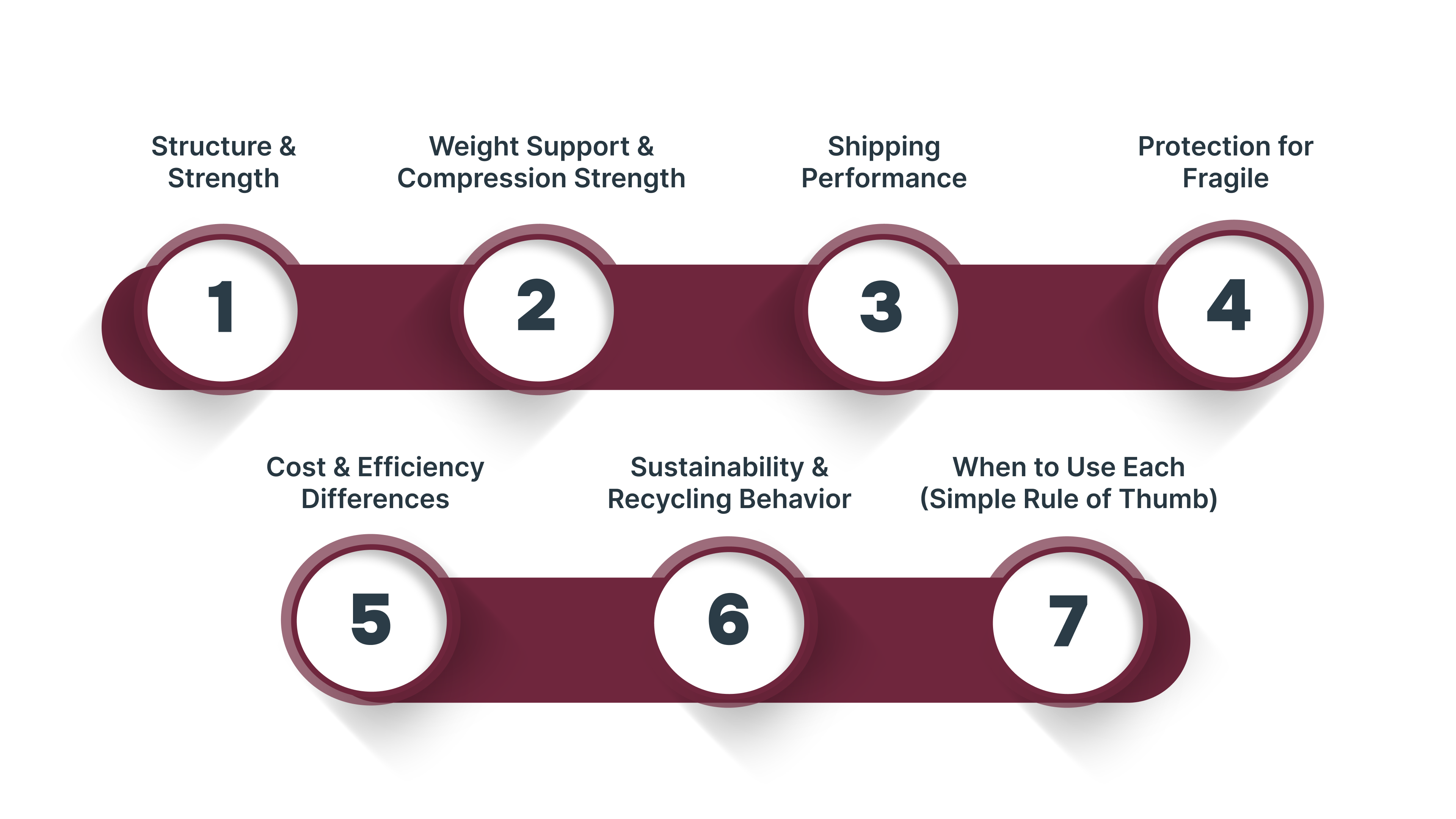
1. Structure & Strength
Corrugated Box
• Built from three layers: liner → fluted medium → liner
• The fluting absorbs impact and supports weight
• Designed for shipping, stacking, and long-distance transport
Carton (Folding Carton)
• Made from single-ply paperboard
• Holds shape but offers minimal crush or compression resistance
• Designed for retail display, not load-bearing
Bottom line:
Corrugated = protective shipping container
Carton = branded presentation box
2. Weight Support & Compression Strength
Corrugated Boxes
• Can handle heavy products, bulk packs, and multi-layer pallet stacking
• Resist top-load pressure in warehouses and trucks
Cartons
• Best for lightweight items
• Collapse quickly under stacking pressure
Impact:
If your product will be stacked, palletized, or shipped, a carton alone is insufficient.
3. Shipping Performance
Corrugated boxes are built for:
• Vibration
• Impact
• Long transits
• Conveyor movement
• Changing temperature/humidity
Cartons are built for:
• Shelf appeal
• Branding
• Fast assembly for retail
Impact:
Most damages in transit occur when teams use cartons for shipping instead of corrugated outer boxes.
4. Protection for Fragile or Valuable Items
Corrugated
• Can incorporate inserts (chipboard, pulp, corrugated partitions)
• Controls movement during transit
• Prevents dents, deformation, and product rubbing
Carton
• No internal cushioning
• Fails when handling is rough or uncontrolled
Impact:
If the product is fragile, irregular, or heavy → corrugated is mandatory.
5. Cost & Efficiency Differences
Corrugated Boxes
• Higher material cost per unit
• But reduce:
• breakage
• returns
• rework
• shipping claims
Cartons
• Lower material cost
• Ideal for high-volume retail packaging
• Not suitable for shipping without an outer carton
Impact:
Cartons save on retail costs; corrugated saves on shipping losses.
6. Sustainability & Recycling Behavior
Corrugated
• Easily recyclable worldwide
• Often made with high recycled fiber content
• Fewer coatings → easier recovery
Cartons
• Recyclable, but printing & coating levels vary
• Laminates or foils can reduce recyclability
Impact:
Both are sustainable, but corrugated is more universally recyclable.
7. When to Use Each (Simple Rule of Thumb)
Cartons are built for presentation, corrugated boxes are built for protection.
Your product’s weight, fragility, and shipping distance determine which one you need.
At-a-Glance Comparison
To make the differences even clearer, here’s a side-by-side comparison:
Category | Corrugated Box | Carton Box (Folding Carton) |
|---|---|---|
Structure | Three layers (liner + fluted medium + liner) | Single-ply paperboard |
Strength | High; built for load-bearing and stacking | Low; holds shape but not load |
Weight Support | Excellent for heavy or fragile items | Suitable only for lightweight products |
Transit Protection | Resists impact, vibration, compression | Minimal protection; not for shipping |
Print Quality | Good; improving with modern presses | Excellent; ideal for detailed branding |
Moisture Resistance | Moderate to high | Low; can warp or weaken when exposed |
Cost | Higher per unit but reduces breakage/returns | Lower per unit; ideal for retail volume |
Sustainability | Highly recyclable; often high recycled content | Recyclable, but coatings/foils affect recovery |
Best Use | Shipping, e-commerce, warehousing | Shelf display, lightweight retail packaging |
When to Use Which?
If you’re choosing between a carton and a corrugated box, the fastest way is to match the packaging to the actual environment the product will face.
Use Corrugated When:
Products will move through multiple shipping touchpoints (3PL → carrier → distribution → doorstep)
Pallet stacking or warehouse racking is involved
The product is breakable, dense, or oddly shaped
You expect rough handling, conveyor impact, or long-distance transport
There’s exposure to humidity, condensation, or temperature swings
Your brand’s damage-rate KPIs must stay low
The carton is only acting as inner packaging and needs an outer protective shipper
Use Cartons When:
The packaging’s main job is branding and shelf presence, not transit protection
The product is lightweight and handled mostly in retail environments
You’re optimizing for visual consistency, color accuracy, and print quality
Packaging needs fast assembly for high-volume retail runs
The product already ships inside a corrugated outer, so the carton serves presentation only
You need cost-efficient packaging for consumer-facing rounds or multipacks
Different industries place different pressures on packaging, so the right choice depends on real-world conditions, not just materials. Here’s how corrugated and carton boxes align with those operational environments.
Industry-Specific Recommendations
Corrugated boxes and carton boxes perform very differently depending on the environment they’re used in. The choice should always match the realities of the industry’s workflow, not just the product’s appearance.
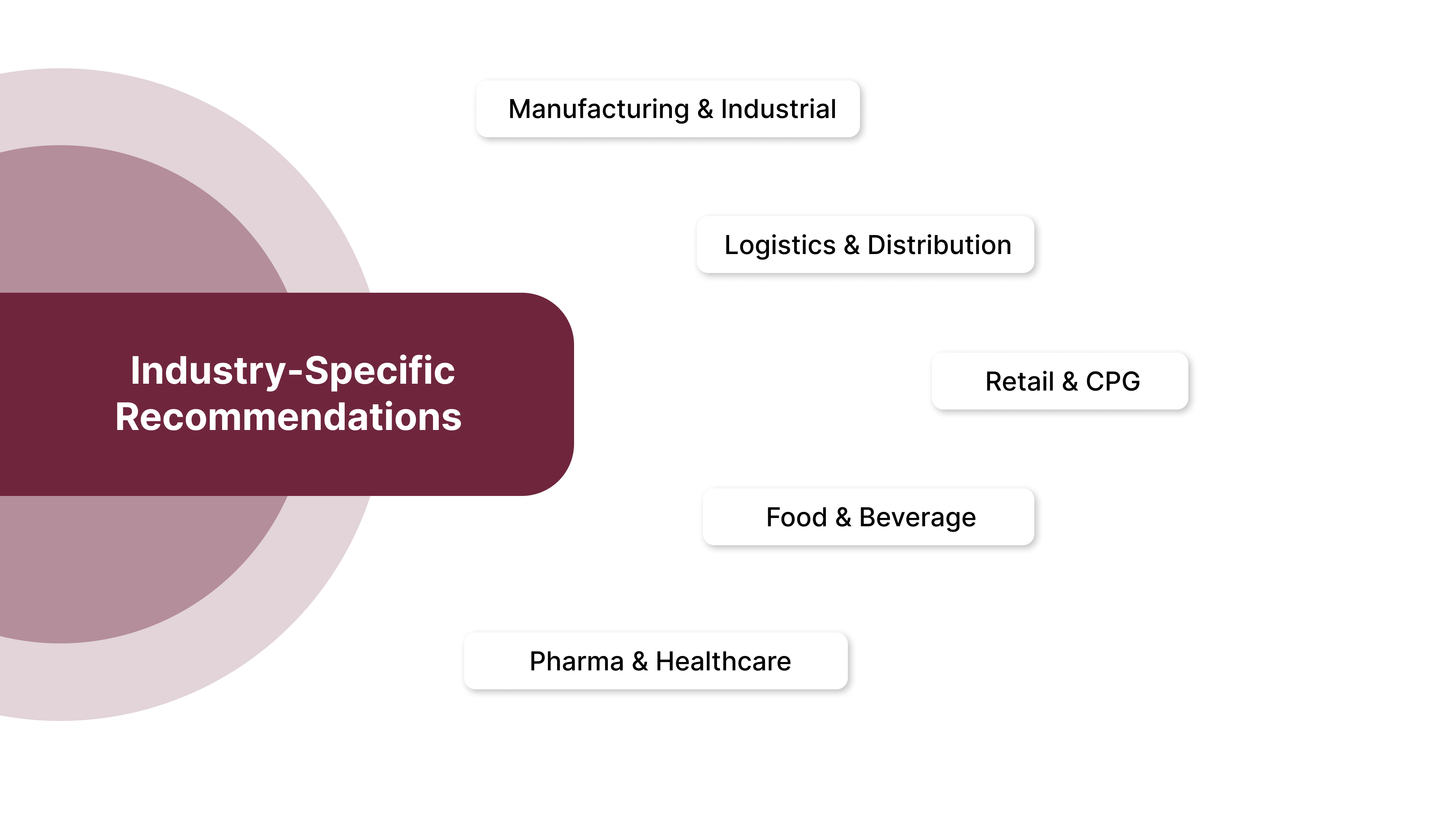
Here’s how each sector should approach selection based on real operational conditions.
Manufacturing & Industrial
Corrugated is the default for heavy, irregular, or metal parts that need impact resistance and stable stacking.
Add chipboard partitions or inserts to prevent abrasion between components.
Cartons work only as internal packaging for small, lightweight items—not for primary shipping.
Prioritise materials that withstand vibration, dust, and compression common in plant environments.
Logistics & Distribution
Corrugated should be the primary shipper due to multi-touch handling, conveyor systems, and stacking pressure.
Choose flute profiles based on warehouse demands (short-term vs. long-term stacking).
Cartons function well as retail-ready inners, but always inside a protective corrugated outer.
Ensure surfaces allow consistent barcode scanability across automated sortation.
Retail & CPG
Cartons excel for brand presentation, color accuracy, and shelf visibility.
Corrugated supports e-commerce shipments, multipacks, and warehouse club formats.
Premium products often need a carton + insert + corrugated system to protect finishes.
Consider print clarity and texture requirements; cartons support higher-end graphics.
Food & Beverage
Corrugated is ideal for bulk packaging, beverages, and cold-chain distribution.
Carton board works well for individual retail units (cereal, snacks, tea, dry foods).
Use moisture-resistant corrugated for refrigerated or condensation-heavy routes.
Confirm food-safe inks and coatings depending on direct/indirect product contact.
Pharma & Healthcare
Cartons are standard for unit-dose, compliance, and secondary packaging, where clarity is crucial.
Corrugated is required for batch shipping, protecting vials, blister packs, and medical devices.
Inserts must be engineered to prevent micro-movement for impact-sensitive items.
Ensure materials meet serialization, labeling, and regional regulatory requirements.
When the packaging format matches the operational realities of the industry, everything runs smoothly, from line efficiency to customer satisfaction.
Common Myths That Cause Confusion
Despite being used every day, packaging terminology is often misunderstood. These quick myth-busters help clarify what’s actually true.
Myth 1: “Cardboard is a packaging material.”
Reality: Cardboard is a generic word, not a specification.
It can refer to anything from cereal-box paperboard to shipping-grade corrugated, which is why it leads to incorrect packaging choices.
Myth 2: “Carton boxes are just weaker versions of corrugated.”
Reality: Cartons aren’t weaker; they’re designed for a different purpose.
They excel in branding and shelf impact, not load-bearing or shipping protection.
Myth 3: “Corrugated boxes are always brown.”
Reality: Corrugated can be fully printed, white, coated, or custom-finished.
Brown Kraft is simply the most common because it’s economical and sustainable.
Myth 4: “Cartons can ship heavy products if they’re thick enough.”
Reality: Thickness doesn’t equal compression strength.
Single-ply board collapses easily, and heavy items require the fluted structure of corrugated.
Myth 5: “Cartons aren’t recyclable.”
Reality: Most cartons are recyclable, though finishes like foils or laminations may require specialty streams.
Myth 6: “Corrugated is overkill for small/light products.”
Reality: Even small, lightweight products often need corrugated for multi-touch shipping or e-commerce handling.
Cartons alone rarely survive long transit paths.
Okay, clear definitions, real differences, myths debunked.
Now the only question left is: Which one is right for your product?
This checklist will help you choose the right one.
Checklist to Choose the Right Box
Use this checklist to match packaging to your product’s real handling conditions:
1. What’s the product weight?
Heavy, dense, or fragile items → corrugated
Lightweight retail products → carton
2. How far does it ship?
Long-distance, multi-carrier, or e-commerce → corrugated
Local distribution or in-store only → carton
3. What are the storage conditions?
Pallet stacking, warehouses, variable humidity → corrugated
Shelf display, controlled environments → carton
4. Is moisture or temperature involved?
Cold chain, damp storage, or outdoor exposure → corrugated
Dry retail environments → carton
5. Is branding or durability the priority?
High-impact print + retail aesthetics → carton
Protection + structural performance → corrugated
6. Is packaging applied manually or by automation?
Automated case packing → corrugated (more predictable tolerance)
High-speed retail lines → carton
7. What’s more important: upfront budget or total cost of damage?
Lower unit cost → carton
Lower breakage/returns → corrugated
Once your criteria are clear, the final step is making sure the packaging you choose can actually be built to perform the way you need. That’s where the right supplier makes a real difference.
How GMS Industries Helps
GMS Industries supports brands that need packaging engineered for real-world handling, not just what looks good on a spec sheet.
Expertise Across Corrugated, Chipboard & Carton Packaging
GMS supplies the full range of fiber-based packaging, including:
Corrugated shipping boxes for heavy, fragile, and high-movement products
Chipboard for inserts, dividers, and product stabilization
Folding cartons for retail display and branded presentation
This allows teams to source multiple components from one partner and ensure they work together as a system.
Material & Structural Guidance
GMS helps teams match packaging to actual conditions:
Product weight and fragility
Transit distance and touchpoints
Storage environment (humidity, stacking, temperature)
Automation vs. manual packing
Cost, MOQ, and sustainability requirements
This alignment prevents damage, over-engineering, and unnecessary spending.
Multi-Location Reliability
With production across multiple facilities, GMS offers:
Faster replenishment
Reduced lead-time variability
Operational redundancy
Better inventory continuity for ongoing programs
Brands with multi-region shipping benefit from consistent output across runs.
Support for Printing, Labeling & Protective Inserts
Because GMS also manufactures:
Pressure-sensitive labels
Chipboard inserts
Corrugated outers
…you get packaging that’s engineered to fit together, reducing assembly errors, mis-sizing, and inconsistencies across SKUs.
Packaging Tailored to Real Shipping Conditions
Instead of designing for ideal circumstances, GMS evaluates:
Vibration
Compression
Moisture exposure
Multi-stop distribution
Warehouse stacking
The result: packaging that arrives intact and protects margin by reducing returns, rework, and freight damage.
Have questions about which box type fits your product?
GMS can walk you through the best options for your handling and shipping environment.
Conclusion
Corrugated boxes and carton boxes play very different roles, and using the wrong one creates preventable damage, higher freight costs, and unnecessary operational friction.
Once you understand how each material behaves under weight, transit pressure, and storage conditions, choosing the right format becomes far simpler.
Evaluate your product’s demands first, then match the packaging to those realities, not the other way around. If you want help making that assessment, GMS Industries can guide you toward the construction that protects your product and keeps operations running smoothly.
FAQ
1. What is the difference between cardboard and carton?
“Cardboard” is a generic, non-technical term. A carton is a real packaging format made from paperboard and used for lightweight, retail-focused packaging.
2. Is corrugated the same as a carton box?
No. Corrugated boxes use a fluted layer for strength and are designed for shipping. Carton boxes are single-ply paperboard for retail display, not transport.
3. Why is corrugated stronger?
The fluted medium between two liners absorbs impact, adds rigidity, and resists compression, making corrugated ideal for stacking and long-distance shipping.
4. Can carton boxes be used for shipping?
Only for extremely lightweight or pre-protected products. Cartons offer almost no crush resistance on their own and usually require an outer corrugated shipper.
5. Which is more eco-friendly, carton or corrugated?
Both are recyclable, but corrugated is more widely accepted in recycling streams and often contains a higher percentage of recycled fiber.
6. Which is cheaper?
Cartons are generally cheaper per unit due to lighter materials and lower structural requirements. Corrugated costs more upfront but reduces breakage, returns, and shipping damage.