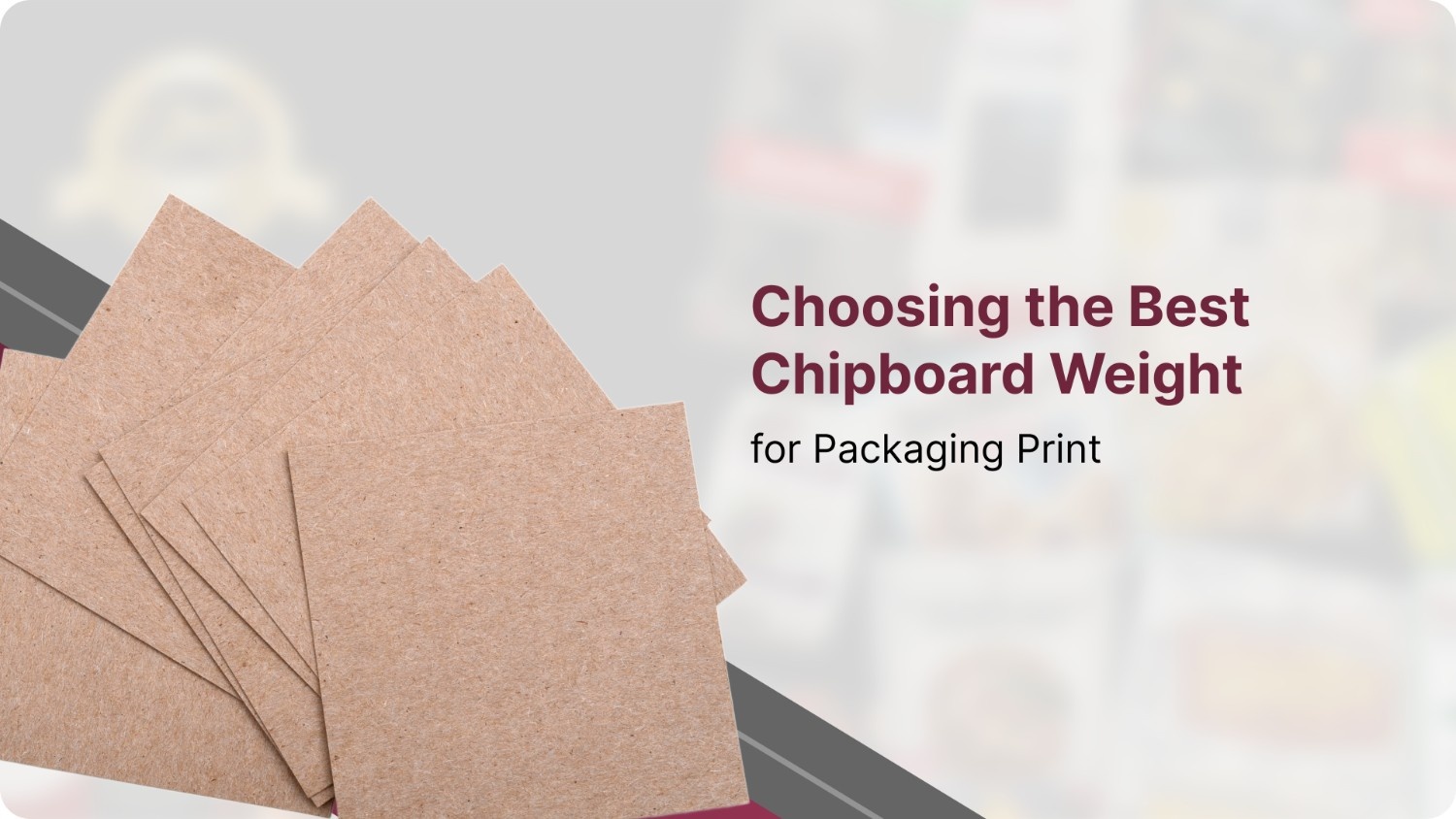
Choosing the right chipboard weight is not only about strength. It directly affects how well your artwork prints, how your carton feels in the hand, and how reliably the box performs once it’s folded and glued. Chipboard is used across folding cartons, sleeves, inserts, rigid box components, and retail displays, and each application demands a different balance between stiffness, surface smoothness, and print clarity.
Thin chipboard may flex or show surface imperfections through the print. Very thick chipboard may resist clean folding, slow down production, or absorb ink inconsistently if the liner is too porous. The key is selecting a weight (or caliper) that supports both structural needs and printing needs.
This guide explains how chipboard weight is measured, what thicknesses are typically used, how they perform in printing, and how to choose the right option for your packaging.
TL;DR / Key Takeaways
Chipboard weight doesn’t determine print quality alone — surface smoothness and density matter more. A coated or white-top chipboard at 24–28 pt prints far cleaner than a rough recycled 36 pt sheet.
Most premium printed cartons fall within a narrow sweet spot: 22–36 pt. Thin enough to fold cleanly, thick enough to support rich colors, foil, and detail.
Use thickness only for structure, not for print performance. For anything above ~40 pt (rigid boxes), you don’t print on chipboard directly — you print on wrapped paper.
GSM, PT, and mm don’t convert cleanly. Always request samples and print proofs because two boards with the same caliper can behave differently depending on the fiber mix and density.
Start with print intent, not thickness. Artwork with gradients, heavy ink coverage, or fine lines will always require a smoother, higher-density surface regardless of caliper.
How Chipboard Weight Is Measured (PT, mm, GSM, Caliper)
Chipboard manufacturers use several measurement systems, which makes comparison confusing unless you understand how each one works. Here are the three most common:
1. Point System (PT)
The most common unit in North American folding carton and chipboard manufacturing.
1 point = 0.001 inches of thickness.
Example: 24 pt = 0.024 inches ≈ 0.61 mm
2. Millimeters (mm)
Many global suppliers use millimeters to describe calipers. Typical packaging chipboard ranges from 0.4 mm to 2.0+ mm, depending on application.
3. GSM (grams per square meter)
GSM measures weight, not thickness, but in chipboard, it is often used interchangeably as an indicator of density and stiffness.
Common chipboard GSMs range from 350 GSM to 700+ GSM, depending on the ply and fiber quality.
Approximate Conversion Reference (for context only)
Because chipboard density varies by fiber mix, these conversions are not exact, but they help position the board types:
Caliper | PT | Approx. mm | Typical GSM Range |
Light carton board | 18–20 pt | 0.45–0.50 mm | 300–400 GSM |
Standard folding carton | 22–28 pt | 0.55–0.70 mm | 350–500 GSM |
Premium folding carton | 30–36 pt | 0.75–0.90 mm | 450–600 GSM |
Rigid box chipboard | 40–60 pt | 1.0–1.5 mm | 600–1000 GSM |
Heavy specialty chipboard | 70–90 pt | 1.8–2.3 mm | 900–1300+ GSM |
(These ranges come from various paper suppliers and industry-standard material sheets.)
What matters:
PT and mm reflect thickness.
GSM reflects density and weight per area.
A higher GSM chipboard at the same thickness is generally stiffer and better for high-end printing.
What Makes Chipboard “Printable”
Before we choose the right weight, it’s important to define what “prints well” actually means in packaging.
Good chipboard printability includes:
Smooth, uniform surface with minimal fiber variation
Low porosity, so the ink sits on the surface rather than soaking in
Consistent caliper for accurate die-cutting and clean creases
Strong liner quality (especially for coated or white-top chipboard)
Good ink holdout so colors stay sharp and vibrant
Two identical calipers can perform differently depending on the fiber mix. Recycled greyboard may be thick but rough; white-top kraft chipboard may be thinner but far better for graphics.
Chipboard properties that improve print quality:
White-top or clay-coated liners
Higher-density fibers (higher GSM at the same thickness)
Harder, less porous surfaces
Tighter caliper tolerances
Low surface dusting
This is why the “best weight for printing” is rarely just “the thickest one.” It’s the board that balances surface quality and structural needs.
Typical Chipboard Calipers and Their Best Uses
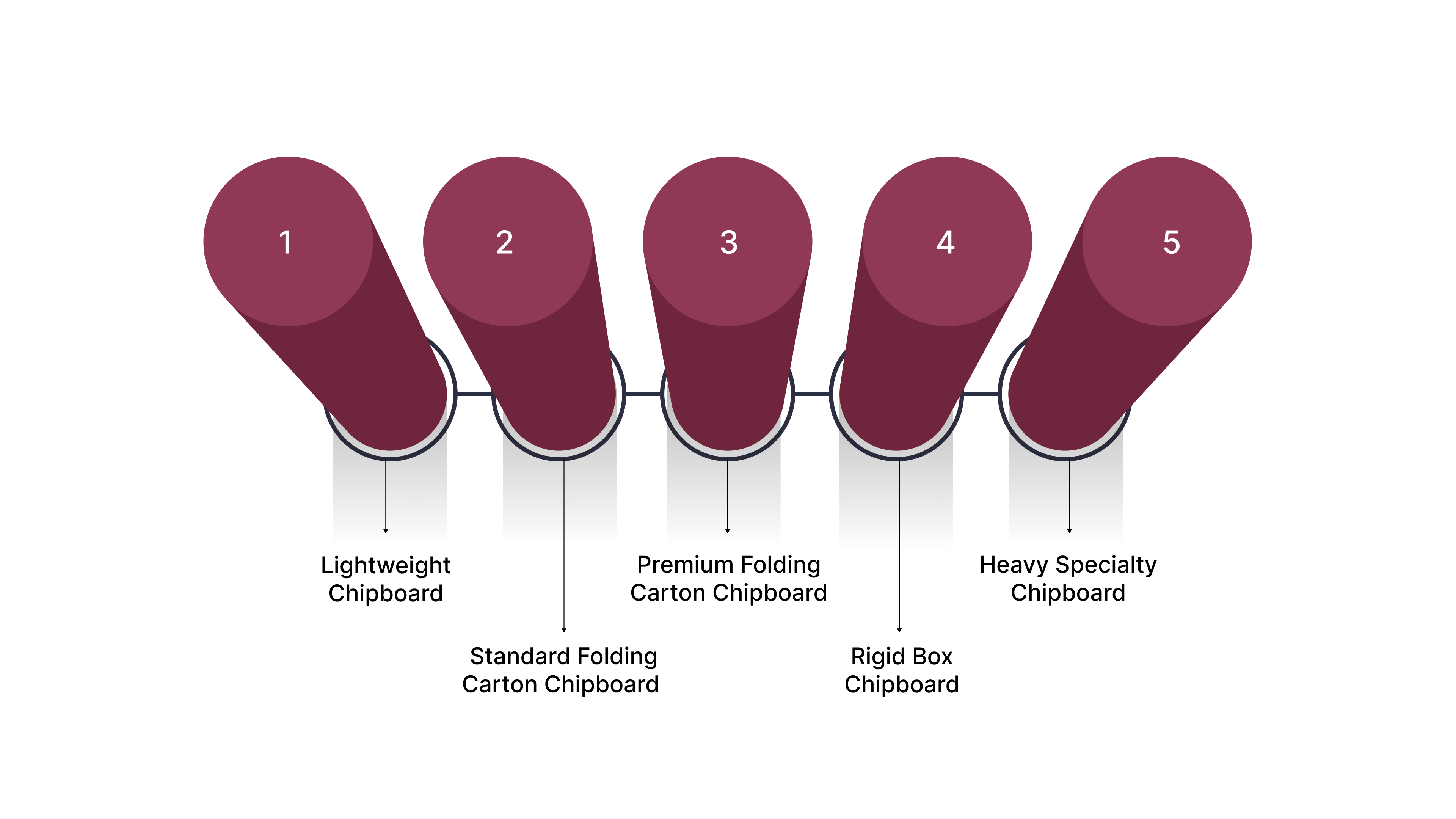
Chipboard comes in many calipers, but most packaging applications fall into a few practical ranges. Each range has a different balance of rigidity, foldability, and print quality.
1. Lightweight Chipboard (18–22 pt / ~0.45–0.55 mm)
Best for:
Inner sleeves
Folding cartons for very light items
Backer cards
Small product inserts
Print performance:
Smooth enough for simple branding and text. Not ideal for heavy ink coverage because thin chipboard can show surface imperfections through the print.
2. Standard Folding Carton Chipboard (22–28 pt / ~0.55–0.70 mm)
Best for:
Cosmetic cartons
OTC pharmaceutical cartons
Personal care packaging
Food sleeves
Retail-ready cartons
Print performance:
This is the “sweet spot” for most printed cartons. It supports fine graphics, foiling, embossing, and die-cutting. Coated white-top variations perform especially well.
3. Premium Folding Carton Chipboard (30–36 pt / ~0.75–0.90 mm)
Best for:
Premium beauty packaging
High-end small electronics
Window cartons
Specialty retail pieces
Print performance:
Supports sharper detail and deeper colors. The added caliper gives a more premium, rigid feel, while still folding cleanly on press.
4. Rigid Box Chipboard (40–60 pt / ~1.0–1.5 mm)
Best for:
Luxury rigid boxes
Gift boxes
Subscription boxes (rigid style)
Slipcases
Print performance:
Chipboard at this thickness isn’t printed on directly. Instead, printed wraps (paper, laminated sheets, specialty materials) are mounted onto the board. The thickness provides a premium structure, but print quality depends on the wrap, not the board.
5. Heavy Specialty Chipboard (70–90+ pt / ~1.8–2.3 mm)
Best for:
Heavy rigid packaging
Archival boxes
Industrial sleeves and partitions
Print performance:
Almost always wrapped rather than printed. Suitable when the priority is maximum rigidity, not direct print.
How Chipboard Thickness Influences Print Quality
A thicker board does not always mean better print. Print quality is shaped by four factors:
1. Surface Smoothness
Thin chipboard with a high-quality coated surface can print better than a thick recycled board with a rough surface. Smoothness affects:
color consistency
ink holdout
dot gain
overall clarity
Professional packaging almost always relies on coated or white-top liners for this reason.
2. Density vs. Bulk
Two boards of the same thickness may behave very differently:
High-density board: smoother, better ink hold, more premium feel.
Low-density board: more porous, absorbs ink, looks duller.
A higher GSM at the same thickness typically gives a cleaner print.
3. Folding and Crease Quality
If a board is too thick for the carton style:
folding becomes difficult
cracking at the score increases
outer layers may fracture during bending
This directly affects visual quality, especially with heavy ink coverage.
4. Finishing Compatibility
Foil stamping, embossing, spot UV, and varnishes require:
controlled caliper
clean surface
predictable stiffness
Too thin → collapse or deformation during embossing
Too thick → inconsistent foil pressure or cracking
This is why most premium printed cartons fall within a narrow mid-caliper window.
How to Choose the Best Chipboard Weight: A Practical Flow
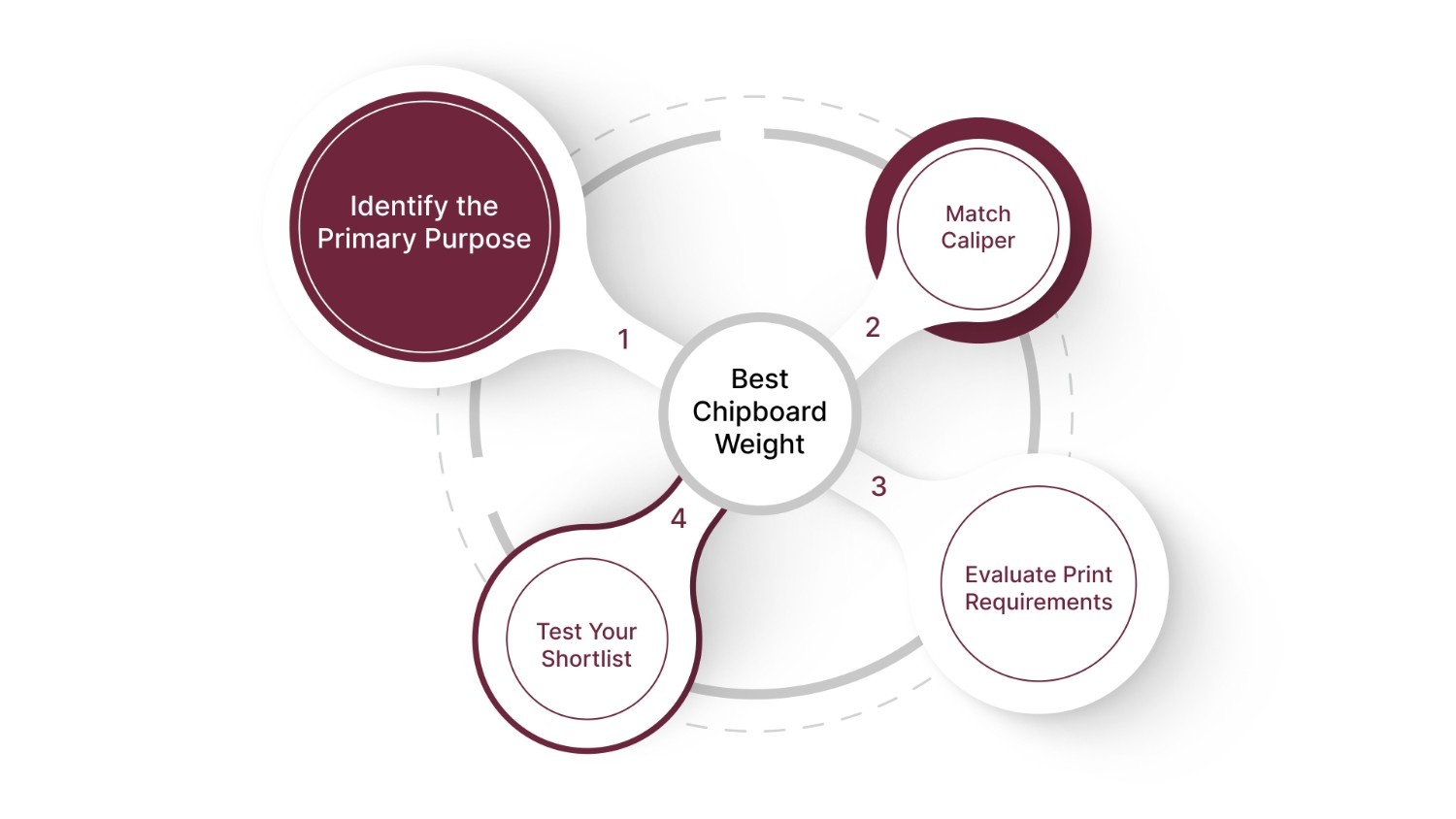
Every packaging project has different print, structural, and cost needs. A simple four-step decision flow keeps things predictable.
Step 1: Identify the Primary Purpose
Is the carton meant for:
branding and shelf appeal?
protection only?
premium experience?
inner packaging / structural inserts?
Your intention shapes the caliper range.
Step 2: Match Caliper to Product Weight and Size
As a starting point:
Light items → 18–22 pt
Most retail cartons → 22–28 pt
Premium retail → 30–36 pt
Rigid packaging → 40+ pt (wrapped)
If the product is heavy, fragile, or large, consider separate corrugated protection regardless of chipboard thickness.
Step 3: Evaluate Print Requirements
Ask your designer and printer:
Is the artwork ink-heavy?
Are gradients or fine lines involved?
Is a coated surface mandatory?
Will there be foil or embossing?
Higher-quality surfaces and slightly thicker boards often improve results.
Step 4: Test Your Shortlist
Never rely on a caliper alone. Test:
print proofs
crease and fold samples
cutting accuracy
color behavior
scuff resistance
This eliminates surprises during mass production.
Quick Reference: Recommended Chipboard Weights for Common Packaging Types
This table gives starting points only. The final choice should always be validated through print proofs and supplier samples.
Packaging Type / Use Case | Recommended Caliper (PT / mm) | Why This Works |
Light folding cartons (tea, lightweight cosmetics, supplements) | 18–22 pt (0.45–0.55 mm) | Flexible, economical, prints cleanly when coated. |
Standard retail cartons (beauty, personal care, small electronics, food sleeves) | 22–28 pt (0.55–0.70 mm) | Most balanced range for print quality + rigidity. |
Premium printed cartons (luxury cosmetics, decorated cartons) | 30–36 pt (0.75–0.90 mm) | Higher stiffness and better support for premium finishing. |
Chipboard inserts / dividers | 28–36 pt (0.70–0.90 mm) | Maintains shape inside shipping or retail cartons. |
Rigid box components (wrapped) | 40–60 pt (1.0–1.5 mm) | Not printed directly; excellent for structure and feel. |
Heavy rigid boxes / archival / specialty | 70–90+ pt (1.8–2.3 mm) | Maximum stiffness; wrap-printed only. |
Important: The “best chipboard weight for printing” sits primarily in the 22–36 pt range. Anything thicker is generally wrapped rather than printed directly.
Why GMS Industries Is a Strong Partner for Chipboard Packaging and Printing
Chipboard packaging needs more than the right caliper to look professional. The final result depends on surface consistency, accurate scoring, controlled tolerances, and precise die-cutting. GMS Industries brings these strengths together with more than three decades of experience producing chipboard cartons, inserts, instruction sheets, and retail-ready packaging.
What GMS Does Well
Smart material selection based on product weight, desired rigidity, artwork complexity, and finishing requirements.
Strong prepress support to manage color profiles, ink absorption, and surface behavior before production begins.
Precision cutting and scoring to prevent cracking, rough edges, or uneven folding on finished cartons.
Reliable finishing quality for categories where appearance matters, such as beauty, food, and consumer goods.
End-to-end packaging capability, including chipboard cartons, folding cartons, labels, instruction sheets, POP displays, rigid boxes, and fulfilment.
By combining consistent materials, controlled production processes, and hands-on technical support, GMS helps brands avoid common chipboard issues from muted colors to weak creases and achieve packaging that looks polished and performs reliably.
Conclusion
Chipboard printing is a balance of thickness, density, surface quality, and structural requirements. While caliper matters, the best print results come from:
choosing a coated or high-quality surface
selecting the correct caliper for your product weight
validating print behavior through proofs
pairing your design with a supplier experienced in chipboard packaging
GMS Industries helps brands make these decisions confidently, delivering packaging that looks sharp, protects products, and feels premium in the customer’s hand.
If you need support choosing the right chipboard weight or want to see print samples, GMS Industries can guide you through material selection, printing, and production. Contact us Today!
Frequently Asked Questions (FAQs)
1. What chipboard thickness prints best?
For most printed folding cartons, the best results come from the mid-range: 22–28 pt for everyday retail packaging and 30–36 pt for premium cartons. These calipers balance rigidity with clean folding and allow colors, gradients, and details to reproduce accurately.
2. Does higher GSM mean better print quality?
Not necessarily. GSM only reflects weight, not print surface. A board with a higher GSM can still be rough or porous, which dulls colors. Print quality depends more on surface smoothness, coatings, and fiber density than on GSM alone.
3. Do you print directly on chipboard for rigid boxes?
No. Rigid boxes use 40–60 pt or thicker chipboard, which is usually too coarse for direct printing. Instead, a separate printed wrap (paper or specialty stock) is mounted onto the board to achieve high-end print and finishing quality.
4. Is thicker chipboard always better for printing?
Thick chipboard isn’t automatically better. If the surface is rough or highly recycled, colors can look muted even at a higher caliper. Thicker boards can also crack at folds or resist clean creasing. A smoother, coated, mid-caliper board often prints sharper than a thicker but lower-quality one.
5. What’s the difference between PT, mm, and GSM?
PT and mm both describe thickness, while GSM measures weight. Because chipboard density varies, these units don’t convert cleanly. Two boards with similar PT may perform very differently in printing if their fiber mix or surface finish isn’t the same.
6. How do I know if my artwork will print well on chipboard?
The safest path is to check the surface first. Smooth, coated, or white-top chipboard handles color and detail more accurately. If your artwork includes fine lines, gradients, or heavy coverage, request a press proof, as chipboard varies by supplier, so testing is essential.