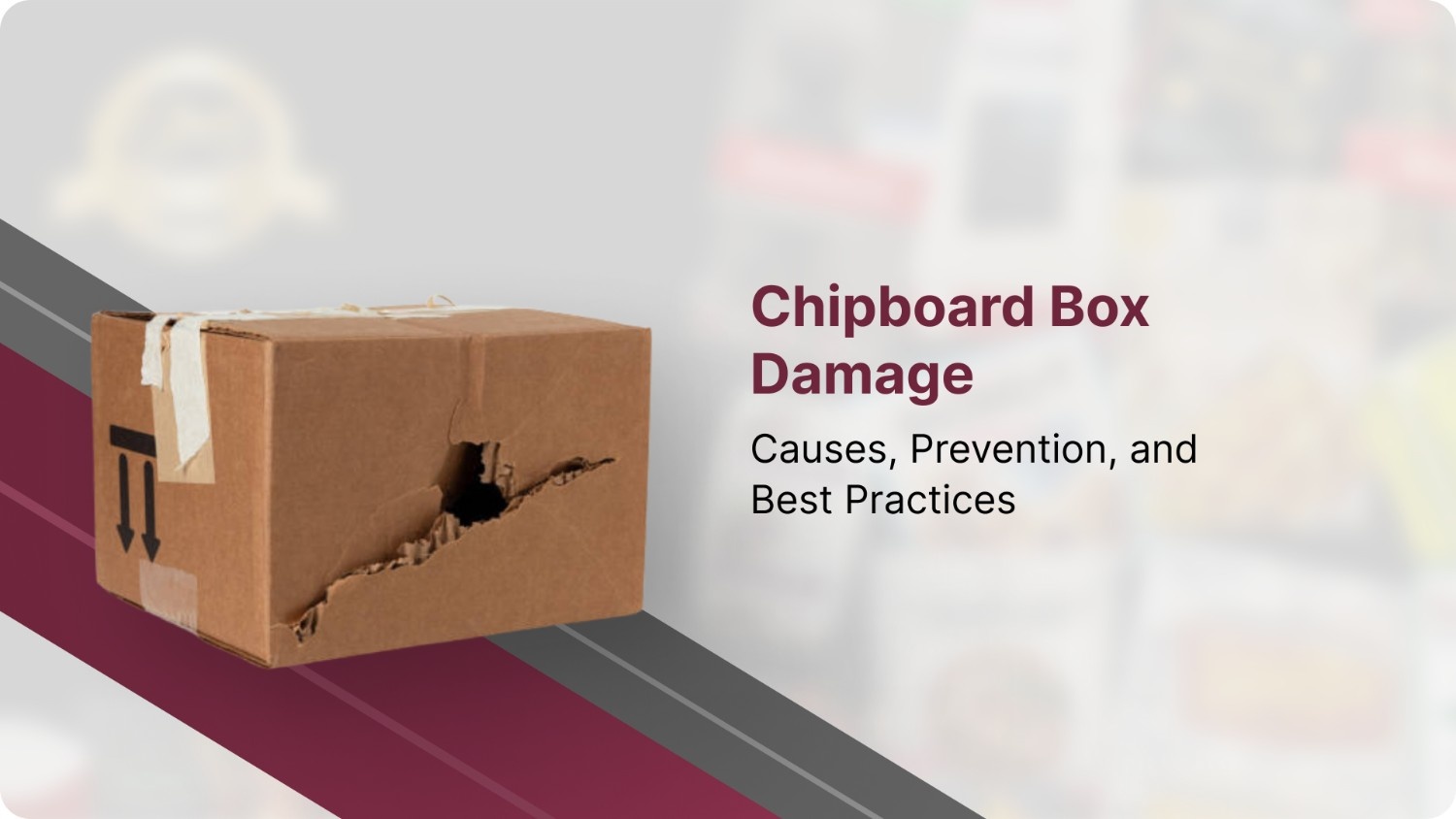
Chipboard boxes are widely used for retail packaging, sleeves, inserts, cosmetics, lightweight consumer goods, and printed displays. They provide a smooth surface for high-quality artwork and a clean presentation. However, chipboard is not intended for heavy loads, long-distance shipping, or environments with moisture and high impact. When the material is used outside its ideal range, damage becomes common and can affect both product protection and brand perception.
This guide explains why chipboard box damage occurs, how to prevent it, and how to choose the right structure and caliper for your product.
Key Takeaways
Chipboard damage is almost always a misuse problem, not a material defect. The majority of failures happen when chipboard is used for weight-bearing, moisture-prone, or shipping-heavy applications, which it was never meant to handle.
Caliper selection and scoring quality matter more than most teams realize. A well-scored, correctly calibrated chipboard box performs significantly better than a thicker but poorly designed one.
Moisture is the fastest way to weaken chipboard, causing warping, softening, delamination, and major print distortion. Storage conditions often matter as much as material choice.
Pairing chipboard with corrugated outers is the most reliable way to reduce real-world damage, especially for cosmetics, electronics accessories, and premium retail items.
Structural design is the biggest cost saver. Small reinforcements, improved folds, or better inserts can reduce breakage far more effectively than switching materials.
Understanding Chipboard and Its Strength Limitations
Chipboard is a single-ply paperboard made from compressed fibers. It is rigid, smooth, and lightweight, which makes it ideal for appearance-driven packaging. Understanding its intended purpose helps clarify why certain types of damage occur.
What Chipboard Is Designed For
Chipboard works best for:
lightweight retail products
folding cartons
product sleeves
inserts and dividers
promotional and display items
items that require a strong visual appeal
Its strength comes from density and rigidity rather than cushioning. This makes it excellent for presentation but not for protection during transport.
Where Chipboard Falls Short
Chipboard has limitations that affect performance in distribution and storage. It is not suitable for:
heavy products
stacked warehouse loads
long-distance shipping
humid or damp environments
high-vibration movement
These limitations set the foundation for most damage scenarios.
Chipboard vs Corrugated
Chipboard is a solid, flat sheet that offers rigidity, while corrugated material includes fluted layers that absorb impact and distribute weight. Corrugated is a shipping material. Chipboard is a presentation material. When chipboard is used for shipping or load-bearing applications, the risk of failure increases significantly.
Common Causes of Chipboard Box Damage
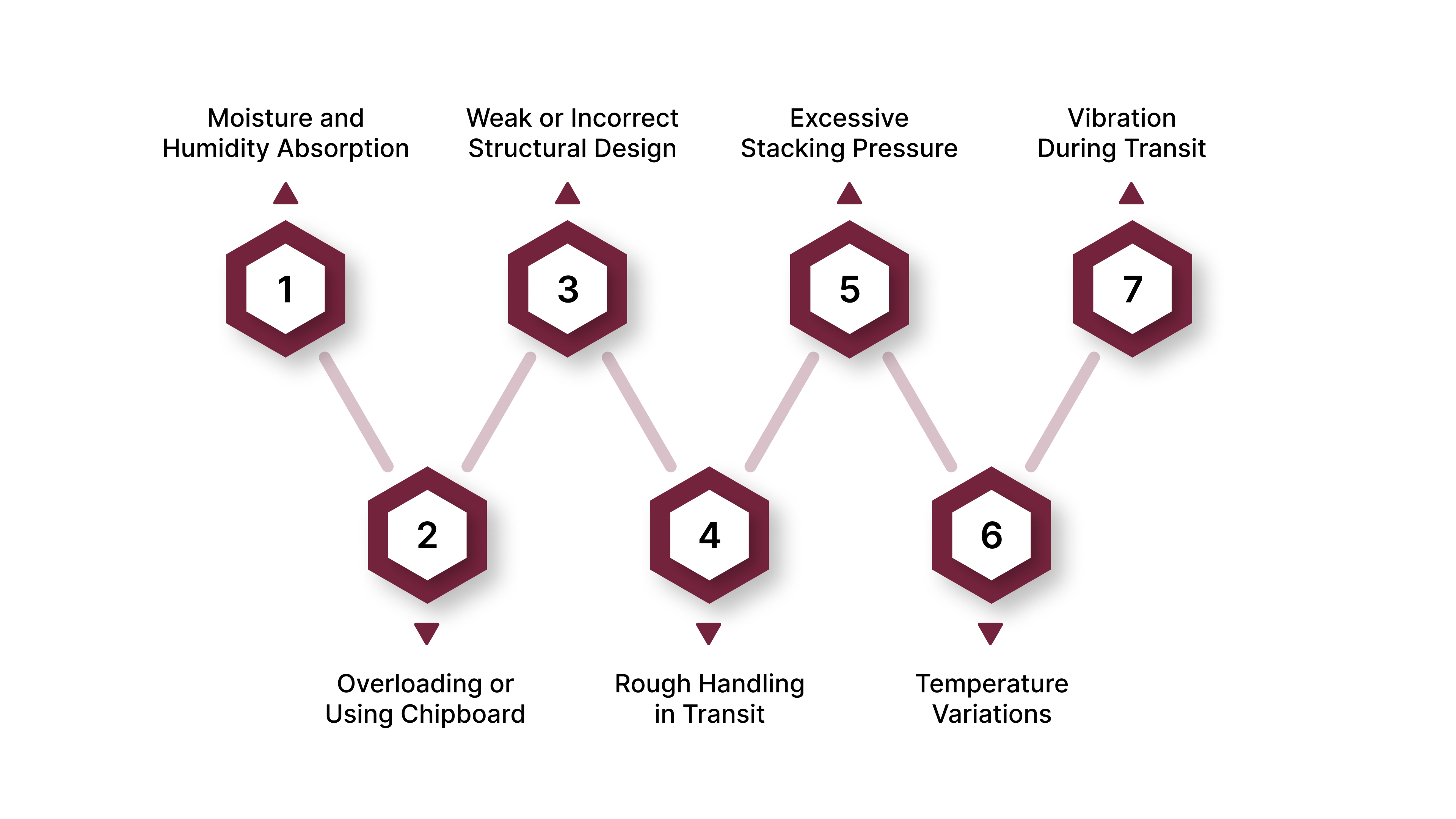
Chipboard damage generally results from a mismatch between material capabilities and real-world handling conditions. Recognizing these causes helps prevent recurring failures.
1. Moisture and Humidity Absorption
Chipboard absorbs moisture quickly. When exposed to high humidity, condensation, or direct contact with water, it can warp, soften, swell, delaminate, or lose structural rigidity. Even mild moisture exposure weakens the board and affects print quality.
2. Overloading or Using Chipboard for Heavy Products
Chipboard is not engineered for high weight. Excessive load often leads to crushed corners, bending, bowing, or tearing along folds. When placed under vertical pressure or used to hold dense items, the material fails early.
3. Weak or Incorrect Structural Design
Poor design choices reduce durability. This includes thin caliper selection, improper scoring, tight fold angles, or designs that do not distribute weight evenly. Chipboard requires precise die-cutting and scoring to maintain structural strength.
4. Rough Handling in Transit
Chipboard lacks the cushioning effect of fluted material. As a result, even moderate impact can cause denting, surface abrasions, corner compression, or tearing from handling pressure. High-speed conveyor lines and carrier handling increase the risk.
5. Excessive Stacking Pressure
Chipboard does not support vertical loads well. Stacking boxes during transport or in warehouses often results in bending, collapse, panel fatigue, or distortion of shape. This is one of the most common forms of chipboard failure.
6. Temperature Variations
Heat and temperature swings can weaken adhesives, distort coatings, and cause surfaces to warp or peel. Glue joints become less reliable, which increases the risk of panel separation.
7. Vibration During Transit
Truck movement, conveyor vibration, or repeated jostling places mechanical stress on chipboard. Without cushioning layers, the board experiences cracking, fatigue at fold lines, or gradual weakening of the structure.
How to Prevent Chipboard Box Damage
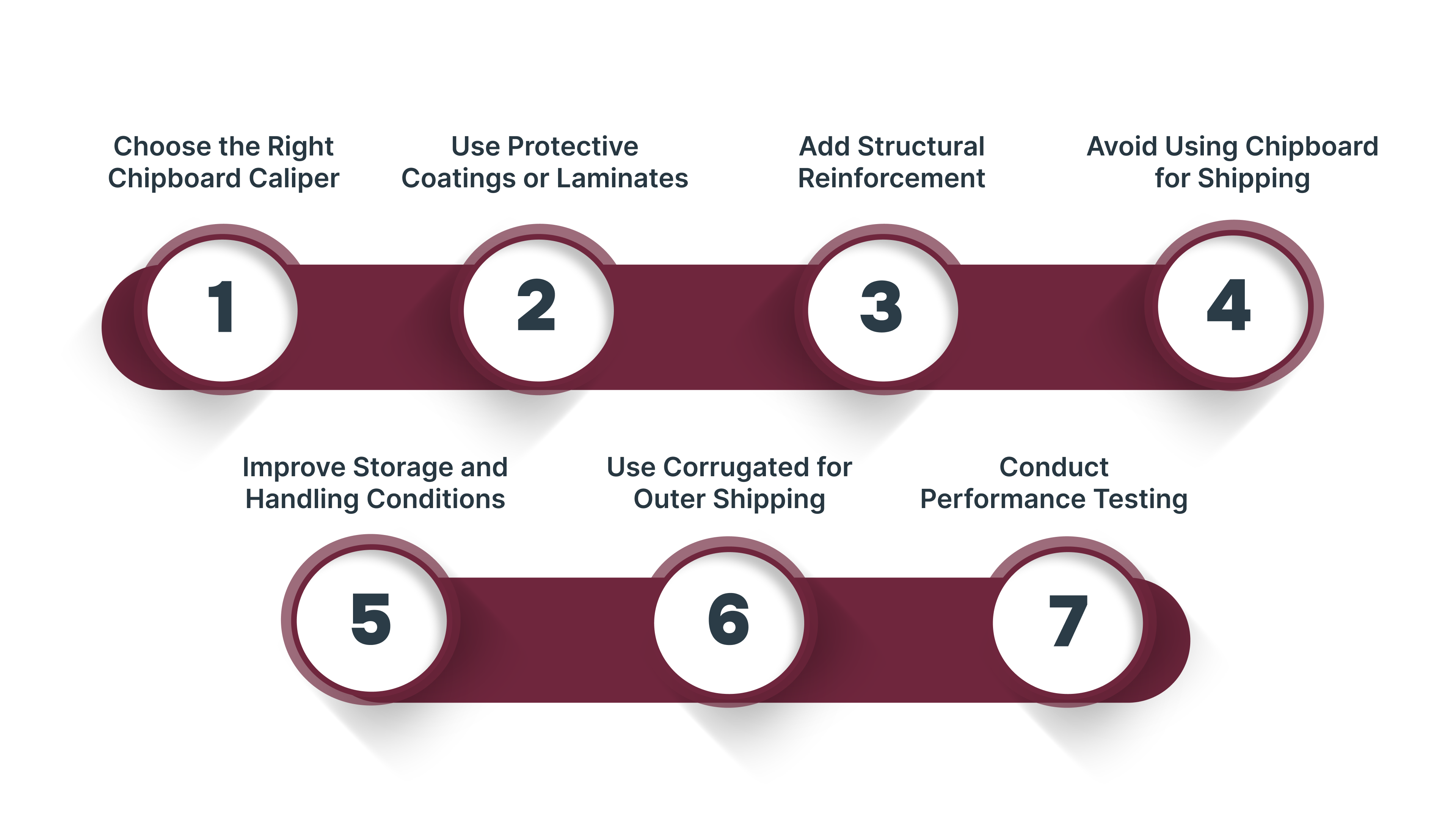
Preventing chipboard box damage requires choosing the right material specifications, designing the structure correctly, and managing storage and handling conditions. The goal is not to make chipboard behave like corrugated, but to use it within its strengths and reinforce it where necessary.
1. Choose the Right Chipboard Caliper
Chipboard comes in different calipers, and selecting the correct thickness plays a significant role in durability. Thicker calipers reduce bending, tearing, and edge damage. The correct choice depends on product weight, the rigidity needed for presentation, and how much handling the box will experience before reaching the customer.
Using a caliper that is too thin leads to weak corners and panels. Using one that is too thick increases the cost unnecessarily. Matching calipers to product requirements is one of the most effective ways to prevent damage.
2. Use Protective Coatings or Laminates
Chipboard performs better when protected with coatings that add resistance to moisture, abrasion, and light handling. Options include aqueous coatings, UV varnish, or laminated film layers. These coatings help maintain surface integrity and reduce the risk of softening or swelling in humid environments.
Coated chipboard maintains its structure longer and provides a more stable surface for printed artwork.
3. Add Structural Reinforcement Where Needed
Certain designs require additional support. Reinforcement methods include using double-wall chipboard for greater rigidity, adding corner supports, reinforcing folds, or incorporating inserts and dividers to distribute weight. These elements help stabilize the structure and prevent stress concentration on a single panel.
Reinforcement is especially important for display boxes or packaging that must hold shape on shelves.
4. Avoid Using Chipboard for Shipping or Heavy Products
Chipboard is not a shipping material. Attempting to use it for heavy or fragile items leads to high damage rates. When the product requires protection during shipping, corrugated boxes are the appropriate choice. Chipboard can still be used inside as retail packaging, sleeves, or inserts, while the corrugated box handles the load and impact.
This combination maintains presentation quality while preventing structural failure.
5. Improve Storage and Handling Conditions
Storage practices directly influence chipboard durability. Best practices include keeping chipboard in climate-controlled areas, storing it off the floor, minimizing stacking height, and keeping it away from damp zones or direct sunlight. Proper handling during assembly and packing also prevents tearing and surface damage.
A controlled storage environment maintains material stiffness and prevents warping.
6. Use Corrugated for Outer Shipping and Chipboard Inside
Many companies pair chipboard with corrugated to achieve both protection and presentation. The outer corrugated shipper absorbs impact and vibration, while the inner chipboard box provides the branded experience. This significantly lowers the risk of damage during transit and is common for cosmetics, electronics accessories, and retail-focused consumer goods.
Using a dual-material approach is one of the most reliable ways to reduce damage rates.
7. Conduct Performance Testing
Testing helps verify that a chipboard design can withstand real-world conditions. Common evaluations include compression testing, vibration testing, drop testing, and humidity exposure tests. These tests identify flaws early, before large production runs, and ensure the box performs adequately throughout the distribution chain.
Performance testing is a practical step that reduces costly redesigns later.
When Chipboard Is the Right Choice (And When It Isn’t)
Chipboard performs very well when used within the correct applications. Understanding where it excels and where it should be avoided helps businesses choose the right material from the start and prevent unnecessary damage.
Best Use Cases for Chipboard
Chipboard is ideal for:
cosmetics and personal care items
pharmaceuticals
small electronics accessories
lightweight consumer products
retail shelf packaging
food sleeves and wraps
inserts, dividers, and inner trays
promotional and display packaging
These applications rely on appearance, print quality, and light handling rather than impact protection. Chipboard offers sharp printing, clean edges, and a premium retail presence, which is why it is common in industries that prioritize presentation.
When to Avoid Chipboard
Chipboard is not suitable for situations that involve heavy weight, pressure, or unpredictable distribution environments. It should be avoided for:
shipping or transport packaging
warehouse stacking
products with high unit weight
moisture-prone or outdoor environments
items that require cushioning
long-distance or multi-stage distribution
In these scenarios, corrugated material offers far better protection and cost efficiency.
Why Chipboard Damage Matters for Businesses
Chipboard failures have a direct impact on both operational costs and brand performance. While the material is cost-effective and visually appealing, using it incorrectly can create avoidable expenses that accumulate over time.
Real Costs of Chipboard Damage Include:
Product returns or replacements
Damaged inventory during storage or transit
Reduced shelf appeal when boxes arrive distorted
Slow packing due to weak folds or torn edges
Increased customer complaints
Higher freight or handling costs from repacking
Negative brand impressions in retail environments
When packaging fails, the product loses value before it even reaches the customer. This is why material choice, structural design, and proper handling are essential.
Why GMS Industries Can Help Prevent Chipboard Box Damage
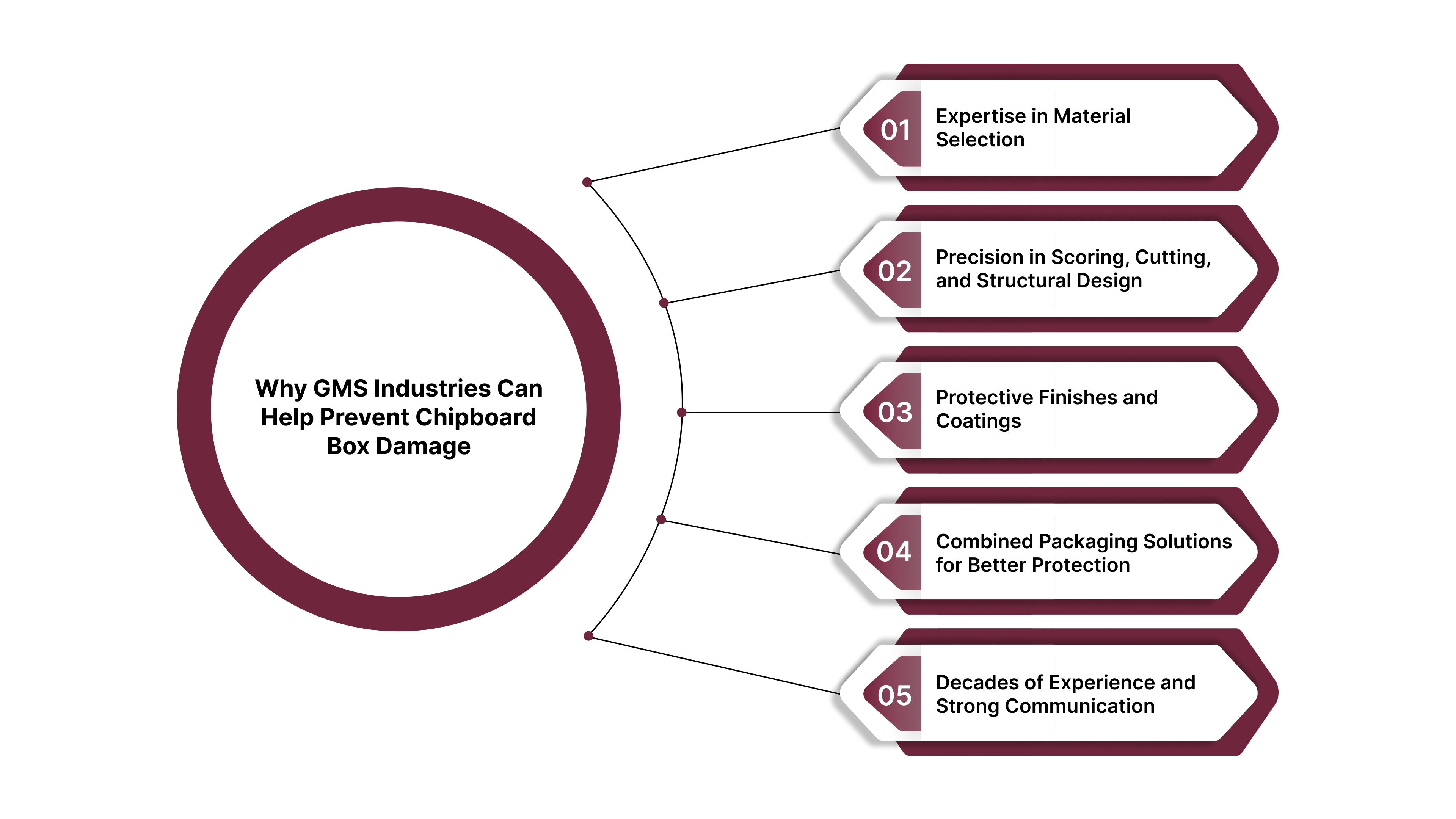
Effective chipboard packaging depends on choosing the right caliper, designing the structure correctly, and ensuring the box is produced with precision. GMS Industries supports these requirements through its experience, manufacturing capabilities, and attention to detail. The company’s approach focuses on preventing damage before it occurs.
Expertise in Material Selection
GMS helps businesses choose the correct chipboard thickness and specifications based on product weight, handling conditions, and presentation goals. This reduces the risk of bending, warping, or tearing and ensures the box performs as intended.
Precision in Scoring, Cutting, and Structural Design
Chipboard strength depends heavily on how the material is cut and scored. GMS uses precise die-cutting, accurate scoring, and structural design practices that reinforce fold lines, create clean edges, and support rigidity across panels.
Protective Finishes and Coatings
The company offers coatings that help chipboard withstand humidity, abrasion, and light handling. These finishes maintain print quality and prevent early softening or deformation, especially in moisture-sensitive environments.
Combined Packaging Solutions for Better Protection
For products that need both presentation and durability, GMS can pair chipboard with corrugated outers. This two-layer approach protects the product during shipping while maintaining a high-quality retail appearance.
Decades of Experience and Strong Communication
With more than 30 years in the industry, GMS understands how chipboard behaves through manufacturing, fulfillment, and distribution. Their emphasis on clear communication reduces errors, prevents design misalignment, and ensures packaging is produced according to the intended conditions.
Conclusion
Chipboard is an effective packaging material when used correctly, but it requires careful attention to design, caliper selection, and handling conditions. Most chipboard damage results from applying the material in situations it is not designed for, such as heavy loads, stacked warehouse storage, high moisture, or rough distribution paths. By choosing the right specifications and working with a supplier who understands chipboard performance, businesses can significantly reduce damage rates and maintain the appearance and integrity of their products.
GMS Industries supports companies with chipboard packaging that is built around efficiency, accuracy, and long-term reliability. If you want guidance on selecting the right material or improving the durability of your current chipboard packaging, the GMS team can help you find a solution that meets your requirements. Contact us Today!
FAQs
1. Why do chipboard boxes get damaged so easily?
Chipboard is a single-ply material with no internal fluting, so it lacks cushioning and compressive strength. It performs poorly under moisture, weight, stacking pressure, and impact. Most damage occurs when it is used for shipping, heavy products, or environments requiring strong protection.
2. How can I strengthen a chipboard box?
Strengthening can be done by increasing caliper thickness, reinforcing fold lines, adding inserts or dividers, applying protective coatings, or pairing the chipboard with a corrugated outer shipper. Structural design improvements often yield the biggest gains.
3. Can chipboard be used for shipping?
Not on its own. Chipboard is not a shipping material and cannot withstand vibration, stacking, or long-distance transport. It can be used inside a corrugated box as a sleeve, tray, or retail carton, but it should not function as the primary protective structure.
4. What causes chipboard to warp or soften?
Moisture is the most common cause. Humidity, condensation, water contact, and poor warehouse storage can cause chipboard to warp, soften, swell, or delaminate. Coatings and proper storage help mitigate these issues, but do not eliminate them fully.
5. What caliper of chipboard should I choose?
Caliper depends on product weight, handling conditions, and required rigidity. Lightweight retail items typically use thinner calipers, while heavier or more visually sensitive items may require thicker material. Working with a packaging supplier helps ensure the caliper aligns with real-world conditions.