Labels may seem simple, but they play a major role in product safety, compliance, and brand recognition.
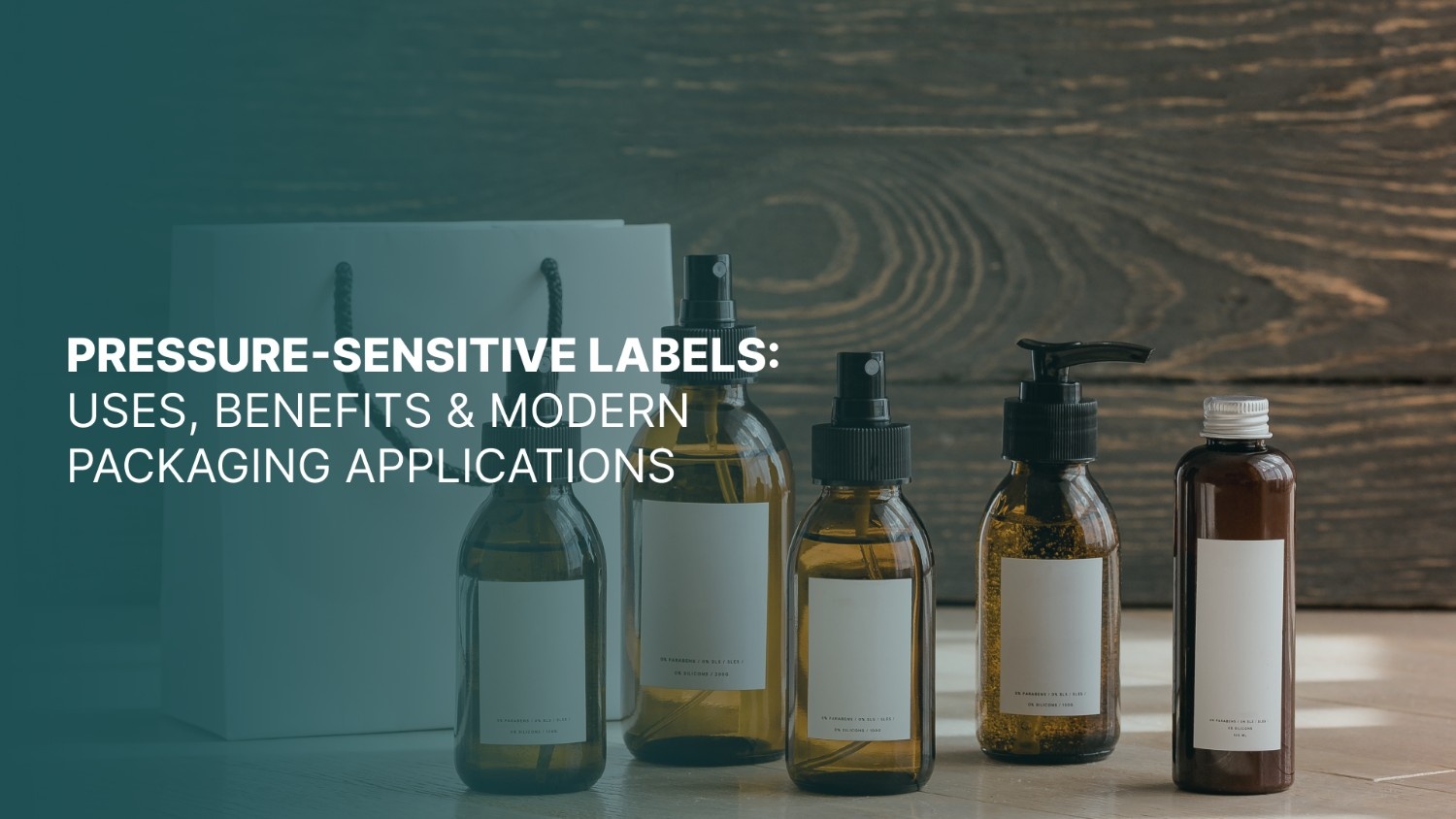
Among the many label formats used today, pressure-sensitive labels (PSLs) have become the industry standard, appearing on everything from bottled water and cosmetics to electronics and shipping cartons.
The reason is straightforward: PSLs are versatile, durable, and adaptable to nearly every surface or packaging type.
But not all pressure-sensitive labels are the same. Choosing the wrong type can cause adhesion issues, fading, or waste in production lines.
This guide breaks down the main types of pressure-sensitive labels, explaining how each works, where they fit best, and how a full-service labeling partner helps businesses select the right material, adhesive, and finish for every application.
Quick Label Lessons to Remember
One Label, Many Forms. Pressure-sensitive labels come in different materials, paper, film, foil, vinyl, and specialty types, each built for specific packaging needs.
The Surface Decides the Winner. Your container’s material, shape, and storage conditions should determine which label and adhesive you use, not just the design or finish.
Smart Labels Save More. The right material and adhesive combination can reduce waste, speed up production lines, and maintain label quality from factory to shelf.
Partner Early, Win Often. Working with a full-service partner like GMS Industries helps teams test, match, and customize label materials, ensuring performance, consistency, and visual impact at scale.
What Is a Pressure-Sensitive Label: Core Structure & How It Works
Pressure-sensitive labels are self-adhesive labeling systems designed to stick to surfaces when pressure is applied.
They don’t require water, heat, or solvent activation, which makes them fast and easy to apply on automated or manual labeling lines.
Each PSL has three essential layers, each contributing to its performance:
Component | Function |
Face Stock | The visible layer is printed with graphics or text. Can be paper, film, foil, or vinyl, depending on application needs. |
Adhesive Layer | The bonding medium determines how well the label sticks to various surfaces (plastic, glass, metal, etc.). Available in permanent, removable, or specialty formulations. |
Release Liner | A backing sheet (often coated paper or film) that protects the adhesive until application, ensuring clean release during labeling. |
Together, these layers create a label that can adapt to multiple container shapes, materials, and environments.
Because of this flexibility, PSLs are widely used in industries such as food and beverage, pharmaceuticals, logistics, industrial goods, and consumer products.
Unlike older glue-applied or heat-transfer labels, PSLs simplify packaging workflows. They are compatible with digital and flexographic printing, allow variable data or batch coding, and can support brand consistency across multiple product lines.
GMS Industries leverages this adaptability by helping clients match the right facestock, adhesive, and coating combination to the product’s lifecycle, ensuring every label performs reliably from production to retail shelf.
Main Types of Pressure-Sensitive Labels
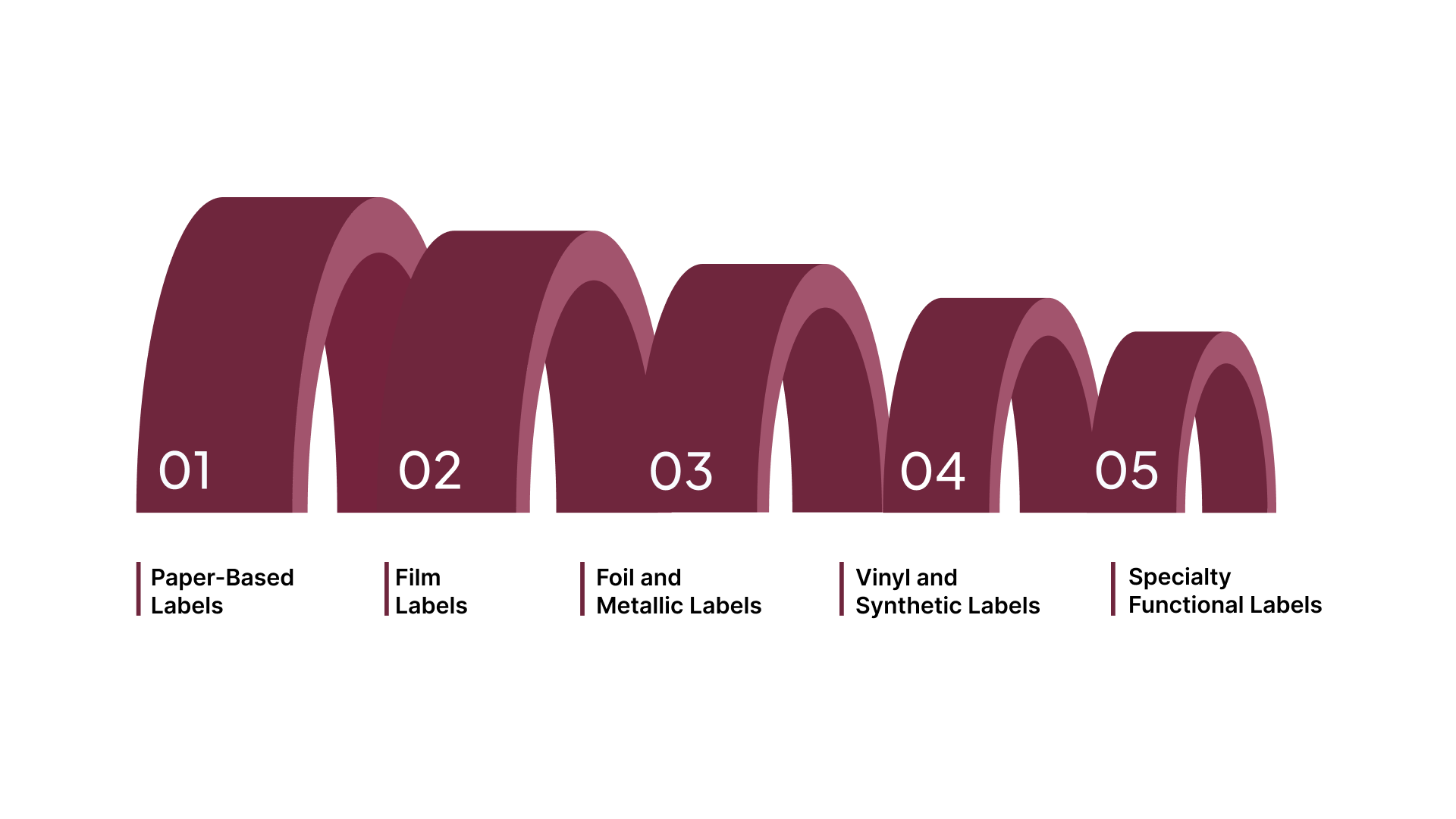
Pressure-sensitive labels can be produced using different face stocks and materials depending on performance needs, print quality, and environment.
Each type offers unique strengths and limitations, making it crucial to align label selection with the product’s purpose and packaging conditions.
Below is an overview of the most common label types used in commercial and industrial packaging.
1. Paper-Based Labels
Overview: The most widely used and cost-effective type. Made from coated or uncoated paper.
Best For: Indoor or dry environments, such as food, cosmetics, and retail packaging.
Advantages: Excellent print surface, compatible with digital and flexo printing, and economical.
Limitations: Limited moisture and chemical resistance; may tear or warp in humid conditions.
Common Applications: Retail barcodes, product descriptions, ingredient lists, promotional stickers.
2. Film Labels
Overview: Made from materials like polypropylene (PP), polyethylene (PE), or polyester (PET).
Best For: Durable labeling on curved, squeezable, or moisture-exposed surfaces.
Advantages: Resistant to water, tearing, and fading; flexible; suitable for plastic or metal containers.
Limitations: Slightly higher cost; may require specific adhesives for certain surfaces.
Common Applications: Beverage bottles, personal care items, industrial containers, flexible pouches.
3. Foil and Metallic Labels
Overview: Constructed from aluminum or metallized film for a premium appearance and durability.
Best For: High-end or decorative packaging.
Advantages: Reflective finish enhances brand visibility; resists temperature and UV exposure.
Limitations: Not suited for all printers; may require laminate protection.
Common Applications: Wine bottles, spirits, luxury goods, specialty cosmetics.
4. Vinyl and Synthetic Labels
Overview: Highly durable, tear-resistant, and designed for extreme environments.
Best For: Outdoor or industrial labeling.
Advantages: Excellent weather, abrasion, and chemical resistance.
Limitations: More expensive; heavier material thickness may affect application speed.
Common Applications: Machinery tags, warning labels, chemical drums, outdoor signage.
5. Specialty Functional Labels
These labels combine specific material and adhesive properties for specialized conditions:
Tamper-Evident / Security Labels: Break or leave residue when removed — ideal for pharmaceuticals, food, and electronics.
Cold-Temperature / Freezer Labels: Use adhesives and films designed for low temperatures.
High-Temperature Labels: Maintain adhesion and print quality in hot-fill, sterilization, or industrial processes.
Variable-Data / Barcode Labels: Enable traceability, batch coding, or regulatory compliance through digital printing.
Common Applications: Medical devices, logistics, cold-chain packaging, and regulated products.
Business Insight:
Choosing the right type isn’t just about material; it’s about matching the environment, surface, and labeling process to avoid waste and rework.
GMS Industries supports this by helping clients test and specify label materials that perform consistently on production lines and in real-world use.
Adhesive and Liner Variants: Customizing for Container, Surface, and Environment
The adhesive and liner are as critical as the label’s face stock. They determine how easily the label applies, how long it lasts, and how it interacts with the packaging surface.
1. Adhesive Types
Adhesive Type | Characteristics | Ideal Use Case |
Permanent | Strong, long-lasting bond | General consumer goods, shipping, and retail |
Removable | Peels off without residue | Promotions, temporary labels |
Repositionable | Allows adjustment before the final set | Automated lines or manual labeling |
High-Tack | Bonds to low-energy surfaces like plastics | Industrial packaging, drums |
Cold-Temperature | Activates at low temps | Frozen or refrigerated products |
Chemical-Resistant | Withstands solvents or cleaning | Automotive, lab, and chemical containers |
Tip: Adhesive choice should reflect not just surface type but also environmental exposure (temperature, moisture, handling).
2. Liner Materials
The liner is the backing that protects the adhesive before use and ensures smooth label release during application.
Liner Type | Material | Benefits |
Paper Liner | Common and economical | Suitable for most labeling applications |
PET Liner | Plastic-based | Stronger, more stable for high-speed applicators |
Filmic Liner | Thin film variant | Reduces waste and improves sustainability |
Glassine Liner | Smooth, semi-transparent paper | Ideal for tight die-cuts and precise release |
Choosing the correct liner impacts application speed, waste reduction, and cost, particularly for automated labeling lines.
3. Coatings and Finishes
Pressure-sensitive labels can be enhanced with laminates, varnishes, or UV coatings for protection and appearance.
These additions help prevent scuffing, moisture damage, and UV fading, improving label lifespan and brand integrity.
Business Insight:
Incorrect adhesive or liner selection can slow production or increase waste.
GMS Industries’ labeling experts help clients evaluate container materials, labeling speed, and environmental conditions to ensure adhesives and liners perform reliably on every application line.
Use-Case Matrix: Which Label Type for Which Application
Not all labels perform equally across packaging environments. Different products, surfaces, and storage conditions demand specific combinations of facestock, adhesive, and finish.
Below is a quick-use matrix summarizing the most common labeling scenarios and the corresponding pressure-sensitive label types.
Application / Environment | Recommended Label Type | Reason / Key Features |
Food & Beverage Packaging | Film or paper labels with moisture-resistant coatings | Resists condensation, supports vibrant branding |
Cosmetics & Personal Care | Film or foil labels | Conforms to curved bottles, maintains appearance under moisture or oil exposure |
Household & Consumer Goods | Paper labels (cost-efficient) | For short-life products, minimal exposure to heat or water |
Industrial & Chemical Containers | Vinyl or high-tack film labels | Withstands abrasion, chemicals, and temperature fluctuations |
Cold-Chain / Refrigerated Goods | Cold-temperature film labels | Adhesive performs under freezing conditions |
Pharmaceutical & Medical Products | Tamper-evident or variable-data labels | Ensures authenticity, supports traceability and compliance |
E-commerce / Logistics | Paper or synthetic shipping labels | Easy to print, durable for barcode scanning and handling |
Luxury & Premium Products | Foil or metallic film labels | Creates a high-end aesthetic and enhances shelf appeal |
Business Takeaway
Choosing a label type isn’t just about visual design; it directly affects supply-chain efficiency, regulatory compliance, and waste reduction.
A mismatch between label type and container surface can lead to adhesion failure, peeling, or damaged branding.
GMS Industries helps manufacturers and brand owners evaluate these variables early in the packaging design phase.
By testing label materials under real-world conditions, they ensure reliable adhesion, consistent color reproduction, and production-line efficiency.
Benefits & Limitations of Pressure-Sensitive Label Types
Pressure-sensitive labels dominate the global packaging landscape for good reason; they simplify application, enhance design flexibility, and reduce setup time.
However, like any material, they come with trade-offs that businesses should understand before specifying them for large-scale production
1. Benefits
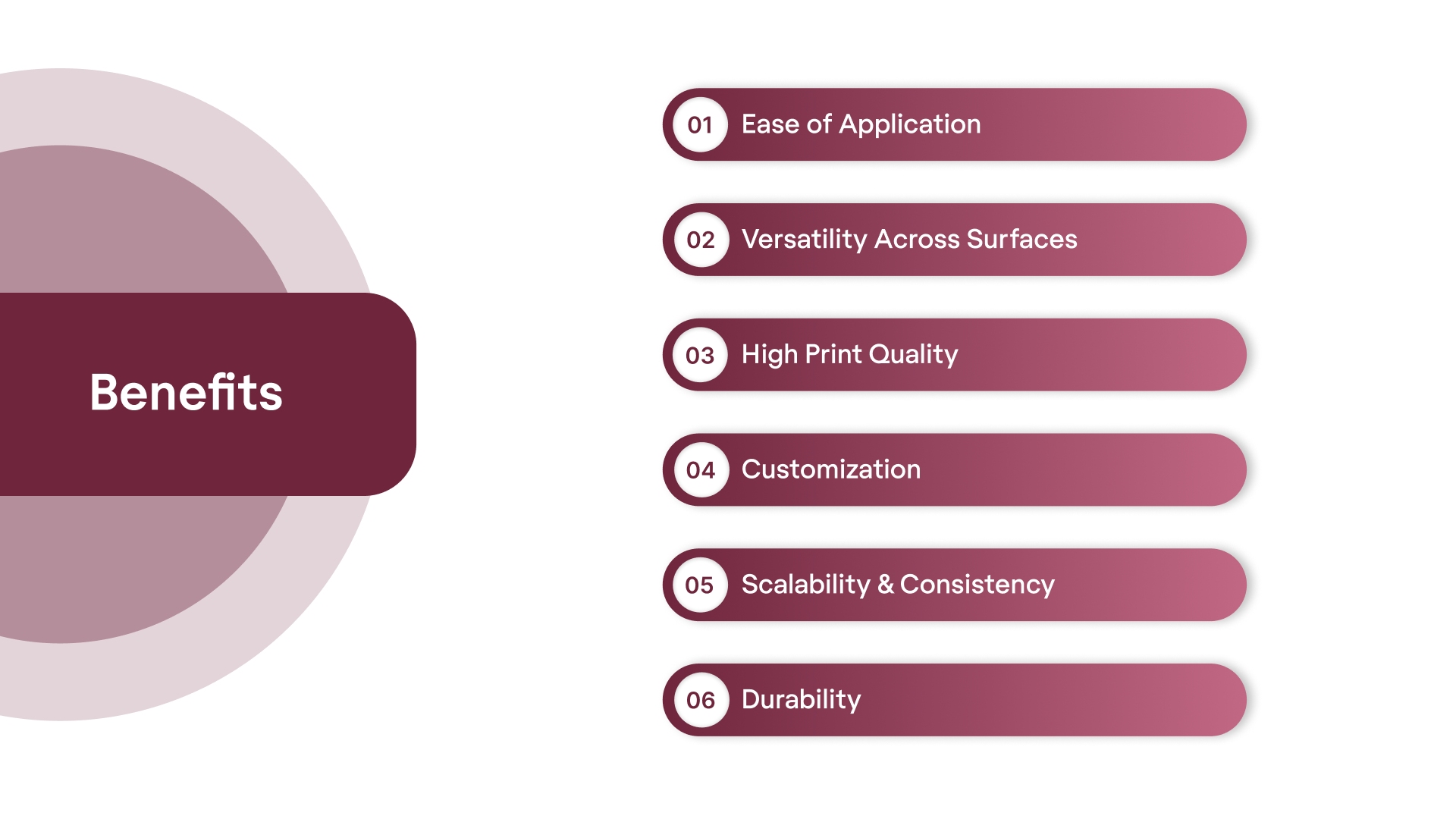
Ease of Application: No water, solvent, or heat required, just pressure. Works with both manual and automated systems, supporting high throughput.
Versatility Across Surfaces: Adheres to glass, plastic, metal, cardboard, and flexible packaging, allowing one labeling solution across multiple product lines.
High Print Quality: Compatible with flexographic, digital, and thermal printing, ideal for branding, barcodes, and compliance labels.
Customization: Offers a range of finishesmatte, gloss, clear-on-clear, metallic, allowing brand differentiation without costly tooling.
Scalability & Consistency: Quick to produce and replicate, ensuring consistency across SKUs and regions.
Durability: With the right combination of adhesive and film, PSLs withstand moisture, UV, abrasion, and chemical exposure.
2. Limitations
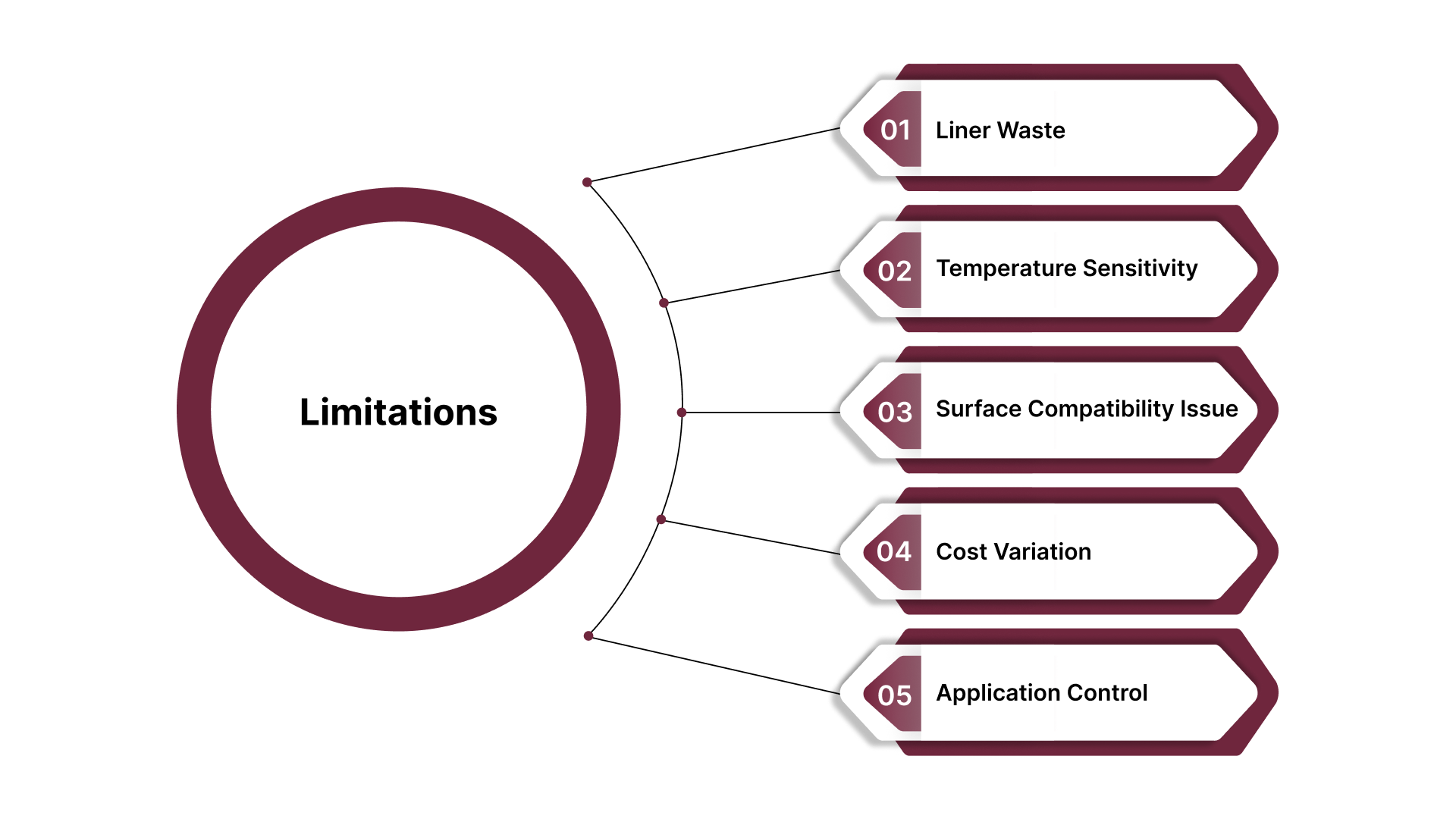
Liner Waste: The silicone-coated liner backing is typically not reusable, creating additional waste management requirements.
Temperature Sensitivity: Some adhesives underperform in extreme cold or heat, requiring specialized formulations.
Surface Compatibility Issue: Low-energy surfaces (e.g., HDPE plastics) may need tailored adhesives to ensure strong bonding.
Cost Variation: Premium materials like metallic films or tamper-evident substrates can increase total labeling cost.
Application Control: Air bubbles or wrinkles can occur if surface conditions or application pressures aren’t optimized.
Operational Insight
When chosen correctly, PSLs reduce downtime, improve labeling speed, and support sustainability goals.
However, misaligned material or adhesive choices often lead to higher rework rates and lost efficiency.
GMS Industries provides in-house testing and engineering support, ensuring that each label’s adhesive, liner, and facestock are tuned to specific production conditions, delivering reliable performance from print to end-use.
Tips for Choosing the Right Pressure-Sensitive Label Supplier / Partner
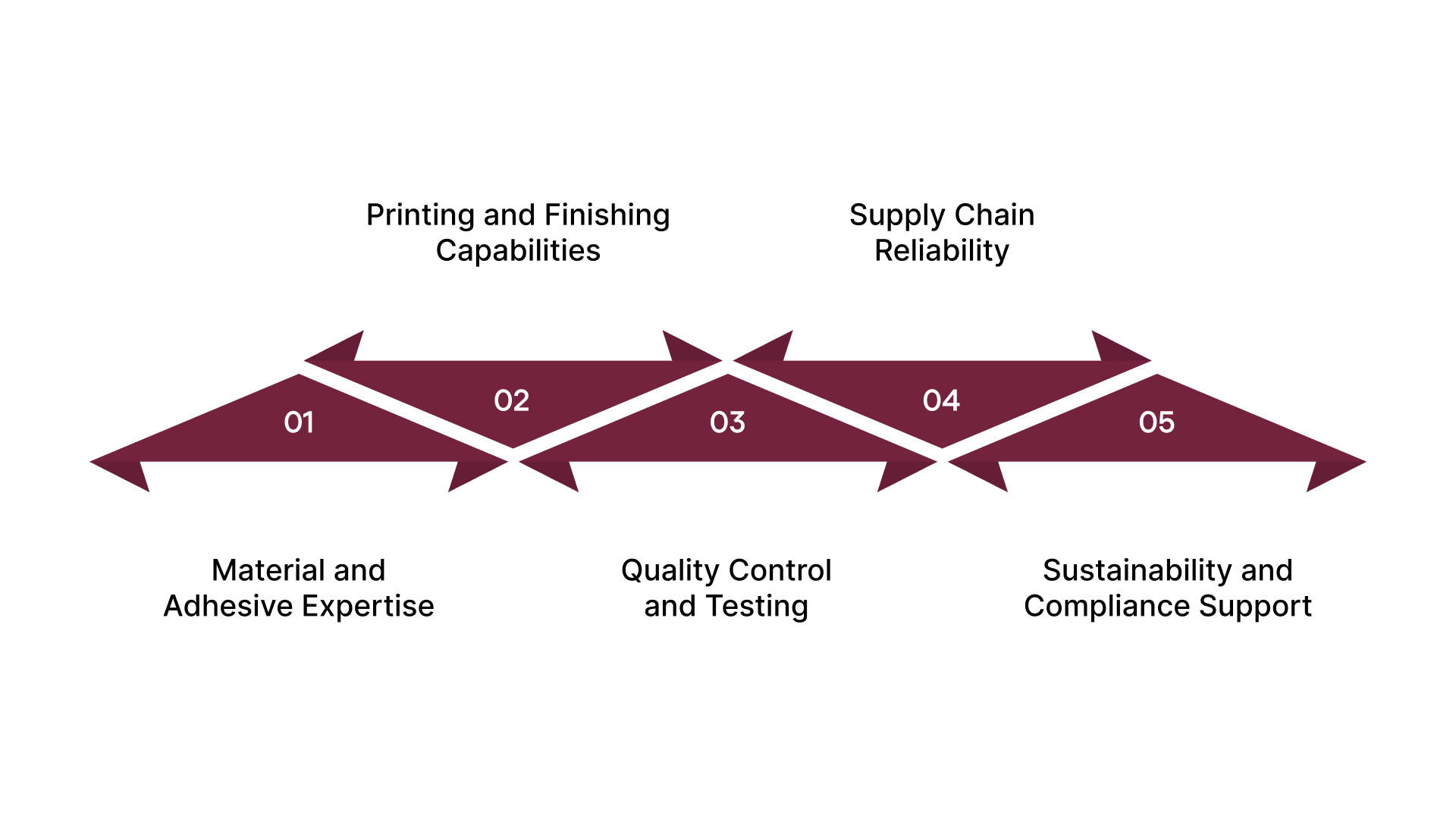
Selecting the right label type is only part of the equation. Equally important is finding a reliable labeling partner who understands materials, adhesives, and production requirements well enough to deliver consistent quality across every run.
Here’s what decision-makers should consider when evaluating a supplier.
1. Material and Adhesive Expertise
A capable partner should understand label chemistry and application surfaces, not just print quality.
They should advise on the right adhesive formulations, liners, and coatings for each product type, ensuring your labels stay in place through filling, transport, and use.
Example: GMS Industries tests each label construction for compatibility with plastic, glass, or metal surfaces under expected temperature and humidity conditions before full production.
2. Printing and Finishing Capabilities
Modern labeling involves digital, flexographic, and hybrid printing to meet diverse design and compliance needs. The supplier should offer:
Multiple print methods (for scalability and variable data)
Finishes like matte, gloss, or tactile coatings
Die-cutting, embossing, and foil stamping for premium applications
This versatility ensures brand consistency and compliance across markets and product lines.
3. Quality Control and Testing
Pressure-sensitive labels must perform consistently across runs. Ask if your supplier conducts adhesion, peel, and durability testing under simulated product conditions. A robust quality-control process reduces waste, downtime, and returns.
4. Supply Chain Reliability
Choose a partner who provides both short-run flexibility and bulk-scale dependability. This is critical for manufacturers managing multiple SKUs or seasonal demand fluctuations.
GMS Industries offers integrated label production, inventory management, and just-in-time delivery to help clients reduce lead times and avoid overstocking.
5. Sustainability and Compliance Support
Packaging buyers increasingly prioritize eco-friendly labeling materials and recyclable liners.
An experienced partner will guide you toward sustainable film stocks, water-based adhesives, and liner-recycling programs, aligning packaging with environmental and regulatory goals.
Business Insight:
A knowledgeable supplier doesn’t just print labels; they help you optimize cost, performance, and operational efficiency.
That’s why GMS Industries acts as both a technical advisor and manufacturing partner, ensuring each label delivers consistent adhesion, durability, and on-brand presentation.
Quick Label Selection Checklist
Decision Factor | What to Consider | Best Practice |
Product Surface | Plastic, glass, metal, cardboard | Match adhesive to surface energy and shape |
Environment | Heat, cold, moisture, chemicals | Choose temperature- or chemical-resistant materials |
Label Lifespan | Short-term or long-term | Permanent vs removable adhesive |
Printing Need | Branding, barcodes, variable data | Select digital or flexo printing accordingly |
Durability | Exposure to handling or abrasion | Use films, vinyls, or protective coatings |
Cost Target | Budget vs premium presentation | Balance face stock and coating quality |
Sustainability Goal | Recycled content or liner recovery | Opt for eco-certified materials |
Partner Selection | Vendor capabilities, testing, and delivery | Work with a full-service provider like GMS |
Conclusion
Selecting the right pressure-sensitive label involves many moving parts, materials, adhesives, coatings, printing, and application. This checklist helps packaging managers and procurement teams make quick, informed decisions.
Pressure-sensitive labels are more than identification tools; they are part of a product’s performance, presentation, and compliance system.
Understanding the types, materials, and adhesives helps manufacturers make smarter, more cost-effective choices.
Whether you need durable film labels for industrial packaging or high-clarity paper labels for retail shelves, the right combination starts with expert guidance.
GMS Industries helps businesses design, test, and deliver custom label solutions that meet operational goals, improving reliability, reducing waste, and strengthening brand integrity at every stage of production.
Frequently Asked Questions
Q1. What are pressure-sensitive labels?
Pressure-sensitive labels use pre-applied adhesive that sticks with light pressure; no heat, water, or solvent is needed.
Q2. How many types of pressure-sensitive labels are there?
There are several, including paper, film, foil, vinyl, and specialty types like tamper-evident or cold-temperature labels.
Q3. Which label type is best for my product?
It depends on your product surface, storage conditions, and durability needs. Paper suits retail; film and vinyl suit industrial or moisture-prone uses.
Q4. Can pressure-sensitive labels be customized?
Yes. They can be printed, embossed, laminated, or die-cut to match brand and packaging needs.
Q5. Are these labels recyclable?
Most are recyclable, especially paper-based types. Film and foil variants can be eco-friendly if paired with recyclable liners.