Label failures seem small, until they halt a production line, trigger rework, or reach store shelves. For brands using pressure-sensitive labels, problems like peeling, smearing, poor ink adhesion, or labels that won’t dispense correctly are more than cosmetic issues; they’re costly mistakes.
And they’re becoming more common. As demand for self-adhesive labels grows, an industry projected to reach $69.2B by 2028, products move faster through fulfillment, cold chain, shipping, and automated application. The margin for error gets smaller, while expectations get higher.
The only way to prevent failures is through reliable quality testing. Pressure-sensitive labels must prove they can adhere properly, withstand handling, survive environmental conditions, and perform on application equipment before they ever reach production.
This guide breaks down the essential tests that ensure your labels hold up in the real world, so your team avoids returns, reprints, and last-minute fixes that slow everything down.
Key Takeaways
Pressure-sensitive labels fail most often due to adhesion issues, ink durability problems, or liner/release defects.
Critical tests include peel adhesion, loop tack, shear, rub/scratch resistance, release force, die-cut accuracy, and cold-temperature performance.
FINAT and ASTM provide the most widely recognized testing standards.
Environmental exposure, moisture, temperature swings, oils, chemicals, and curved surfaces are the top causes of unexpected label failure.
Strong suppliers test each component (facestock, adhesive, liner) and validate performance under real-world application conditions.
What Are Pressure-Sensitive Labels?
Pressure-sensitive labels, often called self-adhesive labels, adhere when light pressure is applied. They’re built from three key layers:
Facestock: the printable material (paper, film, foil).
Adhesive: formulated to bond with specific surfaces and environments.
Liner + release coating: protects the adhesive and controls how the label dispenses.
They’re used across nearly every consumer and industrial category because they’re versatile, machine-friendly, and customizable for different surfaces, shapes, and conditions. But that flexibility means the label’s performance depends heavily on how well each layer is matched and tested.
This is why quality testing matters so much; even small changes in material, adhesive chemistry, or environmental exposure can dramatically affect how a pressure-sensitive label behaves in production or out in the field.
Why Quality Testing Matters (and What’s at Risk When Labels Fail)
Pressure-sensitive labels carry essential information, branding, ingredients, tracking, safety warnings, and they must survive manufacturing, distribution, and consumer handling without failing.
When they don’t, companies face real consequences:
Retail rejections due to damaged barcodes or lifted corners
Production slowdowns from labels that jam or won’t release cleanly
Rework and repackaging costs when adhesion fails in transit
Regulatory risk for industries that require permanent, legible labeling
Brand damage from peeling, bubbling, or scuffed labels on shelves
Most failures can be traced back to issues that would have been caught in quality testing: weak adhesive tack, poor ink anchorage, incorrect liner release, inadequate die-cut depth, or environmental conditions the label wasn’t designed for.
This is why robust testing is the only way to ensure your labels behave exactly as they should on your container, with your applicator, and in your environment.
Factors That Influence Pressure-Sensitive Label Selection
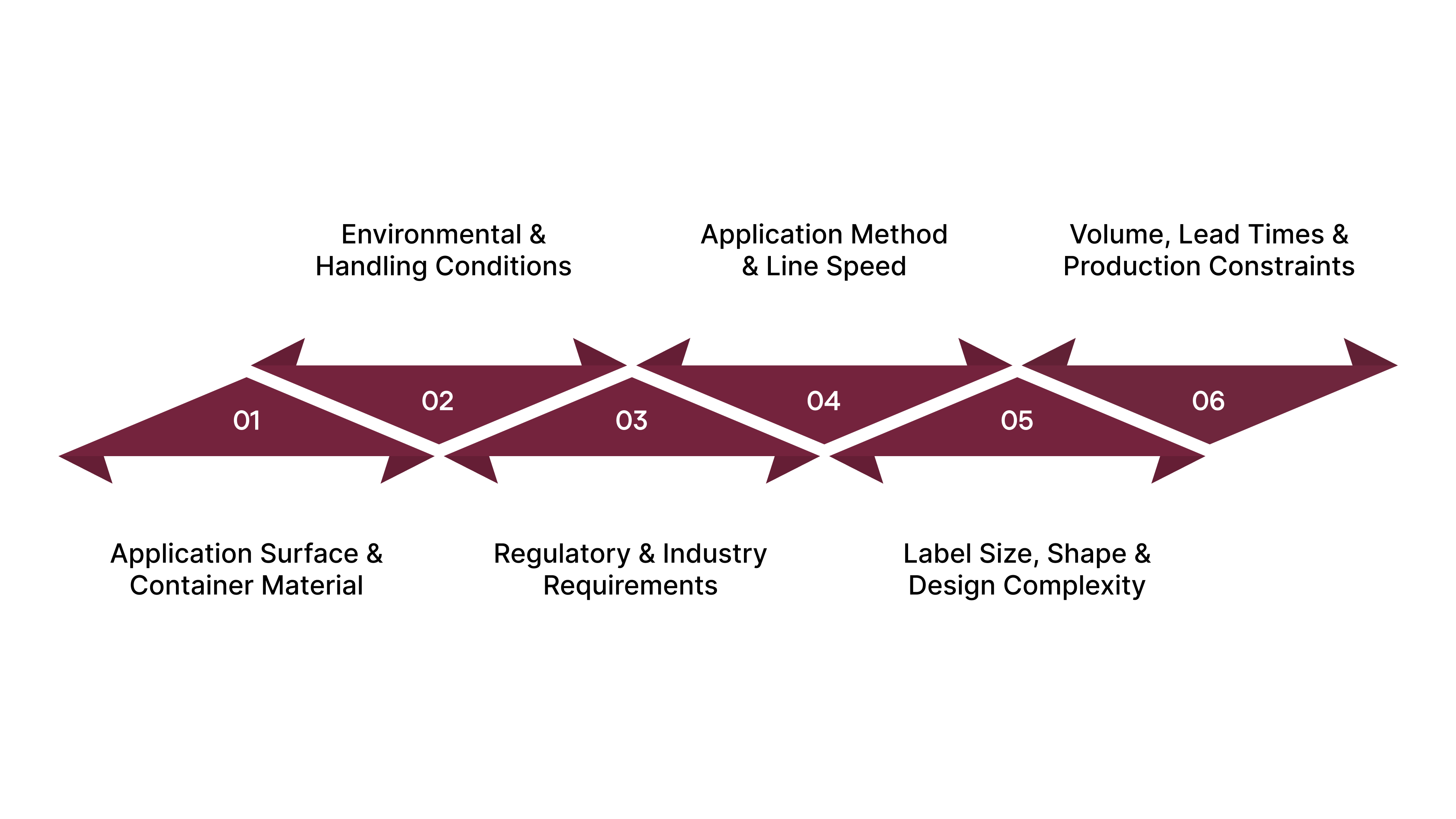
Choosing the right pressure-sensitive label isn’t as simple as picking a material and hitting print. The conditions your product undergoes during filling, shipping, storage, and final use determine what the label must withstand and which quality tests are required to verify performance. Below are the factors with the greatest impact on label selection and testing.
Application Surface & Container Material
The surface your label must adhere to is one of the strongest predictors of label performance. Smooth glass, textured HDPE, coated cartons, and small-diameter tubes all behave differently with adhesives.
Common considerations include:
Material type (glass, plastic, metal, paperboard)
Surface texture or coatings
Curvature or diameter of the container
These factors determine which adhesion tests, such as mandrel hold or peel strength, are necessary.
Environmental & Handling Conditions
Where the product travels and how it’s stored play a major role in label durability. A label that performs well in an office environment may fail quickly in real-world conditions without proper testing.
Environmental variables to account for:
Refrigeration or cold chain exposure
High humidity or condensation
Oils, chemicals, or cleaners
Heat or UV exposure
Abrasion during shipping or shelf contact
These conditions dictate tests for rub resistance, cold-temperature adhesion, moisture resistance, and more.
Regulatory & Industry Requirements
Industries like food and beverage, personal care, industrial chemicals, and pharmaceuticals often require labels to remain legible and secure for a specific period of time.
This may influence:
Adhesive permanence requirements
Print durability and chemical resistance
Compliance with wash-off or recyclability standards
Testing ensures labels continue performing as required throughout the product’s lifecycle.
Application Method & Line Speed
How labels are applied has a direct impact on material choice and test requirements. Hand application is forgiving; automated lines are not.
Critical considerations include:
High-speed dispensing requirements
Liner strength and release characteristics
Die-cut accuracy and matrix removal
Compatibility with existing equipment
This drives the need for tests like release force, die-strike depth, and applicator performance checks.
Label Size, Shape & Design Complexity
Your design doesn't just affect appearance, it affects performance. Larger wraps, tight radiuses, and unique die-cuts can stress a label more than expected.
Design-related considerations include:
Label curvature and wraparound coverage
Edge-to-edge printing or heavy ink coverage
Unusual shapes or perforations
Testing helps confirm the design won’t lift, curl, or tear during application or use.
Volume, Lead Times & Production Constraints
Finally, the realities of production can influence what materials and tests are required. Short timelines, frequent reorders, or multiple SKUs may require alternative constructions or faster-curing adhesives.
You may need to factor in:
Material availability
Roll direction for automated lines
Speed of curing or finishing processes
Whether accelerated aging tests are needed
The 3 Layers That Influence Label Performance
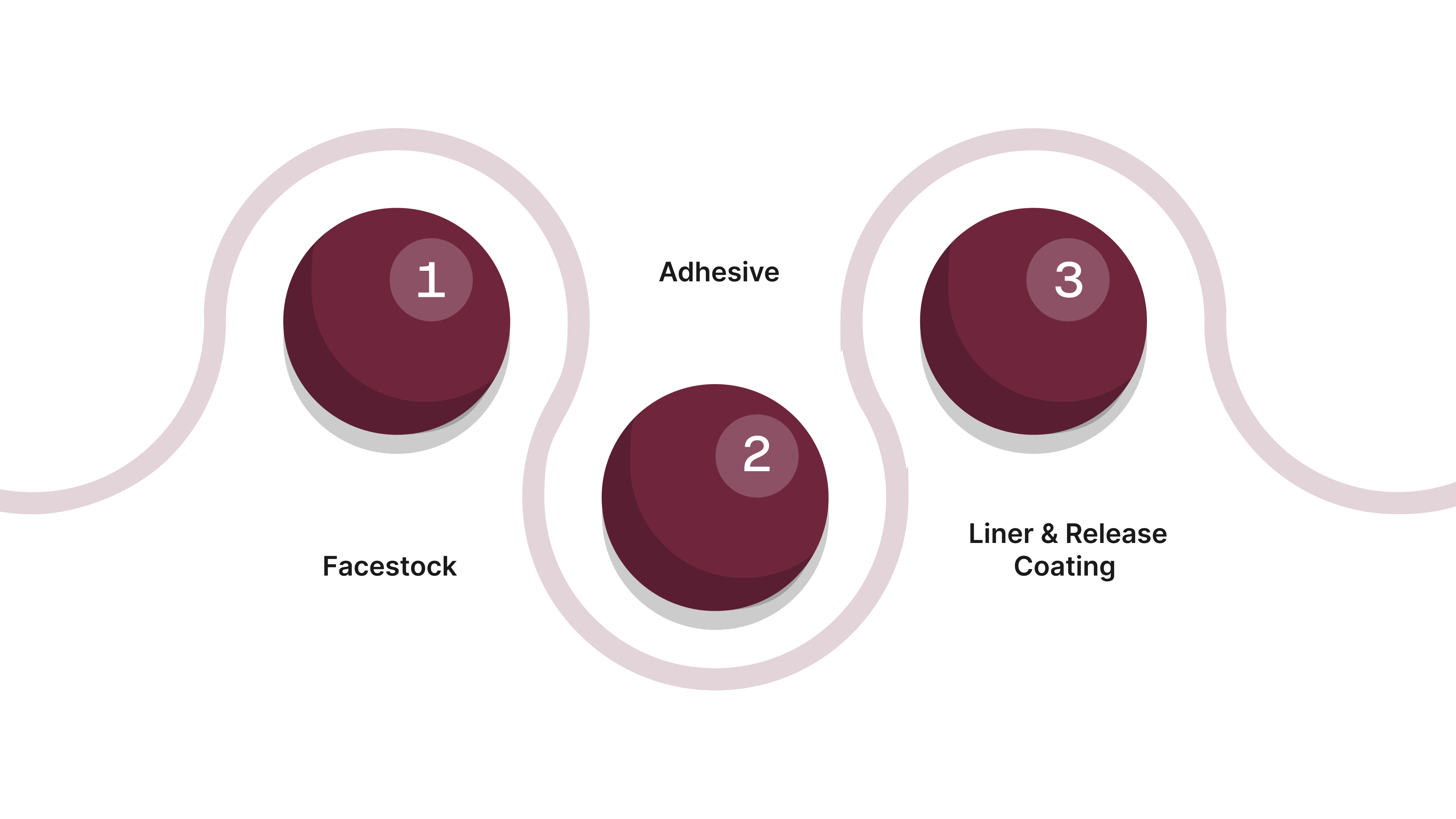
Every pressure-sensitive label is built from three core layers. How each layer is engineered and how well they work together determines the label’s durability, print quality, adhesion, and dispensing performance. Most quality tests tie back to one of these layers.
1. Facestock (The Printable Surface)
The facestock is the visible part of the label, paper, film, foil, or specialty materials. Its job is to display graphics clearly and survive the conditions your product will encounter.
Why it matters:
Determines print quality and ink anchorage
Affects stiffness, flexibility, and ability to wrap around curves
Impacts chemical, moisture, and abrasion resistance
Influences sustainability and recyclability options
Common facestock issues caught during testing:
Ink smearing or scratching
Curling on curved containers
Poor clarity on films
Paper tearing under moisture
2. Adhesive (What Makes the Label Stick)
The adhesive is the most critical functional component. Different adhesives are formulated for different surfaces, temperatures, and environments, and choosing the wrong one is the fastest way to experience label failure.
Why it matters:
Controls peel strength and long-term bond
Determines performance in cold, heat, moisture, and chemical exposure
Affects initial tack (fast-stick) needed for high-speed lines
Critical for small-diameter and flexible containers
Common adhesive failures revealed through testing:
Corner lift or full label lift
Poor grab on plastics like HDPE and PP
Adhesive ooze or bleed
Failure in cold chain or wet environments
3. Liner & Release Coating (What Controls Dispensing)
The liner holds the label in place until it’s applied. It includes a silicone release coating that allows the label to peel off cleanly. A high-quality liner keeps automated equipment running smoothly; a poor-quality liner causes jams and downtime.
Why it matters:
Ensures consistent, smooth release during application
Prevents matrix breaks and tearing
Affects run speeds on automated equipment
Protects the adhesive from contamination
Common liner issues caught in testing:
Uneven release force that causes misfeeds
Liner tears or breaks at high speeds
Silicone gaps leading to stuck labels
Premature release during dispensing
All three layers must be compatible. A premium facestock with the wrong adhesive will fail. A great adhesive with a weak liner will jam applicators. Quality testing ensures each layer is chosen and calibrated to perform exactly as your product requires.
Core Quality Tests for Pressure-Sensitive Labels
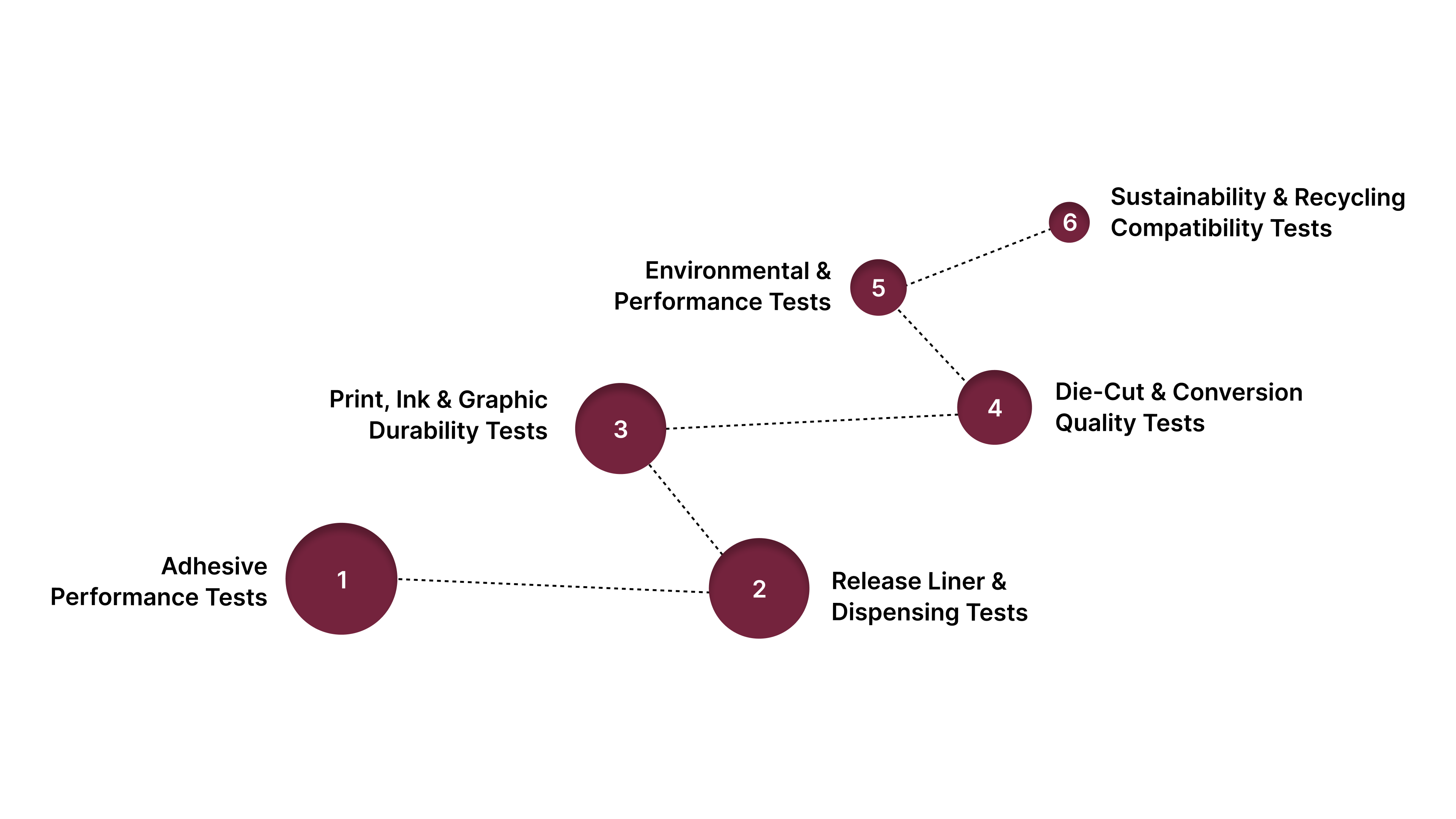
Pressure-sensitive labels may look simple, but every layer, the facestock, adhesive, liner, ink, and topcoat, must work together under real-world conditions. Quality testing confirms that the label behaves as expected during application, shipping, storage, and consumer use.
Below are the most important tests that determine whether a label will succeed or fail in the field.
1. Adhesive Performance Tests
These tests measure how well the label bonds to the intended surface and how it behaves under stress.
Key tests include:
Peel Adhesion (90° or 180°): Measures how strongly the label adheres when peeled at a controlled speed and angle. Essential for any product that must remain labeled throughout distribution.
Loop Tack: Tests the “initial grab”, how quickly the adhesive forms a bond once applied. Critical for fast-moving applicators or curved surfaces.
Shear Strength: Evaluates how the label holds up to sliding or constant pull over time. Important for heavy-use products or labels that carry weight (e.g., hang labels).
Low-Temperature Adhesion: Ensures the adhesive bonds correctly in cold or refrigerated environments.
Mandrel Hold: Assesses adhesion on small-diameter or highly curved containers where lifting is common.
These tests prevent the biggest label failures: lifting corners, sliding, bubbles, weak edges, and labels falling off during cold chain transport.
2. Release Liner & Dispensing Tests
The liner controls how smoothly labels dispense, a major risk point for high-speed lines.
Tests typically include:
Release Force: Ensures the label lifts cleanly and consistently from the liner without tearing, premature release, or jamming.
Silicone Coat Weight: Confirms even silicone coverage on the liner, preventing sticking or uneven release.
UV Resistance: Tests whether the liner or release coating degrades under UV light, which can lead to adhesive issues.
These tests protect against one of the most costly issues: line downtime from poor dispensing.
3. Print, Ink & Graphic Durability Tests
Your label must stay readable and attractive from production to consumer use.
Common tests include:
Ink Anchorage: Measures how well ink bonds to the facestock.
Rub & Scratch Resistance: Ensures graphics don’t smear or rub off during shipping or handling.
UV Cure Validation: Confirms UV inks and coatings are properly cured — uncured inks can transfer, fade, or cause adhesive problems.
Surface Tension Testing: Verifies that the facestock surface is ready for printing (especially films).
These tests prevent smearing, fading, scuffing, and compliance risks from illegible information.
4. Die-Cut & Conversion Quality Tests
A label can fail before it even reaches the product if the die-cutting isn’t accurate.
Tests include:
Die-Strike Depth: Ensures the cut penetrates the facestock but not the liner. Overcuts cause liner breaks; undercuts prevent clean dispensing.
Matrix Stripping Performance: Checks if excess material strips cleanly during converting.
Web Cleanliness: Ensures no adhesive ooze or debris that could gum up equipment.
These tests prevent roll breaks, tears, and stoppages during application.
5. Environmental & Performance Tests
Products rarely stay in perfect conditions. These tests simulate the environments your product will actually encounter.
Common evaluations:
Temperature Cycling: Exposes labels to hot/cold extremes and transitions.
Humidity Exposure: Assesses performance in condensation or moisture-rich environments.
Chemical Resistance: Tests survival on surfaces exposed to oils, solvents, or cleaners (common in cosmetics, industrial, and household products).
Abrasion Resistance: Simulates shipping, shelf wear, or rough handling.
Application Performance: Ensures labels behave correctly on your specific applicator at your actual line speed.
These tests safeguard performance from the filling line to the retail shelf.
6. Sustainability & Recycling Compatibility Tests
As recyclability becomes a priority, some applications require labels that release cleanly during the recycling process.
Key tests:
Wash-Off Testing: Ensures labels release with water in recycling systems (common for PET packaging).
Stickies Testing: Detects leftover adhesive or debris that can contaminate recycled pulp.
These tests matter for brands targeting sustainability goals or retailer-driven packaging standards.
Industry Standards: FINAT, ASTM & Supplier-Level Quality Protocols
Once you understand the tests, the next question is: who defines them and what’s considered “good”?
Below are the main standards used across the pressure-sensitive label industry.
FINAT Test Methods (FTM)
FINAT provides the most widely recognized test protocols for pressure-sensitive labels, especially in Europe, but they are used globally. These cover:
Peel adhesion
Loop tack
Shear testing
Release force
Silicone coat weight
Mandrel hold
Print durability
UV curing
Recyclability (wash-off, stickies)
FINAT tests are highly standardized, making them ideal for cross-supplier comparisons.
ASTM Standards
ASTM standards are commonly used in North America and focus on materials, adhesives, facestocks, and environmental performance.
Relevant tests include:
Abrasion
Chemical resistance
Temperature and humidity exposure
Adhesive bonding strength
Material durability and aging
ASTM tests help verify how labels perform under long-term or extreme conditions.
Supplier-Level QC Testing
Beyond formal standards, reliable suppliers run in-house quality checks to catch issues early.
Robust QC programs typically include:
Incoming material verification
On-press adhesion and ink checks
Die-cut inspection
Liner and release validation
Roll consistency checks
Accelerated aging or environmental simulations were required
This is where suppliers differentiate themselves, and where many label failures are prevented.
How GMS Ensures Pressure-Sensitive Label Quality
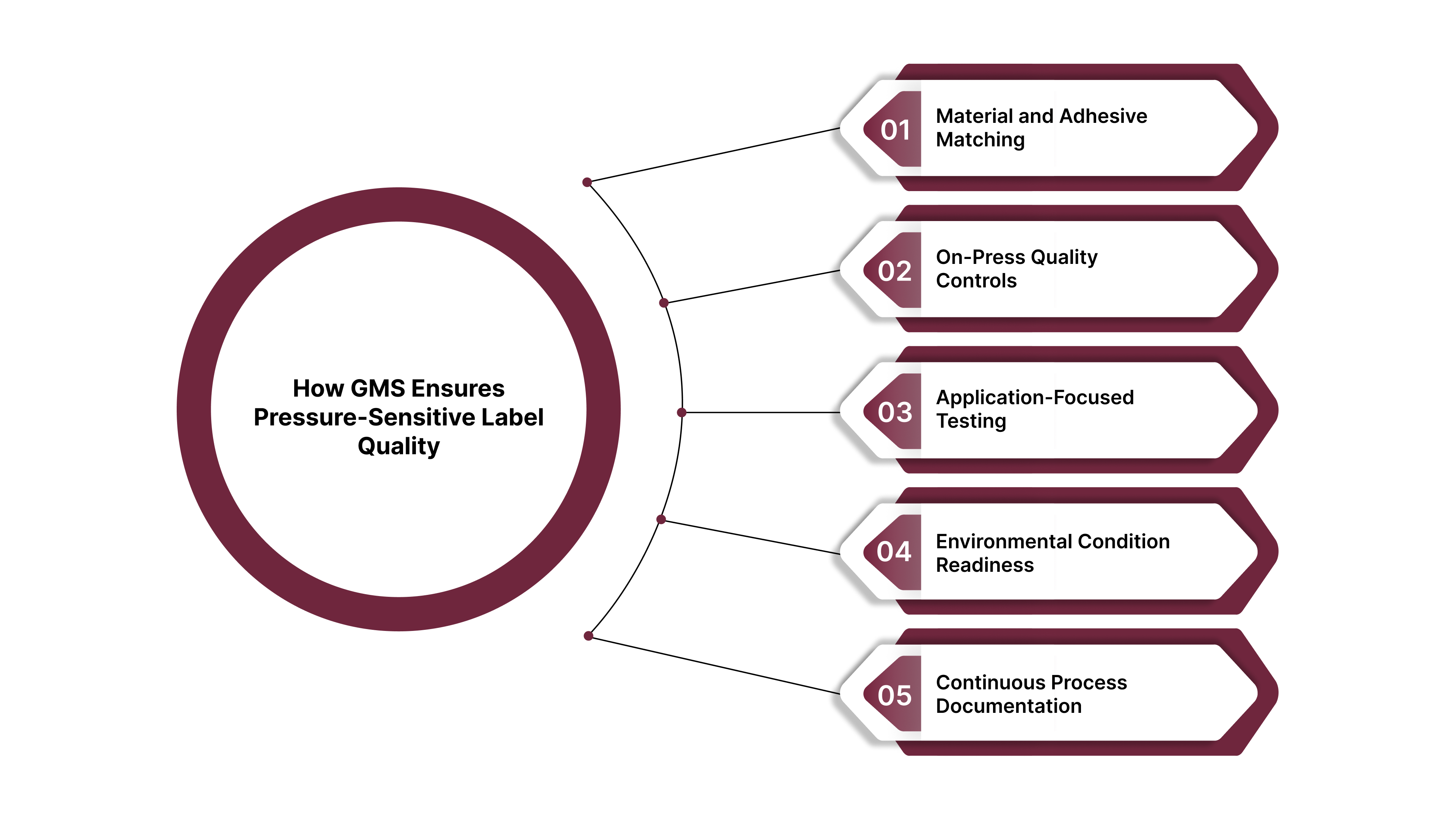
GMS Industries takes a practical, engineering-first approach to pressure-sensitive labels. Our goal is to ensure the label performs exactly as expected once it reaches your container, your line, and your customer’s hands.
Here’s how we support consistent, high-performing labels:
Material and Adhesive Matching
We evaluate your product surface, curvature, and environment to recommend the right facestock and adhesive combination, preventing common failures like edge lift or weak tack.
On-Press Quality Controls
During production, our team checks ink anchorage, print clarity, die-cut precision, and adhesive stability in real time, ensuring consistency across every roll.
Application-Focused Testing
We validate release force, liner integrity, and dispensing performance to make sure labels run smoothly on manual, semi-automatic, or high-speed equipment.
Environmental Condition Readiness
For products facing moisture, cold, chemicals, or friction, we run targeted durability checks to confirm labels won’t peel, fade, or smear under stress.
Continuous Process Documentation
Each job includes material verification, record-keeping, and repeatability testing—ensuring that future runs match the first, roll for roll.
Our approach blends decades of packaging experience with thoughtful testing that prevents issues before they reach the production line.
Conclusion
Label failures don’t happen in a vacuum; they’re almost always the result of a mismatch between the label’s construction, the product’s environment, and the conditions it must survive along the way. Adhesives that seem “strong enough,” inks that look fine on press, or liners that appear smooth can behave very differently once exposed to cold chain logistics, oils, friction, or high-speed dispensing.
The right quality tests eliminate that guesswork. When peel strength, tack, print durability, liner release, and environmental performance are validated upfront, brands avoid costly rework, downtime, and damaged customer perception. Instead of reacting to failures, teams gain the confidence that every roll of labels will perform exactly as intended.
GMS Industries helps brands get there by engineering labels around real-world use, not theoretical specs. From materials selection to practical, application-focused testing, our team ensures your labels stay put, stay legible, and stay consistent on every run.
Ready for labels that perform reliably from line to shelf? Contact GMS Industries for a tailored pressure-sensitive label quote and testing guidance.
FAQs
1. What is the most important quality test for pressure-sensitive labels?
Peel adhesion is often the most critical because it determines whether the label will stay attached throughout its lifecycle. However, the “most important” test depends entirely on your environment and application.
2. Why do labels peel or bubble on curved bottles?
This typically occurs when the adhesive or facestock isn’t suited for curved or small-diameter surfaces. Mandrel hold testing helps identify the right construction.
3. What’s the difference between tack and peel adhesion?
Tack measures the label’s initial grab, while peel adhesion measures its long-term bonding strength. Both are essential for reliable performance.
4. How can I prevent ink from smudging or scratching?
Choosing the correct facestock, topcoat, and ink system, and validating with rub/scratch resistance tests, helps ensure print durability.
5. How often should label quality tests be performed?
Critical tests should be done for each new construction, new material combination, or major environmental shift. Routine QC checks should occur on every production run.