Selecting the right label type affects more than how a product looks. It influences packaging line speed, material compatibility, and long-term supply reliability.
In packaging and manufacturing, the terms pressure-sensitive and self-adhesive are often used interchangeably, creating confusion for buyers comparing suppliers or materials. Both refer to label systems that bond through pressure, not heat or water.
However, knowing how they work and when to use them can improve labeling consistency, reduce downtime, and support brand control.
This article explains what these labels are, how they differ in context, and how businesses can use them to balance cost, performance, and operational efficiency.
Key Takeaways: Pressure-Sensitive vs Self-Adhesive Labels
Point | Summary Insight |
1. Same Technology, Different Terms | Pressure-sensitive and self-adhesive labels are the same type; both use pre-applied adhesive that bonds when pressure is applied. |
2. Naming Difference Only | “Pressure-sensitive” is common in industrial and North American markets; “self-adhesive” is used more in retail and global markets. |
3. Shared Advantages | Both types offer quick application, wide surface compatibility, durable adhesion, and strong print flexibility. |
4. Business Impact | Using the right material and adhesive mix improves labeling speed, reduces waste, and ensures consistent brand presentation. |
5. Partner Advantage | GMS Industries helps businesses design and supply reliable label solutions that perform across packaging lines and environments. |
What Are Pressure-Sensitive and Self-Adhesive Labels
In the labeling industry, pressure-sensitive labels (PSL) and self-adhesive labels (SAL) describe the same fundamental technology — a pre-glued label that adheres when pressure is applied to its surface.
The adhesive is already active; no heat, solvent, or water is needed to trigger bonding.
Both types share the same core construction:
Face stock: the visible, printable layer (paper, film, or foil).
Adhesive layer: pressure-sensitive adhesive (PSA) that forms the bond.
Release liner: a backing sheet that protects the adhesive until application.
The difference between the two terms lies mostly in the naming convention, not in technology.
Pressure-sensitive is widely used in North American manufacturing and industrial labeling.
Self-adhesive is more common in European and consumer goods markets.
Both terms describe labels that adhere instantly under applied pressure, making them versatile for packaging, branding, and regulatory identification across industries.
How These Labels Work: Construction & Adhesive Activation
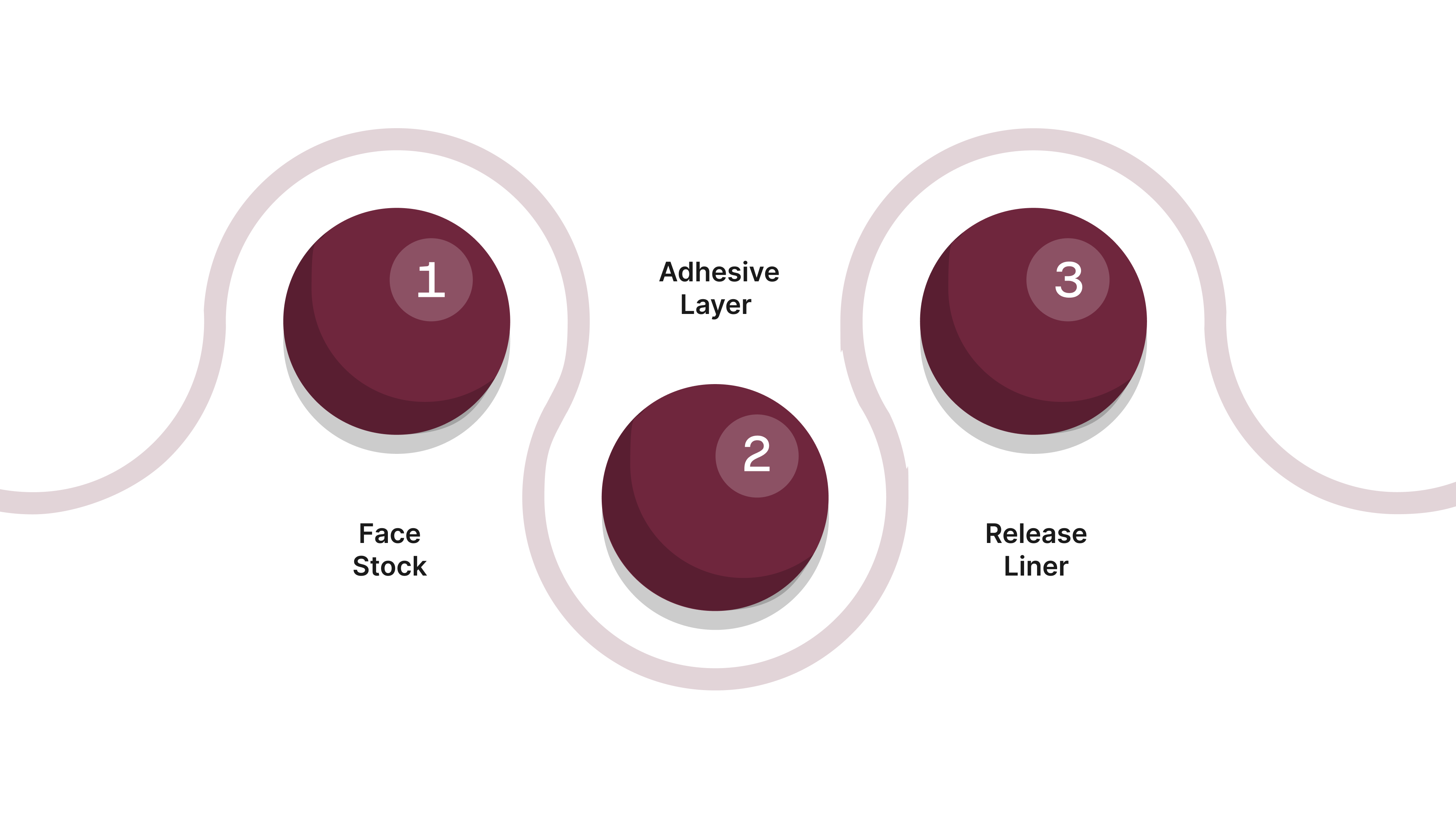
Pressure-sensitive and self-adhesive labels rely on a simple but efficient structure. Each label has three functional layers that work together to ensure consistent adhesion and print quality.
1. Face Stock
This is the printable surface. It can be made of paper, film, or foil, depending on how durable or flexible the label needs to be. For example, film face stocks are preferred in food, cosmetic, or industrial products that face moisture or chemical exposure.
2. Adhesive Layer
The adhesive, known as a pressure-sensitive adhesive (PSA), activates when pressure is applied. No heat, water, or chemical solvent is needed.
The adhesive maintains a delicate balance between stickiness and removability, making it suitable for everything from temporary barcode labels to permanent product identification.
3. Release Liner
A silicone-coated liner protects the adhesive until use. It keeps labels clean, flat, and ready for automated or manual application.
When applied correctly, these layers form an instant bond to various surfaces such as plastic, metal, glass, and cardboard.
The simplicity of pressure activation helps businesses improve labeling line speed, reduce equipment downtime, and maintain consistent branding across packaging formats.
Now that we know how they work, the next step is understanding the available materials and finishes, which directly affect durability, cost, and design flexibility.
Material & Label Options: Face Stocks, Adhesives, and Finishes
Choosing the right material combination is key to achieving label performance and visual quality. A label that looks good but fails under production or storage conditions can create waste, rework, and compliance risks.
1. Face Stock Options
Paper Labels: Cost-effective and easy to print; suitable for short-term or indoor applications.
Film Labels: Made from materials such as polypropylene (PP) or polyester (PET), offering high durability and moisture resistance.
Foil Labels: Used for premium or decorative finishes; ideal for high-end product presentation.
2. Adhesive Types
Permanent Adhesive: For long-term adhesion on packaging, bottles, or cartons.
Removable Adhesive: Allows clean removal without residue, common in retail or temporary labeling.
Repositionable Adhesive: Lets operators adjust label placement before the bond sets, helpful on high-speed or curved surfaces.
3. Finish & Coating Options
Gloss and Matte Coatings: Affect print visibility and tactile feel.
Protective Laminates: Extend resistance to water, oils, or UV light.
Thermal Transfer Coatings: Allow printing of variable data like barcodes or batch numbers.
GMS Industries supports businesses by providing custom label design and printing services that combine the right face stock, adhesive, and finish for each product environment. This approach helps companies avoid label failure, reduce unplanned downtime, and maintain compliance with labeling regulations.
When materials are matched correctly, labels perform better during handling, shipping, and end use, ensuring consistent performance across manufacturing and distribution lines.
Best Use Cases: Which Applications Fit Label Types
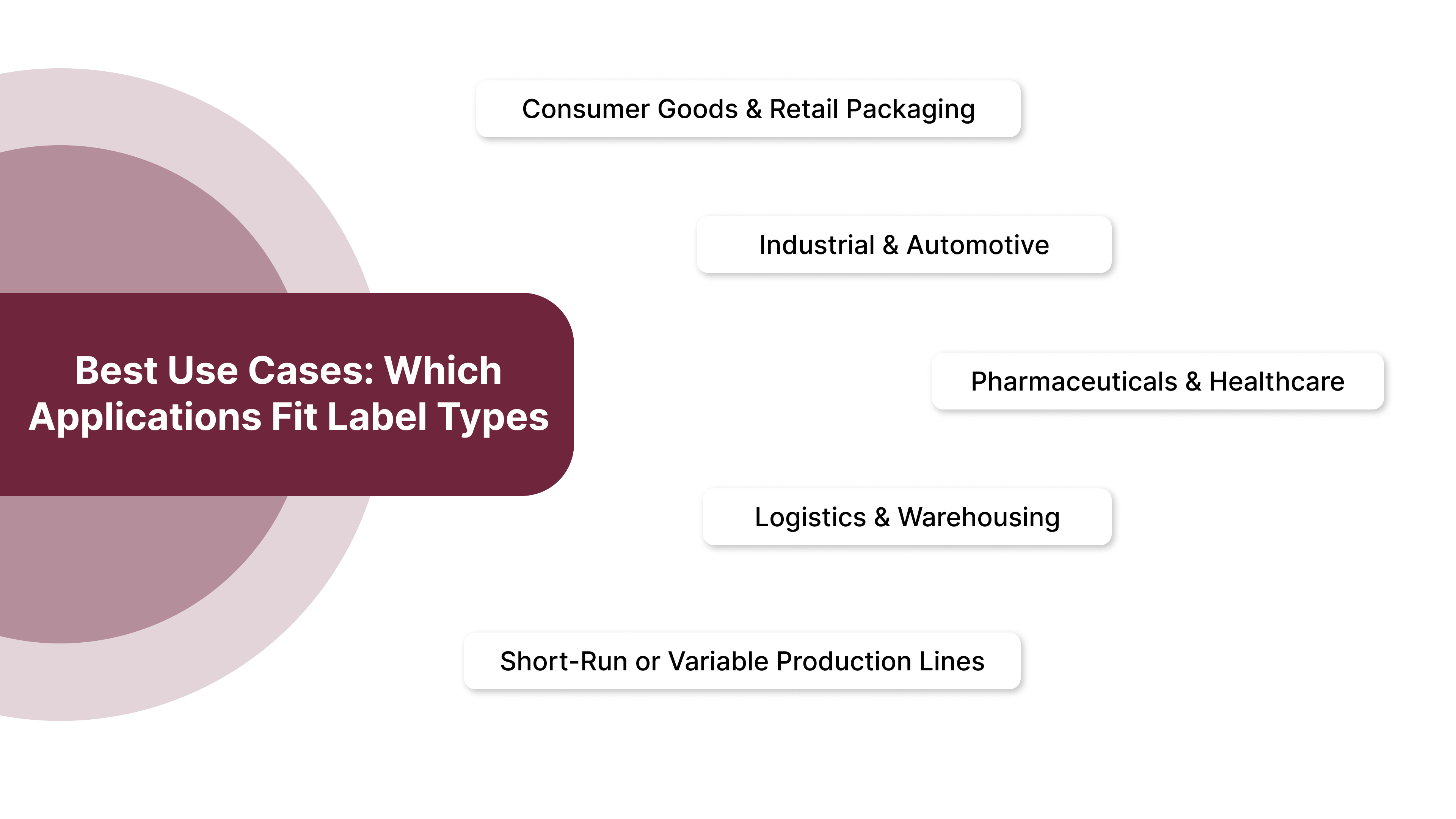
Pressure-sensitive and self-adhesive labels are used across industries because they combine durability, print flexibility, and ease of application. However, some applications benefit more than others from their unique properties.
1. Consumer Goods and Retail Packaging
Products like food, beverages, cosmetics, and household goods rely on these labels for brand presentation and regulatory information.
Adhere well to curved containers, bottles, and jars.
Maintain clarity under refrigeration or moderate humidity.
Enable high-quality printing for strong shelf appeal.
GMS Industries frequently supports consumer brands with custom-printed pressure-sensitive labels that balance visual design and production efficiency, ensuring every label runs smoothly on automated filling and labeling lines.
2. Industrial and Automotive
Industrial components, tools, and automotive parts often require chemical- and heat-resistant labels that remain legible under demanding conditions.
Polyester or polyimide films withstand high temperatures and solvents.
Durable adhesives ensure traceability and compliance labeling.
Useful for serial numbers, instructions, and safety data.
These labels help companies maintain regulatory compliance and avoid rework caused by lost or damaged identification.
3. Pharmaceuticals and Healthcare
Pressure-sensitive labels work well for vials, bottles, and medical device packaging.
Compatible with small diameters and complex shapes.
Support variable data printing (lot numbers, barcodes, expiry dates).
Available with tamper-evident or sterile surface coatings.
When printed and finished under controlled conditions, these labels support both compliance and supply-chain accuracy in sensitive industries.
4. Logistics and Warehousing
Self-adhesive barcode and tracking labels are essential for modern logistics.
Enable fast scanning and identification on boxes, pallets, and racks.
Work with automated applicators and thermal printers.
Simplify warehouse management and product traceability.
Businesses seeking consistent labeling across multiple packaging stages often rely on partners like GMS Industries, which provide pre-printed or variable-data label solutions that integrate directly with labeling systems and ERP workflows.
5. Short-Run or Variable Production Lines
For contract manufacturers or seasonal brands, pressure-sensitive labels allow fast changeovers without investing in glue systems or label molds.
Simplifies line setup for small batches.
Reduces downtime between product SKUs.
Supports quick response to market changes.
This adaptability helps businesses control costs and meet fluctuating production schedules without sacrificing quality.
Cost & Operational Considerations for Business Buyers
Choosing between label types is not only about upfront material cost. It involves assessing how labeling affects production efficiency, long-term costs, and sustainability goals.
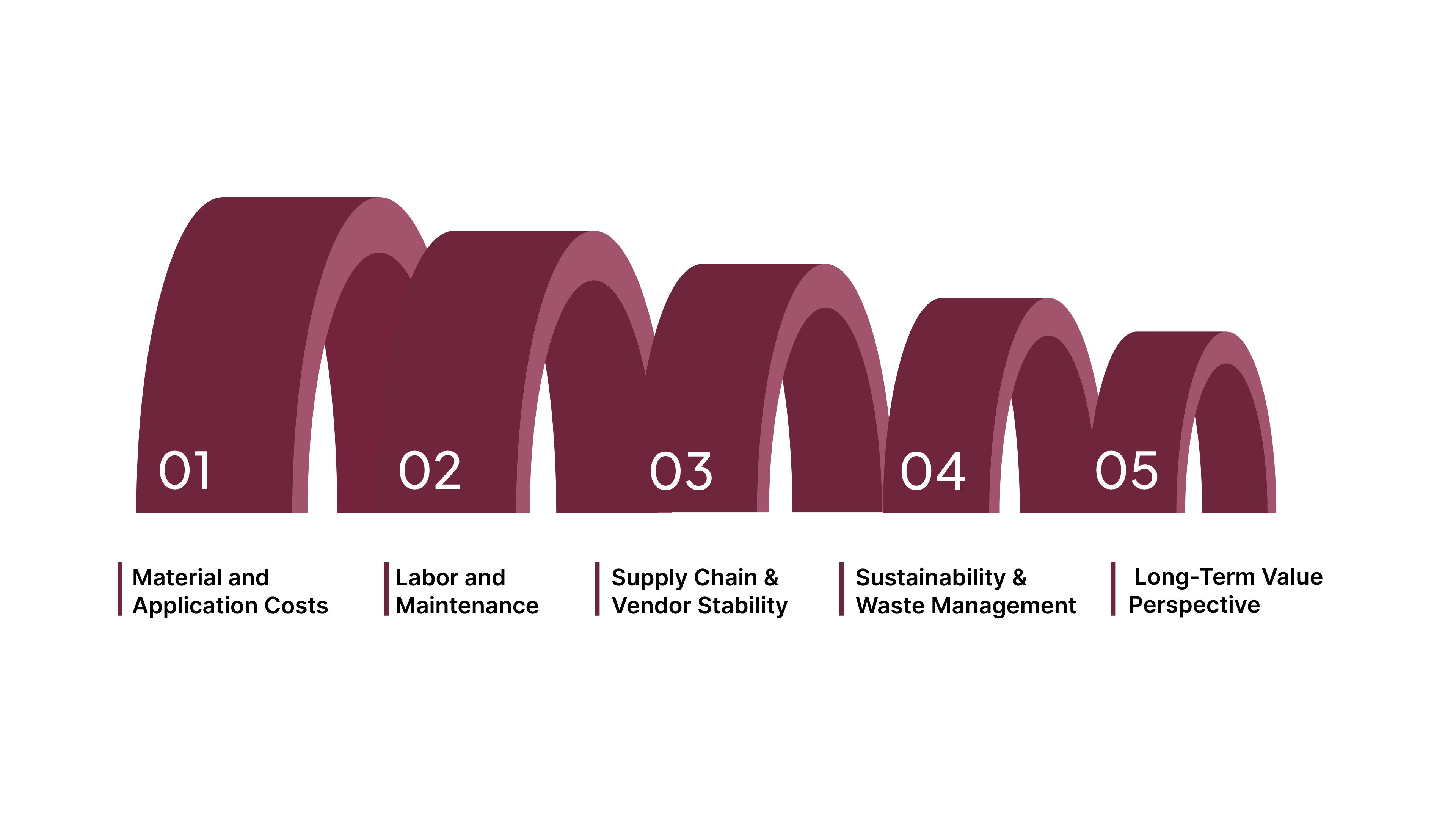
1. Material and Application Costs
Pressure-sensitive labels may cost more per unit than wet-glue alternatives, but the total cost of ownership is often lower because:
There is no need for glue or curing equipment.
Changeovers are faster, reducing downtime.
Label waste from misalignment is minimized.
These factors can reduce the cost per labeled unit and increase throughput on high-speed lines.
2. Labor and Maintenance
Because they are ready to apply, these labels simplify line operation and reduce operator dependency. This leads to:
Lower labor training and maintenance needs.
Faster troubleshooting and reduced line interruptions.
More consistent labeling results.
When used across multiple packaging lines, these efficiencies accumulate into measurable operational savings.
3. Supply Chain and Vendor Stability
For large or distributed operations, consistency of label quality and supply is critical.
Working with a full-service provider like GMS Industries helps ensure:
Standardized label quality across production sites.
Flexible order quantities and repeat print accuracy.
Reliable delivery schedules backed by in-house printing and distribution.
This stability supports long-term cost control and avoids disruptions caused by label shortages or vendor variability.
4. Sustainability and Waste Management
Liner waste and recyclability are growing concerns in the packaging industry. New materials such as linerless labels and lightweight film stocks are helping reduce waste without compromising adhesion.
Businesses focused on sustainability can work with partners who recommend eco-aligned materials and support liner recycling programs to meet corporate goals.
5. Long-Term Value Perspective
When buyers consider labeling a strategic element, not just a cost center, the advantages multiply:
Fewer rejected shipments due to label failure.
Stronger brand consistency across product lines.
Easier compliance management and traceability.
With proper material selection and supplier support, pressure-sensitive and self-adhesive labels can deliver measurable operational and financial benefits over time.
How a Full-Service Packaging Partner Can Help (GMS Industries’ Label Services)
Choosing the right label type is only part of the decision. Many businesses struggle with consistency, sourcing delays, and production waste because separate vendors handle label design, printing, and material selection.
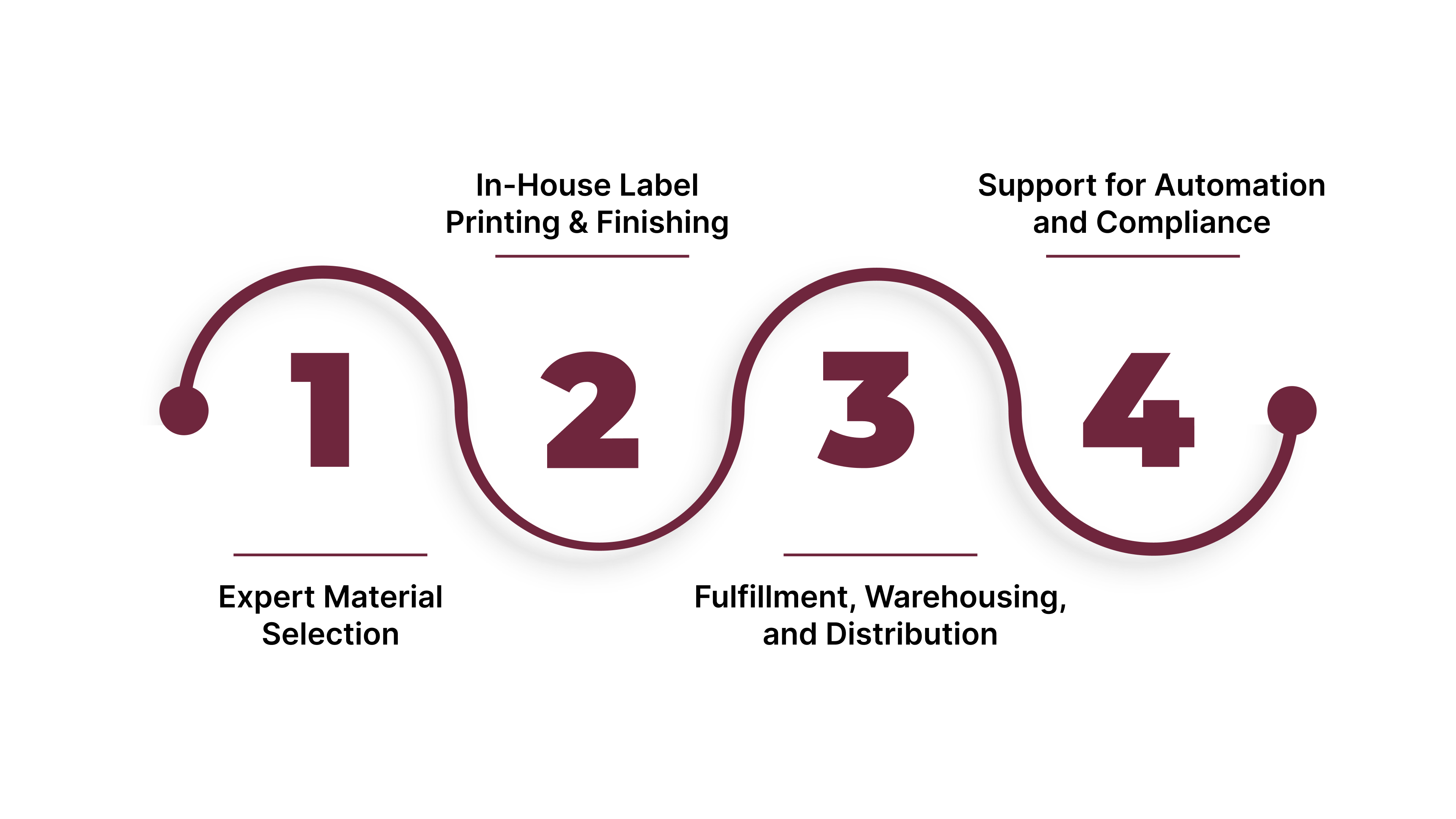
A full-service partner can help streamline the process from concept to application.
1. Expert Material Selection
GMS Industries helps companies select the right adhesive, face stock, and coating combination for each product and environment. Whether labels must withstand moisture, temperature changes, or frequent handling, GMS tailors solutions that prevent adhesion issues and printing defects.
2. In-House Label Printing and Finishing
With comprehensive printing capabilities, including digital, flexographic, and specialty finishes, GMS ensures consistent quality and branding across every label batch.
This helps companies maintain brand consistency and reduces downtime caused by print mismatches or supplier transitions.
3. Fulfilling, Warehousing, and Distribution
Beyond manufacturing, GMS supports label storage and delivery coordination, helping clients maintain stable inventory levels. Businesses can order labels as needed without holding excess stock, ensuring steady supply and production continuity.
4. Support for Automation and Compliance
GMS assists businesses in integrating automated labeling systems, ensuring label materials and adhesives match equipment requirements.
The company also supports labeling for regulated industries, such as food, medical, and industrial sectors, by offering compliant materials and traceable production records.
Working with a partner like GMS Industries allows packaging teams to focus on production, not troubleshooting. The result is consistent label performance, fewer disruptions, and stronger operational reliability.
Conclusion
Pressure-sensitive and self-adhesive labels remain one of the most versatile labeling solutions in packaging today. Their ease of use, flexibility, and print quality make them suitable for everything from retail goods to industrial equipment.
For businesses seeking consistency and efficiency, the right label choice directly supports smoother production flow, faster changeovers, and lower cost per labeled unit.
GMS Industries provides more than labels; it delivers end-to-end packaging and labeling solutions that help manufacturers improve reliability, compliance, and brand consistency.
Through custom design, in-house printing, and nationwide fulfillment, GMS ensures every label performs as expected, on every product, every time.
Looking to simplify your labeling process or upgrade to pressure-sensitive solutions?
Contact GMS Industries to discuss how tailored labeling and packaging services can support your production goals and long-term operational efficiency.
FAQs
1. Are pressure-sensitive and self-adhesive labels different?
No. They are the same label type. Both use pre-applied adhesive that sticks when pressure is applied—no heat, solvent, or water needed.
2. Why do people use two terms for the same label?
“Pressure-sensitive” is common in industrial markets, while “self-adhesive” is more popular in retail and global packaging. The technology is identical.
3. What are pressure-sensitive labels made of?
They include three layers: a printable face stock, an adhesive layer, and a release liner.
4. Can these labels handle moisture or heat?
Yes, with the right materials and coatings. GMS Industries helps select adhesives that resist temperature and humidity.
5. Are these labels suitable for automation?
Yes. They are compatible with most automated applicators and high-speed labeling lines.
6. Are pressure-sensitive labels recyclable?
Many are recyclable, depending on the face stock and liner. Eco-friendly options are available.
7. How do I choose the right label?
Consider product surface, environment, and application speed. A full-service provider like GMS can match materials to your exact needs.