Budgeting for a POP display shouldn’t feel like guesswork, but for most teams, it does. You’re trying to plan a retail launch or promotion, and every decision depends on one number you still don’t have: what the display will actually cost.
You want displays that look great, meet retailer requirements, ship efficiently, and stay within budget, but the cost drivers behind POP displays aren’t obvious. Materials, print method, size, weight capacity, assembly, and freight all change the price, and those details aren’t always explained up front.
This guide clears up the confusion about POP display cost, key cost factors, and an easy way to estimate your budget before requesting quotes.
Key Takeaways
Most POP displays cost between $5 and $250+ per unit, depending on type, materials, size, and print method.
Material and printing are the biggest cost drivers; freight and assembly add more than most teams expect.
Corrugated displays are the most cost-effective, especially for seasonal or short-term promotions.
Permanent and semi-permanent displays cost more upfront but can be reused, reducing long-term spend.
You can lower costs by optimizing footprint, reducing print coverage, and shipping flat, all without losing impact.
What Is a POP Display?
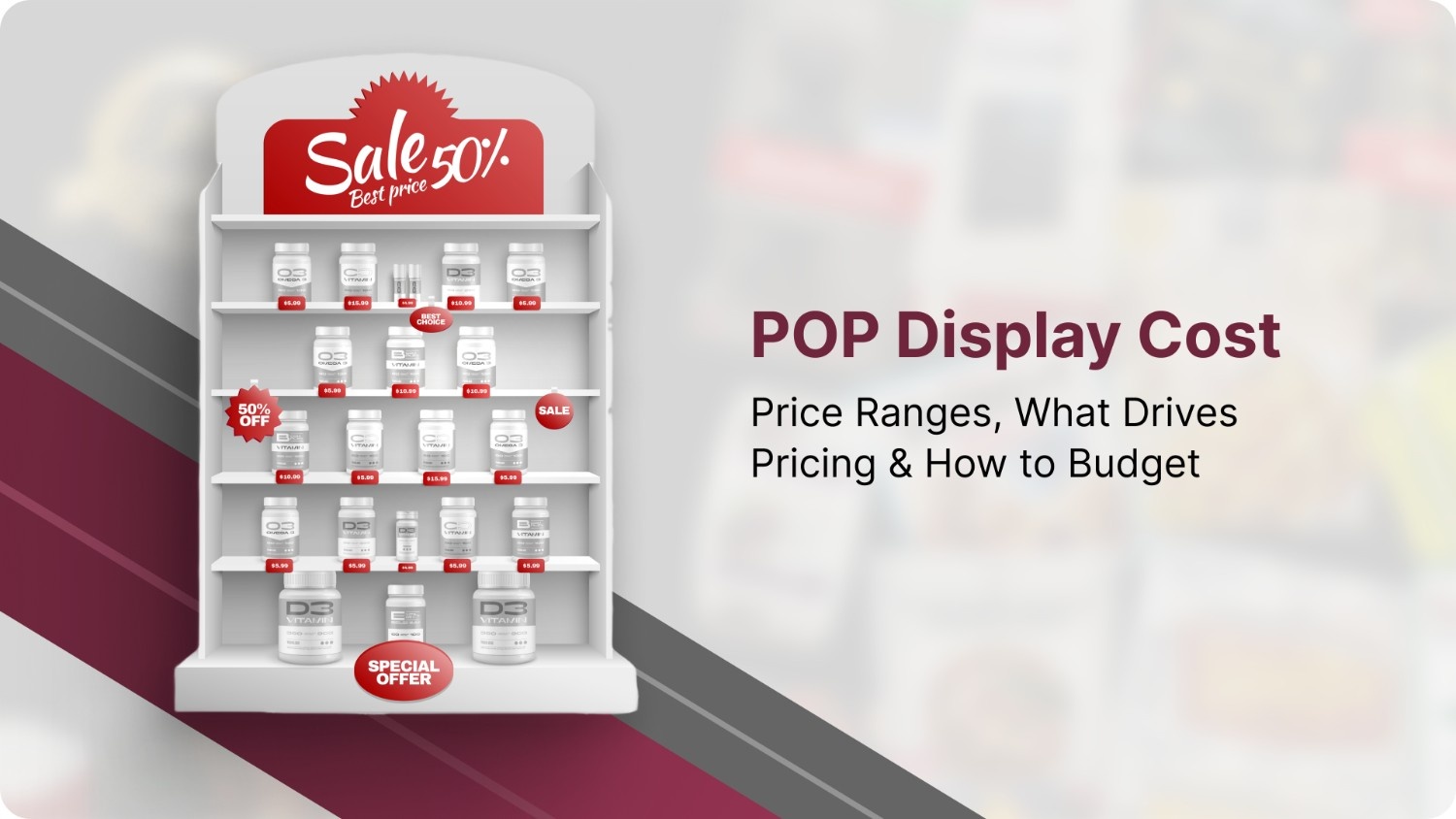
A point-of-purchase (POP) display is a standalone structure placed inside a retail environment to showcase products, promote a campaign, or support a retailer’s merchandising strategy. Unlike standard shelves, POP displays are customized to grab attention and guide shoppers toward a specific product or offer.
They’re often used during product launches, seasonal promotions, or to give a featured item more visibility than it would receive on a crowded shelf.
POP displays can appear almost anywhere inside a store, but the most common placements include high-traffic areas such as checkout lanes, aisle ends, and promotional zones. Their job is simple: present products in a way that increases visibility, encourages impulse purchases, and supports the story a brand wants to tell in-store.
Brands typically rely on POP displays to:
Introduce new products or flavors
Group related items into a single, easy-to-shop unit
Highlight limited-time or seasonal promotions
Strengthen brand presence in competitive categories
With this foundation in place, the next step is understanding the different types of POP displays, because the type you choose is one of the biggest factors affecting cost.
Types of POP Displays (Temporary, Semi-Permanent, Permanent & Digital)
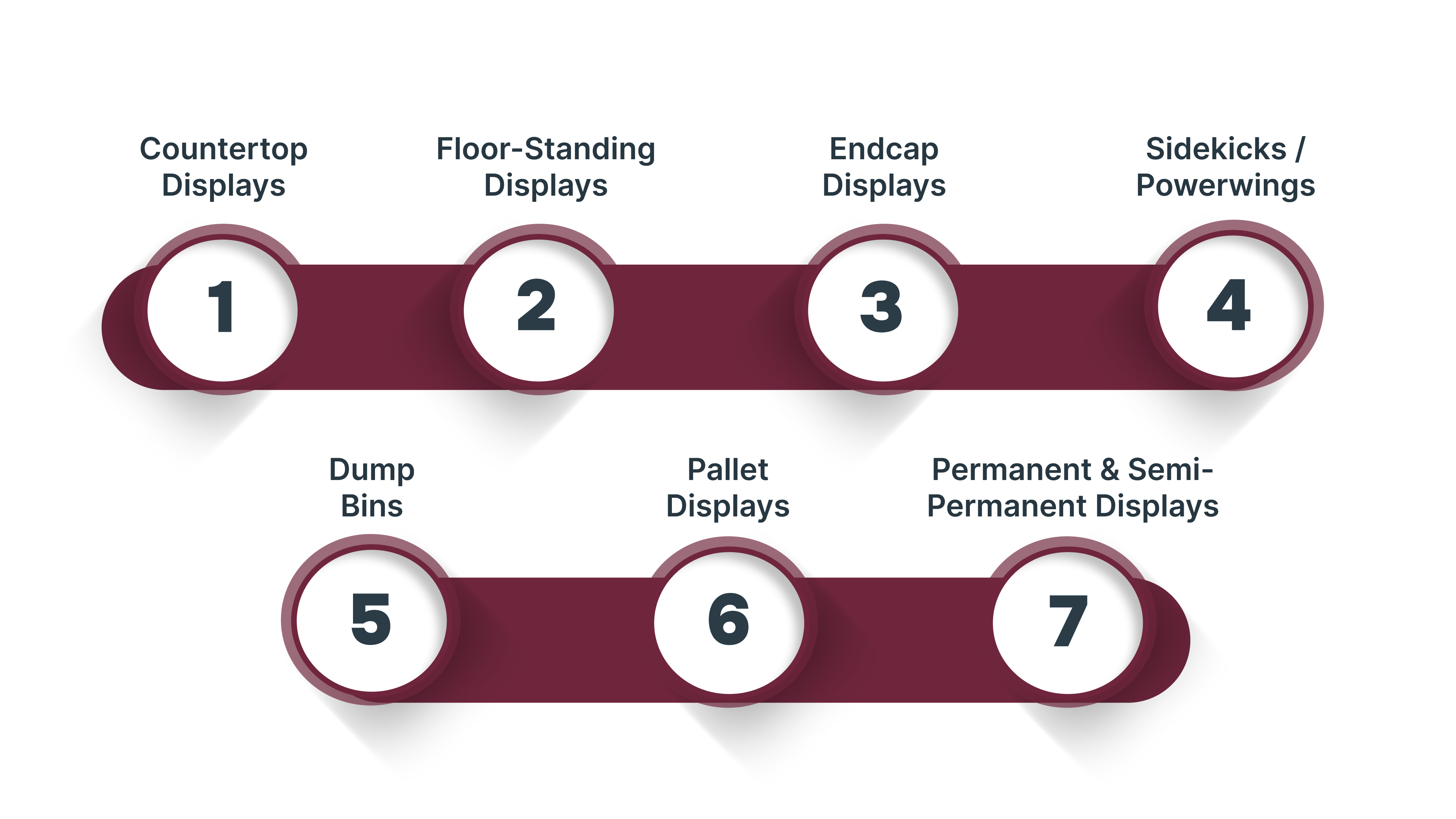
POP displays come in several formats, each designed for a different level of visibility, product weight, and in-store placement. While every retailer has its own merchandising standards, most displays fall into a few common categories.
Countertop Displays
These small, lightweight units sit near the register or on service counters. They’re typically used for trial-size items, small accessories, or lower-priced products that benefit from impulse purchases. As they require less material and have a compact footprint, they are often the most cost-effective option.
Floor-Standing Displays
Freestanding units that hold larger quantities of product and stand several feet tall. These displays create a strong visual presence and are often used for feature launches, seasonal campaigns, or hero SKUs. They require more structure and printing, which increases cost, but they also offer more space for branding and storytelling.
Endcap Displays
Positioned at the ends of aisles, endcaps take advantage of high foot traffic and clear sightlines. They can be fully custom structures or simpler corrugated components attached to retailer-provided fixtures. Endcaps are valuable real estate and often require more engineering to meet retailer guidelines.
Sidekicks/Powerwings
These are smaller displays that attach to existing shelving, usually along the sides of aisles. They work well for lightweight items like snacks or accessories and offer a middle ground between countertop displays and full floor units.
Dump Bins
Large open-top bins designed to hold high-volume or loose items, anything shoppers can easily pick through. They’re cost-effective compared to full engineered displays, but still require durable materials, especially for heavier products.
Pallet Displays
Common in warehouse clubs or big-box retailers, pallet displays sit directly on a pallet and hold a significant amount of product. They offer maximum visibility but come with strict structural requirements and higher printing and material costs.
Permanent & Semi-Permanent Displays
Built from plastic, metal, wood, or heavy-duty board, these displays last months or years. They offer a premium look but require greater upfront investment in engineering, materials, and assembly.
Let's understand the key drivers that influence POP display pricing.
What Drives POP Display Cost? Key Factors That Increase or Reduce Pricing
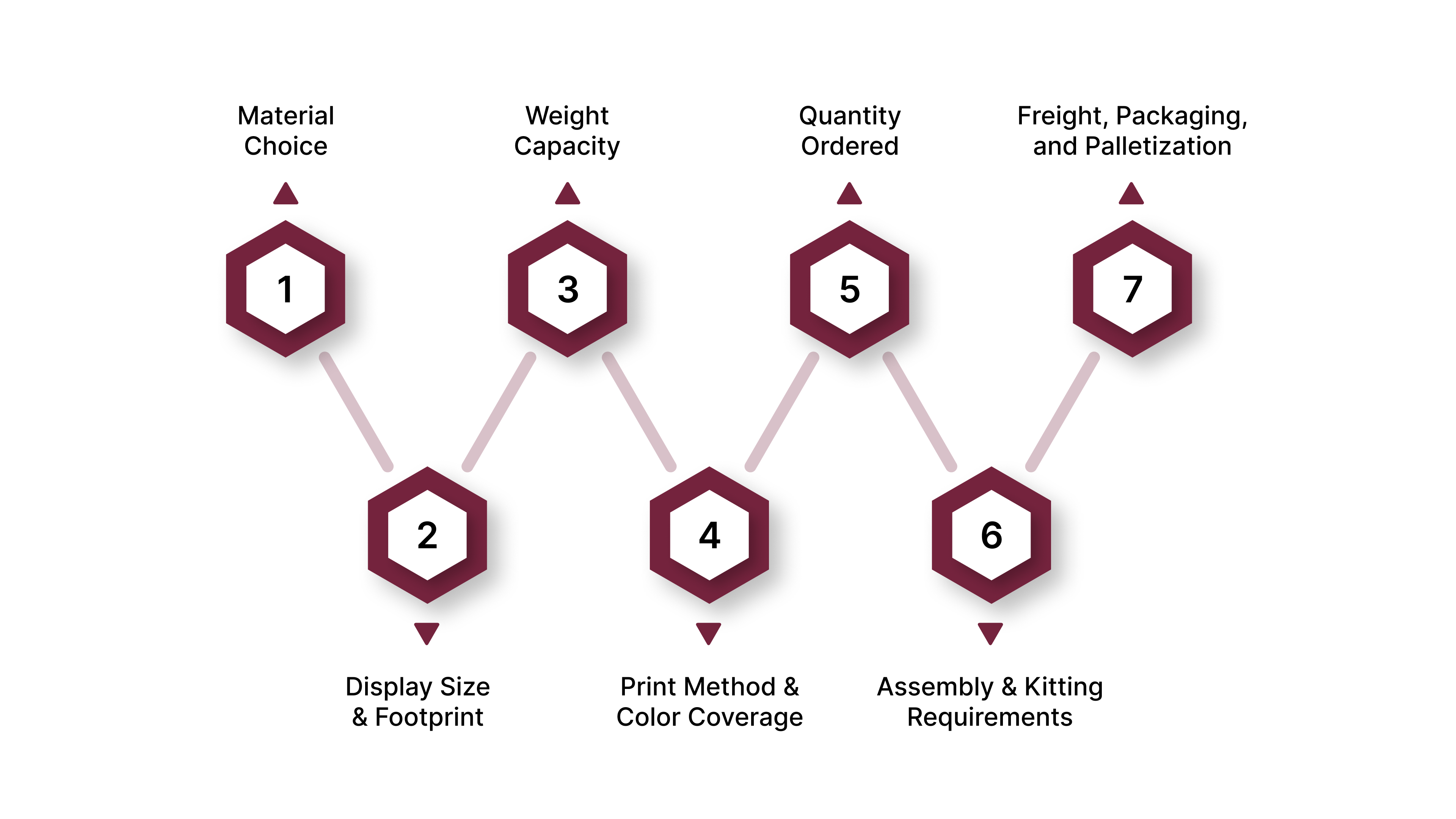
Understanding the price ranges is helpful, but the real clarity comes from knowing why POP displays cost what they do. Most teams only see the per-unit price, but several underlying factors shape that number. When you understand these drivers, you can make smarter design choices, avoid unnecessary expenses, and compare vendor quotes more fairly.
Here are the main elements that influence the total cost of a POP display:
1. Material Choice
Material is one of the biggest cost determinants. Temporary corrugated displays are the most affordable, while semi-permanent materials (chipboard, plastic components, thicker board) or permanent materials (wood, metal, acrylic) increase cost.
Corrugated: Lowest cost, ideal for short-term promotions
Chipboard / heavier board: Mid-tier cost, longer lifespan
Wood/metal/plastic: Highest cost, built for multi-year use
The heavier or more durable the material, the more engineering and production costs it carries.
2. Display Size and Footprint
Larger displays require more material, more printing, and often higher freight costs. A small countertop display is inexpensive to produce and ship, while a tall floor display or a full pallet unit needs a stronger structure, more artwork, and more robust packaging.
Even small increases in height or depth can change both production and shipping costs.
3. Weight Capacity and Structural Engineering
Displays must support the weight of the products they hold. A unit designed for lightweight packets needs far less engineering than one carrying gallon containers or bulky boxed items.
Engineering decisions directly influence the following factors:
Board thickness
Number of supports
Reinforcement methods
Required testing
Material combinations
Heavier products require more structure, which in turn increases cost.
Heavier products = more structure = higher cost.
4. Print Method and Color Coverage
Printing is another major cost driver. Fully printed, high-color graphics cost more than targeted artwork or simple one-color branding.
To optimize production expense, the chosen print method and coverage must align with the run size and brand-impact goals. The key printing factors include:
Print method selection (digital, flexo, or litho-laminated)
Total color count
Extent of ink coverage
Required graphic quality
Application of specialty coatings
Coatings, such as gloss, matte, or UV finishes, add cost but enhance presentation.
5. Quantity Ordered
POP display pricing benefits significantly from economies of scale. Larger orders reduce the per-unit cost because tooling, printing setup, and engineering are distributed across more units.
Low quantities = higher cost per display
Higher quantities = improved unit pricing
This is especially noticeable with litho printing or custom die-cutting.
6. Assembly and Kitting Requirements
Some displays ship flat for the retailer to assemble; others require partial or full assembly before shipping. Pre-assembly saves stores time but increases manufacturing labor.
Kitting, loading product into the display before shipment, also adds cost but can streamline in-store execution.
7. Freight, Packaging, and Palletization
Shipping often plays a larger role in POP display cost than many teams anticipate. The way a display folds, ships, and fits on a pallet can significantly influence freight charges. Key considerations include:
Dimensional weight
Pallet efficiency
Packaging style
Distance and shipping method
Displays designed to ship flat typically reduce freight and handling costs.
Understanding the actual price ranges for each category helps with better budgeting.
POP Display Price Ranges According to Types
POP display pricing varies because different display types serve different lifespans, product weights, and printing requirements.
Below is a clear breakdown showing what brands actually spend in each category.
Temporary POP Displays
A temporary POP display is designed for short-term retail activation, typically lasting 4–12 weeks. They are constructed using standard corrugated or lightweight board to minimize material cost and are ideal for seasonal promotions, limited-time offers, and immediate product launches.
Cost Range and Breakdown
The typical cost range for a temporary POP display is $5 to $150 per display, depending on size and complexity.
Display Type | Typical Cost Range |
|---|---|
Small Countertop Displays | $5–$30 |
Sidekicks/Powerwings | $10–$40 |
Dump Bins (Larger Volume) | $25–$80 |
Floor-Standing Corrugated Displays | $40–$150 |
Key Cost Factors
Pricing for temporary displays increases based on complexity and manufacturing effort:
Full-panel litho printing (increases print and setup cost)
Structural supports required for heavier products
Larger display footprint (increases material and freight costs)
Temporary displays remain the most budget-friendly option across all retailers.
Semi-Permanent POP Displays
A semi-permanent POP display is built for medium-term use, typically lasting 3–12 months. These displays support everyday in-line promotions and longer marketing campaigns, using sturdier materials like heavier corrugate, chipboard, plastics, or light metal framing.
Cost Range and Breakdown
The typical cost range for a semi-permanent POP display is $40 to $300+ per display, depending on materials, engineering, and expected load capacity.
Display Type | Typical Cost Range |
|---|---|
Chipboard countertop unit | $40–$90 |
Hybrid corrugate + plastic floor display | $100–$250 |
Semi-permanent endcap structure | $150–$300+ |
Key Cost Factors
Where a unit falls in the range depends on:
Heavier materials that increase durability and cost
Complex shapes or shelving that require more engineering
Moderate weight load needing thicker substrates or internal supports
Semi-permanent displays cost more upfront but reduce the need for frequent refresh cycles.
Permanent POP Displays
A permanent POP display is engineered for long-term retail use, typically lasting 2–5+ years. These units are common in premium categories—electronics, cosmetics, spirits, and tools, where brand presence and durability are critical. Typical materials include wood, metal, acrylic, or molded plastic.
Cost Range and Breakdown
The typical cost range for a permanent POP display is $150 to $1,000+ per display, with significant variance based on fabrication methods and material mix.
Display Type | Typical Cost Range |
|---|---|
Basic metal frame with shelves | $150–$350 |
Wood or MDF fixture with branding | $300–$700 |
Mixed-material premium display | $700–$1,500+ |
Key Cost Factors
Permanent displays vary dramatically in construction due to:
Engineering and custom fabrication
Hardware requirements
Integrated lighting
Specialty finishes (powder coat, laminate, edge banding)
Digital components or motion elements
Permanent POP displays are long-term investment pieces ideal for stable product lines.
Digital POP Displays
A digital POP display combines physical structure with integrated screens for dynamic content delivery. These displays typically last 1–5+ years, depending on technology and usage. They are common in electronics aisles, seasonal showcases, demo areas, and interactive brand experiences.
Cost Range and Breakdown
The typical cost range for a digital POP display is $150 to $2,500+ per display, primarily driven by screen hardware and interactive features.
Display Type | Typical Cost Range |
|---|---|
Small LCD header | $150–$400 |
Medium digital sign integrated into a corrugated display | $400–$900 |
Large interactive display with shelving | $1,500–$2,500+ |
Key Cost Factors
Price varies based on:
Screen size, resolution, and brightness
Interactive features (touchscreen, sensors, audio)
Content management system capabilities
Integration with physical shelving or structural elements
Housing materials (acrylic, metal, wood)
Digital displays offer high-impact engagement and are ideal for brands seeking dynamic storytelling or real-time content updates.
How to Calculate the Cost of Your POP Display
A straightforward way to understand POP display pricing is to break the project into a few basic parts. Here’s a clean example showing how those parts add up in a typical temporary display project.
Example Scenario:
A mid-size floor display for a short-term retail promotion.
Base corrugated display structure: $85
Product load capacity (250 units × $0.40 each for structural support + layout requirements): $100
High-quality printed graphics and coatings: $35
Now add them together:
Total Estimated Cost = $85 + $100 + $35 = $220 per display
This example is intentionally simple, but it reflects how many POP display quotes are built in reality:
One cost for the display itself,
One cost is driven by how much product it must carry, and
One cost for printing and finishing.
In larger rollouts, you may also factor in assembly or freight, but the core calculation usually starts with these three elements. This gives teams a quick, practical way to forecast budget before diving into more detailed quoting.
Ways to Reduce POP Display Cost Without Hurting Quality
Many teams assume that lowering cost means sacrificing strength or visual appeal, but most savings actually come from smarter design choices, not cutting corners. The following approaches help reduce spend while maintaining durability, branding impact, and retailer compliance.
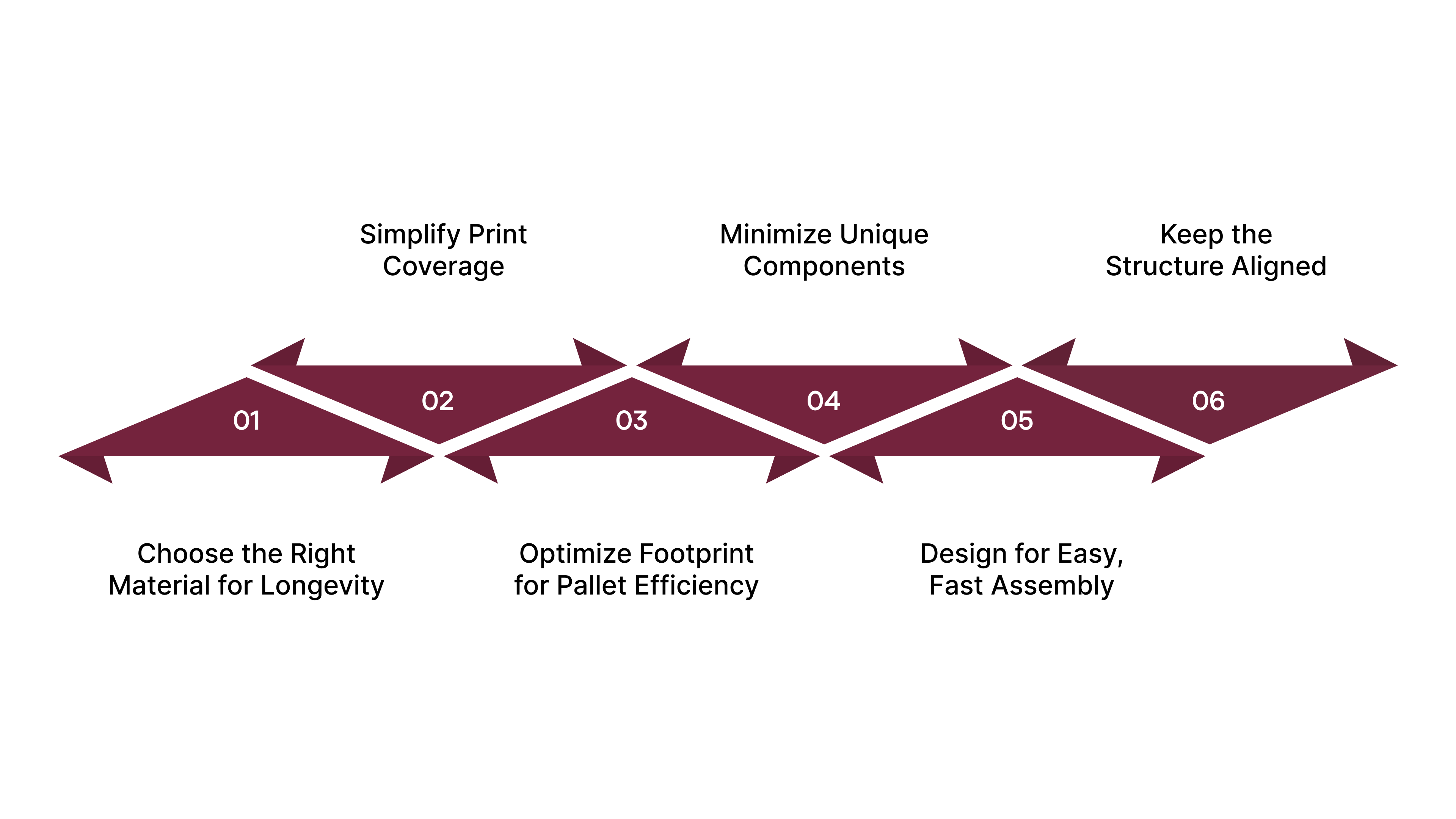
1. Use the Right Material for the Display’s Lifespan
A short-term promotion doesn’t need semi-permanent materials. Choosing the appropriate board grade or combining substrates strategically can reduce cost without affecting performance.
2. Simplify Print Coverage
Full-panel artwork is visually strong but not always necessary. Printing only on the most visible surfaces, minimizing solid ink coverage, or using fewer finishes can lower printing costs while keeping the display eye-catching.
3. Optimize the Footprint for Efficient Palletization
Displays that ship flat and nest efficiently reduce freight and warehousing costs. Even small adjustments, like narrowing a panel by half an inch, can allow more units per pallet.
4. Minimize Unique Components
A display that uses fewer custom pieces is faster to produce and assemble. Repeating die-cuts or using symmetrical components reduces tooling and labor costs.
5. Design for Easy, Fast Assembly
Retailers prefer displays that are intuitive to set up. Clear folding patterns, fewer locking mechanisms, and pre-glued sections reduce the labor cost of both manufacturing and in-store setup.
6. Keep the Structure Aligned With Product Weight
Over-engineering leads to unnecessary material use. A well-calibrated structural design can support weight efficiently without adding unnecessary reinforcements.
What to Prepare Before Requesting a POP Display Quote
Clear information leads to faster, more accurate estimates. Before reaching out to a manufacturer, gather the following:
1. Product Details
Dimensions and weight
Number of SKUs
Total units the display must hold
2. Display Goals
How long it needs to last
Where it will be placed (checkout, endcap, aisle, club store)
Any retailer-specific requirements or guidelines
3. Artwork or Branding Direction
Initial concepts, even rough ones
Preferences for print styles or finishes
Any required brand assets or logo files
4. Quantities
Estimated order volume
Potential future runs
5. Timeline
Required in-store date
Internal artwork deadlines
Whether prototyping is needed
Having these details ready allows manufacturers to engineer accurately, plan materials effectively, and provide pricing with fewer revisions.
Conclusion
Planning a POP display can feel uncertain: prices vary widely, quotes are hard to compare, and it’s difficult to predict the final cost. Teams want the opposite: clear numbers, a reliable plan, and confidence that the display will look great, meet retailer requirements, and stay within budget.
That clarity is possible. When the engineering, materials, printing, and logistics all make sense upfront, the entire process becomes easier and more predictable.
This is where GMS Industries best supports brands. Our team breaks down cost drivers, recommends the most efficient structural approach, and helps you plan a display that fits both your goals and your budget.
If you’re preparing for an upcoming retail launch and want a clear, accurate estimate and a partner who makes the path simple, our team is ready to help.
Contact GMS Industries for a detailed POP display quote and expert guidance.
FAQs
1. What’s the most affordable type of POP display?
Temporary corrugated countertop or sidekick displays are typically the least expensive, starting around $5–$30 per unit.
2. How long does manufacturing take?
Lead times vary by complexity, but most temporary displays take 4–8 weeks from approved artwork to delivery. Permanent units may require more time.
3. Do displays need to meet specific retailer requirements?
Yes. Many retailers have strict standards for dimensions, safety, material type, or print specs. Always check requirements early.
4. Can a display be prototyped before full production?
Yes. Prototyping helps validate structure, weight capacity, and print before committing to a full run.
5. Does ordering larger quantities reduce the unit cost?
Almost always. Tooling, printing setup, and materials become more cost-efficient at higher volumes.