Cosmetic packaging does far more than protect a product. It shapes first impressions, reinforces brand trust, and influences buying decisions. From premium folding cartons and labels to secondary packaging built for retail and ecommerce, every detail matters.
As consumer expectations rise around quality, sustainability, and shelf presence, brands must balance design, compliance, and supply chain reliability. Understanding today’s cosmetic packaging options helps beauty and skincare companies align brand identity with operational efficiency.
This guide covers cosmetic packaging materials, design considerations, regulatory requirements, and fulfillment strategies brands need to plan for in 2026.
Key takeaways
Cosmetic packaging is a connected system, not a single component. Effective packaging integrates primary containers, secondary cartons, labels, and tertiary packaging to ensure protection, compliance, and consistency.
Material and structural choices directly impact product integrity and returns. Selecting the right paperboard, corrugated strength, and finishes is critical to preventing damage, maintaining print quality, and ensuring packaging performs under real-world handling and distribution conditions.
Sustainability must be balanced with durability and compliance. Eco-friendly and biodegradable packaging is most effective when recyclable and responsibly sourced materials are evaluated for strength, moisture resistance, and regulatory alignment, not treated as a marketing add-on.
Common packaging failures stem from disconnected planning. Issues such as transit damage, labeling non-compliance, and fulfillment inefficiencies often arise when aesthetics, materials, and logistics are planned in isolation rather than as part of a unified packaging strategy.
GMS Industries supports scalable cosmetic packaging through coordinated execution. It helps cosmetic and skincare brands reduce risk, maintain consistency, and scale packaging operations across North American supply chains.
What is packaging for cosmetics?
Cosmetic packaging refers to the primary, secondary, and supporting materials used to contain, protect, present, and communicate information about beauty and skincare products throughout their lifecycle.
While cosmetic packaging is often viewed as a branding element, its role goes far beyond visual appeal. Packaging must protect formulations from contamination, light, air, and physical damage while also supporting regulatory compliance, labeling clarity, and efficient handling across retail and ecommerce channels.
Cosmetic packaging typically functions through a combination of interconnected elements rather than a single component:
Primary packaging and product protection: The container in direct contact with the product must preserve formulation stability and prevent leakage, contamination, or degradation over time.
Secondary packaging and structural support: Folding cartons and rigid boxes protect primary containers during handling, shipping, and retail display while reinforcing brand presentation.
Labeling and information delivery: Pressure-sensitive labels and instruction sheets communicate ingredients, usage directions, warnings, and regulatory details required for compliance.
Material and finish selection: Paperboard, coatings, inks, and finishes influence durability, shelf impact, and how packaging performs under real-world conditions.
Distribution and handling considerations: Packaging must withstand stacking, transport, storage, and fulfillment without compromising appearance or structural integrity.
Understanding cosmetic packaging as a connected system rather than a single box or label is essential for beauty and skincare brands planning for scale, compliance, and brand consistency in 2026 and beyond.
Benefits of well-planned cosmetic packaging
Thoughtfully designed cosmetic packaging delivers value far beyond visual appeal. It plays a critical role in brand perception, product protection, and operational performance.
Well-engineered packaging helps cosmetic brands:
Strengthen shelf presence and reinforce brand credibility
Protect delicate products during shipping, handling, and storage
Maintain compliance through clear labeling and instruction inserts
Streamline fulfillment and distribution across multiple channels
Reduce returns and damage caused by inadequate secondary packaging
When cosmetic packaging is approached as a complete system, it supports both marketing goals and long-term operational efficiency. In 2026, brands that treat packaging as a strategic asset are better positioned to scale while maintaining quality and consistency.
What’s new in cosmetic packaging in 2026
Cosmetic packaging in 2026 is evolving beyond aesthetics to support brand differentiation, compliance, and operational efficiency. As beauty and skincare brands expand across retail and ecommerce channels, packaging must perform consistently from shelf presentation to fulfillment and distribution.
Material choices are becoming more deliberate, with brands prioritizing packaging that balances premium look, structural protection, and supply chain reliability. Folding cartons, rigid boxes, and secondary packaging are increasingly designed to withstand handling while preserving visual appeal. Labeling and instruction sheets are also receiving more attention, as regulatory requirements and consumer demand for clear product information continue to grow.
Another shift is the closer alignment between packaging design and logistics. Brands are designing cosmetic packaging with nesting, storage efficiency, and distribution in mind, reducing damage, minimizing waste, and improving fulfillment accuracy across North American supply chains.
Types of packaging used for cosmetics in 2026
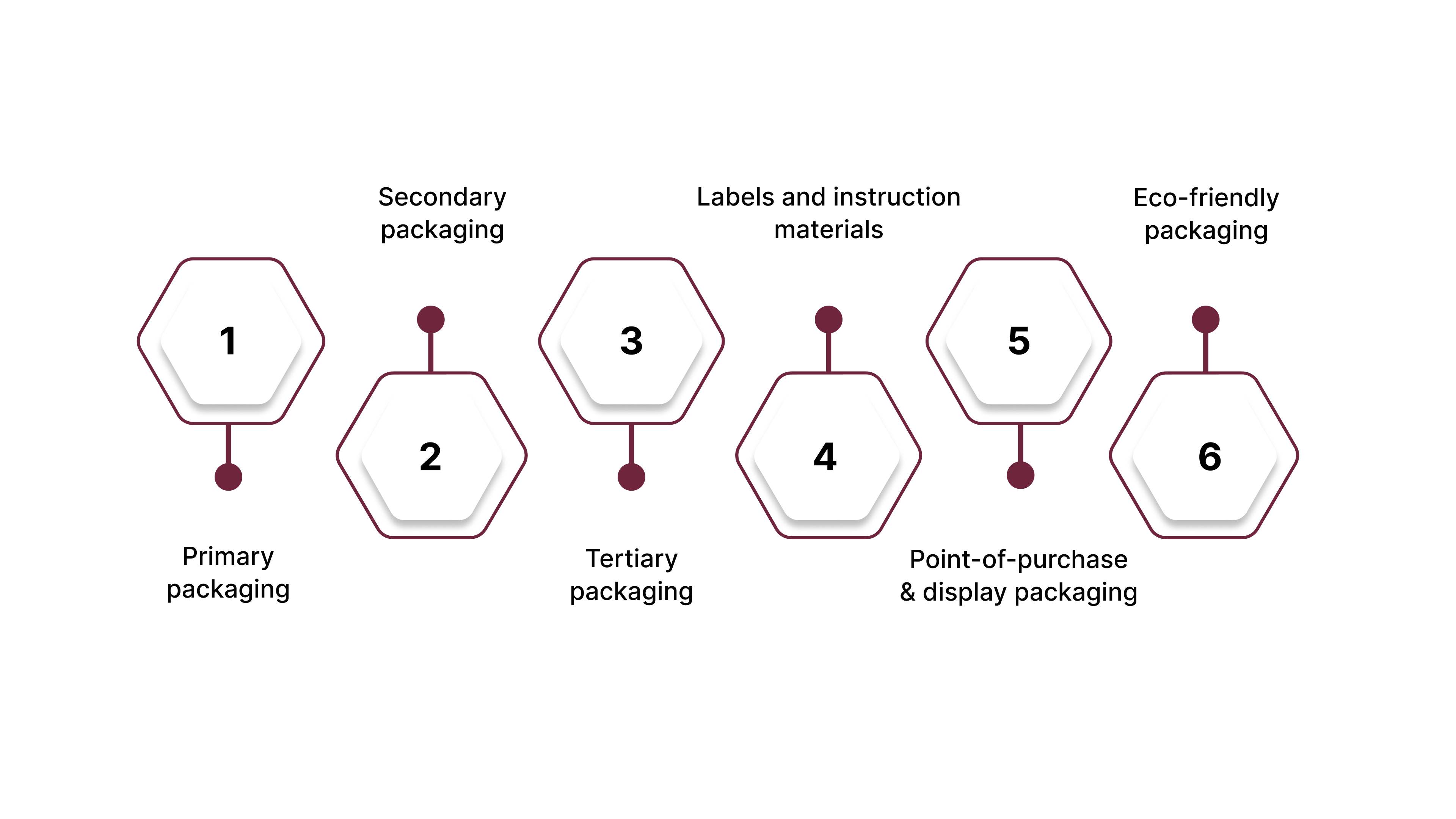
Cosmetic packaging is typically designed as a layered system, with each type serving a specific function across product protection, branding, and distribution.
Understanding these packaging types helps brands select solutions that align with product requirements, compliance needs, and sales channels:
1. Primary packaging: Primary packaging is the component that comes into direct contact with the cosmetic product. This includes bottles, jars, tubes, pumps, and compacts.
Its role is to protect formulations from contamination, leakage, and environmental exposure while maintaining product stability throughout its shelf life.
2. Secondary packaging: Secondary packaging surrounds the primary container and supports both protection and presentation.
Folding cartons and rigid boxes are commonly used to improve shelf appeal, provide structural support during handling, and accommodate regulatory labeling and product information.
3. Tertiary packaging: Tertiary packaging is designed for shipping, storage, and distribution rather than consumer display.
Corrugated boxes, dividers, and protective inserts help reduce transit damage, improve stacking efficiency, and support fulfillment across retail and ecommerce operations.
4. Labels and instruction materials: Pressure-sensitive labels and printed instruction sheets communicate essential product details, including ingredients, directions, warnings, and compliance information.
These materials must remain legible and intact despite handling, moisture, and temperature changes.
5. Point-of-purchase and display packaging: POP displays and custom retail units are used to highlight cosmetic products in-store and support promotional campaigns.
These displays must balance durability with visual impact while fitting within retail space constraints.
6. Eco-friendly and biodegradable packaging: Eco-friendly cosmetic packaging focuses on reducing environmental impact while maintaining performance and brand quality.
This includes recyclable paperboard cartons, biodegradable materials, responsibly sourced substrates, and designs that minimize excess packaging.
Biodegradable and sustainable packaging options are increasingly used for secondary and tertiary packaging, where brands can reduce material use without compromising product safety. Clear labeling and thoughtful material selection are essential to ensure sustainability claims are accurate and aligned with regulatory guidelines.
In 2026, eco-conscious cosmetic packaging is most effective when sustainability goals are integrated with structural design, compliance requirements, and supply chain realities, not treated as a standalone feature.
Material considerations for cosmetic packaging
Material selection plays a critical role in how cosmetic packaging performs across protection, presentation, compliance, and distribution. The right materials support product integrity and brand perception, while poor choices can lead to damage, degradation, or regulatory risk.
Here are some things to be considered:
Product compatibility and formulation protection: Packaging materials must be compatible with the cosmetic formulation they contain. Certain products are sensitive to light, air, or moisture, requiring materials that provide appropriate barriers to prevent degradation, leakage, or contamination over time.
Structural strength and durability: Folding cartons, rigid boxes, and corrugated packaging must withstand handling, stacking, and transportation without compromising appearance. Material thickness, flute type, and board quality directly affect how packaging performs during fulfillment and distribution.
Print quality and finish requirements: Materials influence how well graphics, coatings, and finishes are applied and maintained. Smooth, high-quality substrates support consistent printing and brand presentation, while poor material selection can result in fading, scuffing, or uneven finishes.
Sustainability and material sourcing: Eco-friendly materials such as recyclable paperboard or responsibly sourced substrates are increasingly important, but sustainability should not come at the expense of performance. Materials must meet durability and compliance standards while supporting environmental goals.
Regulatory and labeling durability: Labels and printed instruction sheets must remain legible throughout handling, storage, and consumer use. Material choices should account for exposure to moisture, oils, and temperature variations that can affect adhesion and readability.
Selecting cosmetic packaging materials requires balancing protection, presentation, compliance, and supply chain demands. When materials are chosen with real-world conditions in mind, packaging performs consistently from production through point of sale.
Common mistakes brands make with cosmetic packaging
Cosmetic packaging failures rarely come from a single decision. In most cases, issues arise when design, materials, and supply chain considerations are treated separately rather than as part of a connected system.
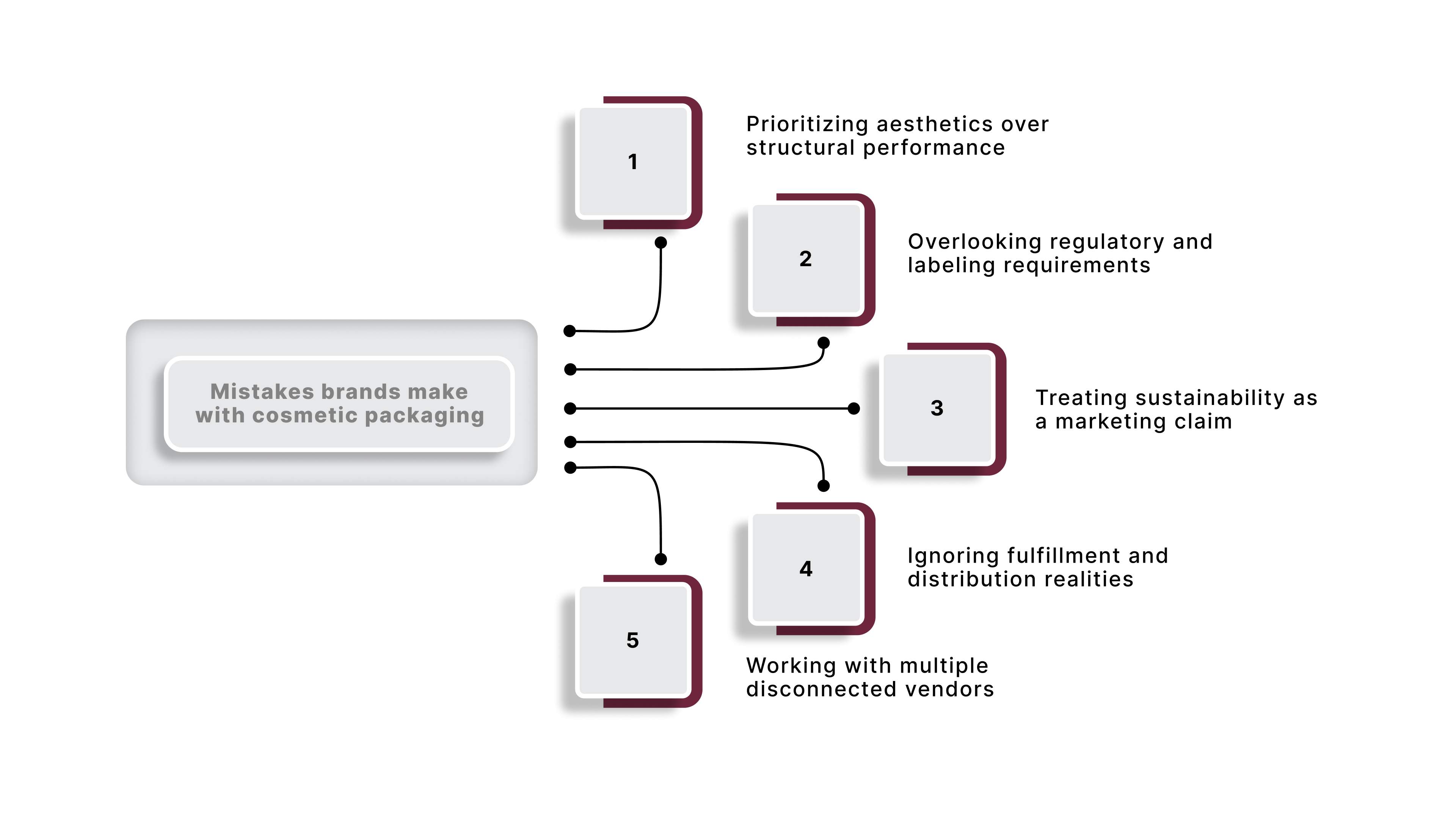
This includes:
Prioritizing aesthetics over structural performance: Packaging that looks premium on the shelf may underperform during shipping or handling, leading to product damage, repacks, or returns. Thin cartons, weak closures, or poor inserts often lead to damaged products and increased returns.
Overlooking regulatory and labeling requirements: Incomplete ingredient listings, unclear usage instructions, or poorly placed warnings can create compliance risks. Labels and instruction sheets must remain legible and durable throughout the product’s lifecycle, not just at launch.
Treating sustainability as a marketing claim rather than a design choice: Using eco-friendly or biodegradable materials without understanding their performance limitations can lead to reduced durability, moisture sensitivity, or misleading sustainability claims. Sustainable packaging must be validated for real-world conditions.
Ignoring fulfillment and distribution realities: Packaging designed without considering stacking, storage, or ecommerce fulfillment often leads to inefficiencies, damage, or excess void fill. Secondary and tertiary packaging should support both retail presentation and logistics.
Working with multiple disconnected vendors: Fragmented packaging workflows increase the risk of misalignment between design, production, labeling, and distribution. Without coordination, quality inconsistencies and delays become more likely.
Avoiding these mistakes starts with planning cosmetic packaging as an integrated system, one that balances brand presentation, compliance, sustainability, and operational performance from the outset.
Strategies to choose the right packaging for cosmetics
Choosing the right cosmetic packaging requires balancing brand goals with practical performance requirements.
The most effective strategies focus on long-term consistency rather than short-term visual appeal:
Start with product and formulation needs: Packaging decisions should begin with how the product behaves under real conditions. Sensitivity to light, air, moisture, or pressure should guide container selection, secondary packaging strength, and material choices.
Design packaging as a complete system: Primary containers, secondary cartons, labels, and tertiary packaging should work together. Treating each component in isolation increases the risk of damage, misalignment, or inefficiency during fulfillment and distribution.
Account for retail and ecommerce channels early: Packaging must perform across multiple sales environments. Designs that work for retail shelves may need additional protection for ecommerce shipping, while still maintaining brand consistency.
Plan for compliance and labeling from the outset: Ingredient lists, usage instructions, and required warnings should be integrated into packaging layouts early. This avoids redesigns and ensures labels and inserts remain legible and durable throughout the product lifecycle.
Balance sustainability with performance: Eco-friendly materials should be evaluated for durability, barrier properties, and handling requirements. Sustainable packaging works best when environmental goals are aligned with structural and operational needs.
Evaluate scalability and supply chain reliability: Packaging should support growth without frequent redesigns. Materials, formats, and production methods should remain consistent and available as volumes increase across North American supply chains.
Selecting cosmetic packaging strategically helps brands protect products, maintain compliance, and deliver a consistent brand experience as they scale in 2026 and beyond.
How GMS Industries supports cosmetic packaging decisions
Cosmetic packaging decisions in 2026 are shaped by increasing brand expectations, tighter compliance requirements, and the need for packaging that performs consistently across retail and ecommerce channels. As product portfolios expand and distribution becomes more complex, packaging must protect formulations, maintain brand integrity, and move efficiently through North American supply chains.
GMS Industries supports cosmetic and skincare brands by helping them determine when standard packaging formats are sufficient and when custom-engineered cartons, labels, or corrugated solutions are required. Rather than treating packaging as a single component, GMS approaches cosmetic packaging as a connected system, with design, materials, printing, and fulfillment working together to reduce risk and improve consistency.
Key ways GMS Industries adds value during cosmetic packaging planning include:
Packaging structure and material evaluation: GMS works with brands to assess how folding cartons, rigid boxes, and corrugated packaging should be structured based on product weight, fragility, and handling requirements. This ensures packaging provides adequate protection without unnecessary material use.
Print quality and brand alignment: Through in-house prepress and printing capabilities, GMS helps ensure colors, finishes, and graphics remain consistent across cartons, labels, and instruction sheets, supporting brand presentation at scale.
Labeling and information integration: GMS supports the production of pressure-sensitive labels and printed instruction sheets that clearly communicate ingredients, usage directions, and required product information, helping brands maintain consistency and readability across packaging components.
Fulfillment and distribution readiness: By aligning secondary and tertiary packaging with warehousing and distribution needs, GMS helps cosmetic brands reduce damage, improve stacking efficiency, and support smoother fulfillment across U.S. and cross-border operations.
Single-partner coordination: By managing multiple packaging elements under one roof, GMS reduces fragmentation between design, printing, and distribution. This lowers the risk of misalignment, delays, or quality inconsistencies during launches and ongoing production.
Through this integrated approach, GMS Industries helps cosmetic brands make packaging decisions that balance brand presentation, protection, and operational efficiency, delivering packaging solutions that perform reliably from production through point of sale in 2026 and beyond.
Conclusion
Effective cosmetic packaging requires more than visual appeal. Packaging must protect product integrity, support compliance, and perform consistently across retail, ecommerce, and distribution environments. As brand portfolios grow and supply chains become more complex, packaging decisions play a direct role in quality, efficiency, and customer experience.
GMS Industries supports cosmetic and skincare brands by aligning packaging structure, materials, printing, and fulfillment under a single, coordinated approach. This helps ensure packaging solutions are practical to produce, consistent at scale, and reliable throughout handling and distribution.
For brands where packaging performance, brand representation, and supply chain reliability are critical, a full-service packaging partner provides a clear advantage.
Connect with GMS Industries to discuss cosmetic packaging solutions designed to support your products and brand goals in 2026 and beyond.
Frequently Asked Questions (FAQs)
1. What type of packaging is best for cosmetic and skincare products?
The best packaging depends on the product formulation, fragility, and sales channel. Most cosmetic brands use a combination of primary containers, secondary folding cartons or rigid boxes, and corrugated packaging for shipping. The goal is to balance product protection, brand presentation, and distribution efficiency.
2. Why is secondary packaging important for cosmetics?
Secondary packaging protects primary containers during handling and transport while also supporting branding and compliance. Folding cartons and rigid boxes provide structural strength, shelf presence, and space for required labeling and instruction materials.
3. How does cosmetic packaging differ for retail and ecommerce?
Retail packaging prioritizes shelf impact and visual consistency, while ecommerce packaging must withstand shipping, stacking, and parcel handling. Many brands design cosmetic packaging to perform across both channels by reinforcing secondary and tertiary packaging without compromising appearance.
4. Can eco-friendly packaging be used for cosmetic products without sacrificing quality?
Yes, when materials are selected carefully. Recyclable and responsibly sourced paperboard is commonly used for secondary and tertiary packaging. Sustainable packaging works best when durability, moisture resistance, and handling requirements are evaluated alongside environmental goals.
5. What should brands consider when scaling cosmetic packaging?
Brands should consider material availability, print consistency, fulfillment requirements, and coordination across packaging components. Working with a single packaging partner can help maintain quality and reduce complexity as volumes increase across North American supply chains.